Pages

Showing posts with label cardiovascular disease. Show all posts

Monday, April 14, 2025

Verve Therapeutics Nails Cardiovascular Disease CRISPR Study

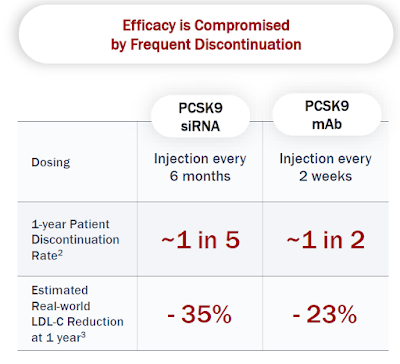
Patients do not benefit from drugs they do not take.  This is especially true in the cardiovascular disease space aimed at lowering atherogenic LDL-cholesterol where the majority of patients starting on oral options like statins do not take their pills after just one year.  This is also true for once every 2 to 4 weeks next-generation PCSK9 antibodies and even semiannual PCSK9 RNAi therapeutic inclisiran, though to a lesser degree in the latter case.


With this realization in mind, Verve Therapeutics set out to develop a PCSK9 CRISPR base editing treatment that should lower LDL-cholesterol for life by at least -40% after just a single administration of an intravenous LNP formulation.  Unfortunately, a first generation formulation, VERVE-101, had to be abandoned a year ago because of laboratory abnormalities, in particular ALT/AST elevations 5 to 10-fold above the upper limit of normal as well as a case of dangerously low platelet counts in a first clinical trial.  In addition, the intra-dose variability of the PCSK9 knockdown and LDLc lowering between subjects and the dose-responsiveness were not optimal.


Liver enzyme elevations (here ALT) with VERVE-101 in the HEART-1 study

All evidence pointed towards the LNP formulation, not the PCSK9 as the target or the base editing process, to be the culprit for the safety issues.  Verve therefore decided to replace some of the lipids in the liposomal formulation and add GalNAc sugars so as to allow the LNP to be taken up by both the LDL-receptor (via ApoE)- and ASGPR (via GalNAc).  This is helpful for two patient populations that are most in need for new treatment options and which lack LDL receptors (heFH and hoFH).  The base editor and guide RNAs were left unchanged from VERVE-101. 

Based on data from the first 14 subjects treated with VERVE-102 revealed today the theory translated perfectly into clinical practice.  At doses above 50mg of the LNP, the mean LDLc reduction was -59%, in line with the most potent PCSK9 agents (antibodies) and significantly more potent than inclisiran, especially in the heterozygous FH (heFH) population.  Moreover, there was a beautiful dose response for both PCSK9 and LDLc lowering and very little inter-patient variability.


Dose-related LDLc lowering in the HEART-2 trial with VERVE-102


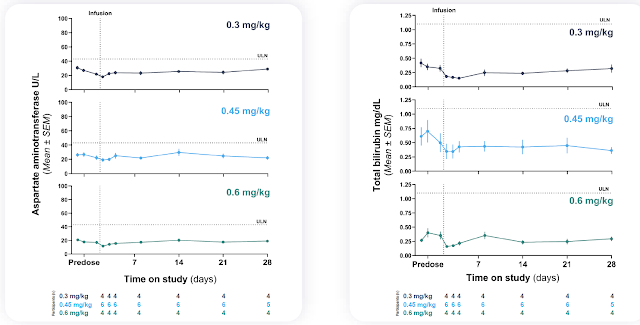
Even more importantly, the safety was pristine.  There was hardly a blip with no outliers in terms of ALT/AST changes upon LNP administration, a stark difference to VERVE-101.  Similarly, no platelet changes were seen.  Only a single case of grade 2 infusion reaction was observed which rapidly resolved and does not pose an obstacle to further clinical development and commercialization.  Anybody familiar with LNP technology understands that GalNAc-LNPs are now the gold standard in the delivery of genome editing in the liver.


Verve Therapeutics is wrapping up the HEART-2 study with a final higher dose to see whether there is further LDLc lowering and then proceed to a ~60-subject phase II study aimed at locking down one of two fixed doses of VERVE-102 for the registrational phase of clinical development.

Today marks a milestone in moving genome editing to large, indeed very large patient populations. 


Disclosure: I owned some Verve Therapeutics shares going into data and doubled down on it after seeing the emerging VERVE-102 product profile.


Tuesday, October 30, 2018

RNAi is the Future of Cardiovascular Disease


At least, this is what Big Pharma and Biotech is saying right now following deals between pure-play RNAi companies Arrowhead Pharmaceuticals and Dicerna with Amgen and Eli Lilly, respectively, and the sale of The Medicines Company with its lead PCSK9 RNAi asset really being only a matter of timing.  Besides its new relationship with Eli Lilly announced yesterday, Dicerna has an ongoin CVD-related NASH/NAFLD collaboration with Boehringer-Ingelheim.  In addition, Wave Life Sciences and Akcea, the commercial Ionis spin-out, have been pursuing cardiovascular targets along with Pfizer and Novartis, respectively, using the competitive RNaseH antisense gene knockdown technology.

Drugging the undruggable

Part of the attraction of RNAi for CVD for the pharmaceutical industry is because the targets that come from large genetic studies (e.g. ApoCIII, Apo(a), ANGPTL3) based on chance alone are not readily druggable.  To make matters worse, amorphous lipid macromolecular aggregates are particularly difficult to target with either small molecules or antibodies.

Infrequent dosing

What a difference 10 years can make.  When Protiva (now Arbutus) was one of the first to enter a systemically administered RNAi therapeutic against LDLc-related ApoB into the clinic a decade ago, it often found itself ridiculed for using RNAi in such an indication.  Systemic RNAi back then required relatively frequent (1-3 weeks) intravenous administration which would make it an unlikely modality for widespread diseases that ideally require decade-long preventive treatment strategies.

Fast-forward to the present and now we have subcutaneously delivered RNAi with potential dosing frequencies of up to once-a-year as evidenced by the lead candidate of this crop, phase III asset Inclisiran by The Medicines Company.  If the remarkable safety profile holds up following about 2000 patient years of clinical experience, such a drug should be very widely prescribed, not least because it should enjoy great adherence, one of the major impediments of treatment success in cardiovascular disease.   

Undoubtedly, it has been the Inclisiran performance so far that has attracted the attention of players like Eli Lilly and Amgen, the latter of which, of course, should know particularly well about the competitive threat from RNAi having an antibody-based PCSK9 agent on the market (Repatha).  Beyond the upcoming slew of phase III read-outs with Inclisiran, it will equally be interesting to see the types of new targets being pursued and the clinical validation of targets like Apo(a) by the antisense competition.

Monday, June 24, 2013

ApoC III Confirmed as High Potential Gene Knockdown Target

Small molecules, monoclonal antibodies, and fish oils move out!  Combining the power of genetics and therapeutic gene knockdown, ISIS Pharmaceuticals presented last night by far the most profound reduction in serum triglycerides which are thought to be an important risk factor in cardiovascular disease and other less common conditions such as pancreatitis: a 72% reduction of serum triglycerides following an 88% gene knockdown of ApoC III with a bonus 40% elevation of the good HDL cholesterol in a phase II study of ISIS-ApoCIIIRx presented at the Amercian Diabetes Association. This confirms in Man that ApoC III antagonizes the metabolism of triglycerides.

The ApoC III knockdown results were not unexpected.  In the preceding phase I study, 71% and 78% ApoC knockdowns were seen at the 200mg/week and 400mg/week dose levels, respectively.  The enhanced, 88% knockdown seen in this phase II study at the 300mg/week level can be explained by the fact that the study drug in the first study was only given for 4 weeks, at which point the phosphorothioate oligonucleotide may not have reached saturation in the liver, whereas in this study it was given for 13 weeks.  

More surprising was the deep 72% reduction in serum triglycerides.  In the phase I studies, 'merely' 43-44% reductions were observed, although this to my knowledge is still superior to e.g. Amarin’s glorified and controversial fish oil.  It is possible that this result is due to a non-linear relationship between ApoC III and serum triglyceride lowering.

Obviously, questions remain unanswered following this small and still early-stage study.  I was surprised to learn that data were reported for only 11 patients with 200 and 500 mg/dL serum triglycerides and type 2 diabetes (the enrolment criteria) although the clinicaltrials.gov entry indicates that 24 was the originally planned number for the blinded, placebo-controlled study.

Secondly, it will be important to learn about the safety and tolerability profile of ISIS-ApoC IIIRx, also in light of the clinical trial experience with the ApoB-targeting, LDL cholesterol-lowering mipomersen (aka KYNAMRO).  To wit, ‘nuisance’ side effects such as injection site reactions and flu-like symptoms contributed to frequent discontinuations in the trials and likely explain what appears to be a very slow uptake after marketing approval.  Of course, Dr. Stan Crooke, the ever-so optimistic CEO of ISIS Pharmaceuticals is convinced that ISIS-ApoCIIIRx has no such issues due to improved screening  methods.  As a reminder, in the phase I study with ISIS-ApoCIIIRx, one out of six injections were associated with injection site reactions.

Thirdly, the link between ApoC III and cardiovascular risk is still debated.  Moreover, similar to ApoB, ApoCIII is thought to contribute to VLDL efflux and inhibiting it may lead to an elevation of liver triglycerides.  This is particularly problematic given that the target patient population is already at an increased risk of hepatosteatosis.


While phosphorothioate antisense company ISIS Pharmaceuticals clearly has a head-start on ApoC III, given the ability of various RNAi technologies to potently knock down genes in the liver, ApoC III is an attractive target for the RNAi Therapeutics industry.  Such a candidate could either be positioned as a best-in-class alternative (à safety; I particularly like here the prospect of a subQ DPC version) or possibly as part of a multi-targeting cocktail against cardiovascular disease (attractive for SNALPs).  It is also one with an attractive partnering potential for some of the smaller companies in the space (early clinical POC, maybe partnering even before clinical development). 

Tuesday, July 3, 2012

Obesity Drug Approval to Unlock Low-Hanging RNAi Therapeutics Opportunities


The FDA approval of weight-loss drug Lorcaserin (to be sold as BELVIQ) a week ago symbolizes a recent shift in the regulatory climate from an extremely conservative, risk-averse one (remember Vioxx and Avandia) to one that tries to better balance the safety concern with providing patients and physicians with new treatment options.  This is also good news for the field of RNAi Therapeutics as the technically lowest-hanging fruits happen to be for targeting genes in the liver, an organ rich in well-validated gene targets related to the metabolic and cardiovascular disease, the two therapeutic fields that arguably suffered the most from the risk-averseness as they had grown heavily reliant on biomarkers in favor of outcomes.  Of course, Tekmira’s SNALP delivery technology, already clinically validated for target gene knockdown in the liver (SNALP Works!), is first in line to benefit from the change, although companies like Merck, Arrowhead Research, and Silence Therapeutics are trying hard to replicate Tekmira’s success with similar and also differentiated approaches.


Lorcaserin Symbolic

The approval path of Lorcaserin has been symbolic for the shift in the regulatory climate.  Despite meeting- in large clinical trials- the FDA’s very own guidelines for weight loss efficacy with what was one of the most benign safety profiles that I have seen, the agency, in briefing documents and Advisory Committee meetings alike seemed about to change the goal-post in the middle of the game by demanding greater degrees of weight loss which it was clear Lorcaserin, as a single agent, could never achieve.  To further justify the negative stance on Lorcaserin, theoretical safety concerns, particularly stemming from clinically irrelevant cases of breast cancer in rats were suddenly picked up on.  If you are a scientist, this scenario might sound familiar to you: if a reviewer of a scientific paper does not like your study or even you personally [on a personal note, the term ‘blogger’ is often used here in a derogative way], he/she will always come up with a reason to reject your study.  In other words, as in publishing, also in drug regulation, no matter how good, anything can be made to look bad if that's the motivation.  

To add insult to injury, Lorcaserin’s two main competitors, Qnexa from Vivus and Contrave from Orexigen, came up ahead of Lorcaserin at least from the AdCom meetings 1-2 years ago, despite these formulations being nothing more than the combination of two established ingredients, the type of life-cycle re-formulation strategy that has pushed the pharmaceutical industry and the healthcare system to the brink of financial viability.  

Thankfully, these events prompted a wide public outcry, including vocal, often ridiculed ‘retail’ shareholders which together with the recognition of the enormous unmet medical need (obesity) caused a remarkable turnaround in the regulatory fortunes of the drug climaxing in a broad label with the main restrictions being that Arena Pharmaceuticals and partner Eisai conduct a number of post-marketing cardiovascular outcome and safety studies- reasonable.  Such a preliminary approval process (witness also the Avastin-breast cancer controversy) that post-pones these studies to a post-marketing setting was also in recognition of the fact that demanding them pre-approval would be financially prohibitive for most small and medium-sized pharmaceutical companies. Moreover, the fact that the only new, single agent among the three weight loss contenders happens to be the first one approved, should be further encouragement for innovative drug developers.


What it means for RNAi Therapeutics

The acceptance of biomarkers such as weight loss, LDL-cholesterol, and glycated hemoglobin, together with postponing hard outcomes studies to the post-marketing setting are the two key ingredients that should greatly increase the attractiveness of harnessing the liver-targeting potential of RNAi Therapeutics to go after metabolic and cardiovascular disease opportunities.  What is more, what in the end may have tilted the agency’s opinion in favor of Lorcaserin (in addition to bowing to political pressure) was the fact that the drug not only promoted weight loss, but also provided clear benefits in terms of other biomarkers such as lowering blood sugar levels in diabetic patients. 

RNAi Therapeutics candidates should be particularly well positioned to take advantage of the regulators valuing the totality of the efficacy data rather than myopically focusing on single end-points that may have been met just marginally.  This is because RNAi Therapeutics have the unique potential to simultaneously go after multiple targets (multi-targeting).  At the risk of repeating myself, an RNAi Therapeutic that could reduce not only atherogenic lipids, but also hepatic fat and increase insulin sensitivity should be very welcome in such an environment.   

The experience with ISIS Pharmaceutical’s mipomersen for which an NDA has been submitted recently, however, also shows that while the emerging approach can speed up drug approval, it can also limit the initial market potential (here, the rare homozygous FH population) and costly outcomes trials may be necessary to address wider patient populations.  It can be argued that ISIS and partner Genzyme simply got unlucky as, unlike the European counterpart, the FDA will only accept LDL-cholesterol lowering as a sufficient end-point for the hoFH population; there should be other cases, however, where the first population in such a staged approval process will justify the investment in the drug development program already.    


In this environment, I look forward to TKM-ApoB and ALN-PCS02 being followed by more metabolic/cardiovascular RNAi Therapeutics candidates, particularly of the multi-targeting type, SNALP-delivered, multi-cassette ddRNAi or otherwise.  With the biomarker-based and staged approval approach, it should be possible again for even small companies like Tekmira to bring such programs into later-stage development on their own.

Monday, October 15, 2007

The Race to Knocking Down Cardiovascular Disease

Given the burden of cardiovascular disease in the Western world representing a multibillion dollar drug market, finding a drug to complement statins in reducing complications due to high levels of bad cholesterol is naturally high on the priority list of many drug developers. The recent OTS Meeting and a Press Release by Alnylam emphasising their leadership by having obtained first-ever data on safely and effectively knocking down PCSK9 with RNAi in non-human primates, illustrate home the promise of RNA-based therapies for CVD. The interest is largely rooted in the fact that targets such as PCSK9, ApoB100, and potentially microRNA-122, well known determinants of blood cholesterol levels, but which have proven impossible to target by traditional small molecule approaches. Moreover, these targets are expressed in the liver, and it is clear by now that current systemic oligo delivery technologies allow them to be knocked down in vivo. Hence, the race is on to who will be first to develop a safe and efficacious oligonucleotide-based therapy for hypercholesterolemia and stand to reap the benefits of a potential blockbuster in the first phase of RNA-based drugs.

Assuming that it is a safe bet that cholesterol levels can be reduced with oligo-based strategies, what will determine regulatory success? Given that low cholesterol is a life-long effort, any drug taken over a long period of time, even before disease onset, will have to be safe first of all. Risk can be largely grouped into four categories: target risk, risks inherent to the therapeutic platform, sequence risk, and risks associated with route of delivery and drug formulation. Arguably the target best validated on the grounds of human genetics is PCSK9, a protease that degrades LDL-receptors and therefore inhibits clearance of bad cholesterol from circulation. Research mostly from the University of Texas Southwestern has shown that mutations that increase the activity of PCSK9 increase cholesterol levels, whereas individuals with nonsense mutations in PCSK9 that reduce PCSK9 activity have lower cholesterol levels and, importantly, a much reduced risk for cardiovascular events. Moreover, the absence of any functional PCSK9 throughout life has no obvious adverse side-effect while retaining the health benefits of low cholesterol.

Before PCSK9 came to the fore, ApoB100, a protein required for the assembly of LDL-cholesterol, used to be the target of choice. Indeed, the development of PCSK9-based treatment strategies have extensively made use of ApoB100 as a marker protein for evaluating RNAi delivery and knockdown in the liver. Pioneering research mostly by ISIS Pharmaceuticals has shown that indeed ApoB100 knockdown has the ability to lower LDL-cholesterol. Although ISIS has not seen fatty liver in clinical trials and preclinical research of their lead antisense compound ISIS 301012 (currently in late phase II) to be a problem, various other groups have observed this side-effect following ApoB100 knockdown, which would not be that surprising given the role of ApoB100 in fat metabolism. However, even if fatty liver will be observed in larger phase III trials and post-approval, ISIS has made the right decision to test 301012 first for patient populations most at risk for CVD.

Similar to ApoB100 and PCSK9, inhibition of microRNA-122 by antisense technologies has been now shown numerous times to also have LDL-cholesterol lowering effects. Strangely, despite the fact that this is by far the most abundant microRNA in the liver, no obvious toxicities have been associated with miR-122 inhibition. Consequently, a number of groups such as Regulus and Santaris hope to develop this into a treatment for hypercholesterolemia.

Taken together, my bet is on PCSK9 knockdown to lead the way in oligo-based therapies for the long-term treatment of hypercholesterolemia. New targets, however, should emerge, partly as a result of now being able to apply RNAi itself for target identification, for example by transiently targeting essentially any gene of interest in the liver in vivo and the use of transgenic RNAi mice (Artemis), a combination of the two latest Nobel prize-winning technologies.

Next to target choice, the nature of the knockdown technology, antisense versus RNAi, itself will also have important safety implications. As I am quite fascinated about the prospect of RNAi for various reasons, please keep in mind that my natural inclination is to favour RNAi any time. In terms of potency, once equal amounts of oligos get delivered into the cell, RNAi has been shown frequently to be generally superior to antisense oligos (ASO), although antisense technologies can be quite diverse. Lower dosages will not only reduce cost of a treatment that has to be taken long-term, but, more importantly, allow for dosages that fall well within therapeutic windows. Moreover, in the case of RNAi, I feel quite comfortable with a technology where the risks such as immuno-stimulation, off-targeting, and potential interference with the endogenous microRNA pathway are reasonably well understood, intensely studied, bioinformatics- and chemistry-based solutions devised, and well taken into account in current RNAi-based drug development efforts. This in fact reflects a new awareness in RNA-targeted therapies, largely driven by the renewed interest generated by the discovery of RNAi. Accordingly, the therapeutic utility of any two RNAi compounds, or antisense compounds for that matter, may differ dramatically due to sequence-dependent toxities.
These toxicities may also be linked to route of delivery and related oligo formulation. A technically quite uncomplicated approach, as taken by 301012, is to simply administer relatively large amounts of unformulated oligos (200mg/week in the case of 301012) to make sure that enough of it ends up in the liver. By contrast, liver uptake of siRNAs is thought to require additional formulation. Indeed, liposomal formulations that are set to enter the clinic within the next year increase liver uptake of siRNAs from less than 1% of injected material to over 30%, allowing for lower dosages to be used. Some toxicities, however, were observed at relatively high dose levels with some of the cationic liposomes, and it remains to be seen whether lipidoids and other “not-so-cationic” liposomes will come to dominate the liver delivery field. Also, while most of the disclosed liposomal delivery vehicles efficiently enhance liver uptake, they are often not specific for uptake into the hepatocyte population in the liver, the cell type of interest. Particularly uptake into Kupffer cells, a type of immune cell in the liver, can lead to dosing and safety complications, and ultimately the path taken recently by scientists from Mirus, which by the way has an RNAi delivery collaboration with Pfizer, to specifically target formulated siRNAs to hepatocytes, but not other liver cell types, may substitute non-specific liposomes in the second wave of RNAi-based therapies for hypercholesterolemia. While delivery is often described as the Achilles Heel for RNAi therapeutics, the charge (ironically) and chemical similarity of siRNAs as a class makes them ideally suited to devise drug targeting strategies that can be broadly applied and should lead to safer therapies, something that is nearly impossible for say small molecules.

ISIS’ ApoB100-targeting antisense 301012 has good chances of becoming the first oligo-based therapy for CVD, at least for people with familial hypercholesterolemia and for whom statins don’t work. Although only a fraction of the overall market, the sheer size of the cholesterol market makes this a lucrative goal nonetheless. I am somewhat surprised that, to my knowledge and despite potential target risk, there is little talk of other ApoB100-targeting therapies. It will be interesting to see what companies like Merck, which has clearly stated their admiration for 301012 at the last OTS Meeting, are willing to pay for rights to 301012. PCSK9-targeting therapies are in late preclinical development and therefore about 3 years behind 301012, but I believe these to be the safest bet for a widely applied oligo-based drug for hypercholesterolemia with a number of organisations ramping up their PCSK9 programs.

Alnylam appears to be leading this race with the recent announcement of first-ever non-human primate data of an RNAi compound that safely and effectively knocked down PCSK9 with concomitant reductions in total and LDL-cholesterol. An IND is planned for the end of this year, or early next year, and probably will depend on finding the delivery solution that most importantly is safe for long-term administration. Importantly, Alnylam enjoys a particularly strong IP position and know-how in targeting PCSK9 by RNAi, due to their own position in fundamental RNAi technology, and important collaborations on the biology of PCSK9 with UT Southwestern, which has been leading in the genetics of PCSK9, as well as in delivery with the Anderson/Langer lab at the MIT and exclusive access to Tekmira’s cationic liposomal delivery IP for RNAi. Sirna-Merck may want to dispute this with an patent on targeting the same PCSK9 by RNAi that issued recently and was filed in July 2006 as part of their brute-force approach to patenting genes for RNAi. Alnylam, however, presented their first PCSK9 RNAi data in mice at last year’s 2nd Annual OTS Meeting, and it is anybody’s guess when their or rather UT Southwestern’s first lab-book entry on PCSK9 RNAi occurred. Probably at a similar stage to Alnylam is the PCSK9-antisense collaboration of ISIS with Bristol-Myers Squibbs for which mouse data have been published earlier this year. Santaris’ antisense compounds for PCSK9/ApoB100 and miR-122 should also be heading soon towards the clinic.

New delivery technologies, including oral formulations, and targets should ensure that the oligo-CVD field will remain lively in the years to come. Also, since there have been a number of recent data demonstrating efficient targeting of RNAi to the endothelia of blood vessels, new RNAi strategies aimed directly at the atherosclerotic plaques may emerge.

It would not be the first time that several similar compounds, small molecule, antibody or recombinant protein, with essentially the same molecular targets, would co-exist in a market, a concept also very familiar to the hypercholesterolemia field. IP, careful clinical development involving the best scientists in both oligonucleotide technology, delivery and the biology of the drug targets, together with a bit of luck, will decide who will reap the largest benefits from the potentially first knockdown blockbuster.
By Dirk Haussecker. All rights reserved.

Disclaimer: This blog is not intended for distribution to or use by any person or entity who is a citizen or resident of, or located in any locality, state, country or other jurisdiction where such distribution, publication, availability or use would be contrary to law or regulation or which would subject the author or any of his collaborators and contributors to any registration or licensing requirement within such jurisdiction. This blog expresses only my opinions, they may be flawed and are for entertainment purposes only. Opinions expressed are a direct result of information which may or may not be accurate, and I do not assume any responsibility for material errors or to provide updates should circumstances change. Opinions expressed in this blog may have been disseminated before to others. This blog should not be taken as investment, legal or tax advice. The investments referred to herein may not be suitable for you. Investments particularly in the field of RNAi Therapeutics and biotechnology carry a high risk of total loss. You, the reader must make your own investment decisions in consultation with your professional advisors in light of your specific circumstances. I reserve the right to buy, sell, or short any security including those that may or may not be discussed on my blog.