Pages

Monday, July 24, 2023

Lightning Fast Wave Life Sciences Demonstrates High ADAR Editing Rates Across Targets

There was a time, not that long ago, when 1-3% ADAR editing rates in tissue culture cells were typically reported in the field.  The hope then was that with further chemical optimization, editing rates could be increased high enough to have a clinically relevant impact in the setting of a gain-of-function approach.  Mathematically speaking, go from nothing to something is an immeasurable relative increase.

In the realm of biology, this is pertinent to diseases like Duchenne Muscular Dystrophy or Spinal Muscular Atrophy where relatively small, 10-20% target engagement by RNA Therapeutics have been demonstrated (splice modulator SPINRAZA) or are expected (exon skippers) to have big disease modifying activity when given to patients essentially genetically null (=not expressing) dystrophin and SMN1, respectively.

In theory, the upper limit of ADAR Editing should be extremely high since near-complete editing of ion channel and neurotransmitter receptor pre-mRNAs are seen in neurobiology.

The perception that ADAR Editing mediated by oligonucleotides could be generally low in clinical applications started to shift when Monian and colleagues at Wave Life Sciences reported in a groundbreaking Nature Biotech paper a year ago robust 50%+ editing rates of the alpha-1 antitrypsin Z allele.  It suggested that this can be achieved by painstaking chemical optimization at a ‘lucky' target site.  This is not much different from how small molecules get chemically matured following an initial low-affinity, low-specificity hit.


For the type of blockbuster market opportunity like alpha-1-antitrypsin this effort is well worth it.  Still, finding potent editing-enabling oligos in an efficient manner would open many doors such as testing scientific hypotheses faster, especially as the ADAR Editing pioneers sift through their list of candidate targets and indications.

Enter Wave Life Sciences and their PRISM platform.  I have never quite understood what exactly is behind this platform for oligonucleotide discovery (RNAi, exon skipping and ADAR Editing).  It does appear, however, to test many combinations of chemical modifications at the base, sugar, and internucleotide linker while considering their chemical neighborhoods and stereochemistry, ultimately coming up with design principles for potent oligonucleotide therapeutics candidates.


Certainly, given that modern lab automation allows for increased throughputs (see biotechtv tour of Aera Therapeutics), such a Big Data, Artificial Intelligence approach to oligonucleotide drug development makes a lot of sense and can give biotech companies crucial competitive advantages in terms of time and better molecules.  

Two chemistry insights regarding ADAR technology that have emerged from PRISM stand out so far.  Firstly, the zwitterionic phosphorylguanidine (PN) backbone linker, preferably in a stereopure format.  The PN chemistry is shown to allow for improved unassisted cellular uptake into various cell types in mice (immune cells, various liver cell types, renal cells etc) while stereopurity brings advantages in terms of ADAR recognition of the duplex substrate.  This sounds similar to the morpholino chemistry that has proven to be quite safe following systemic administration (e.g. eteplirsen by Sarepta), but is very rapidly eliminated from the circulation into urine.  It will therefore be important to show in future studies that the dose demands for oligos with predominantly PN backbone are not as high.

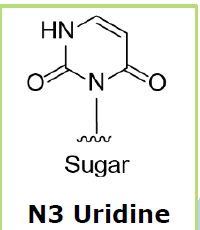
With regard to the orphan base, the base opposite the adenosine to be edited, Wave is honing in on deoxy-N3 uridine as its preferred chemistry.


In addition to alpha-1-antitrypsin (now partnered with GSK), robust 50-90% editing is demonstrated for a number of clinically relevant genes such as UGP2 (à epileptic encephalopathy 83), and Nrf2-Keap signaling (stress regulation in chronic disease).  For the latter two targets, not just one, but several highly potent editing oligos could be identified.  This reflects increased emphasis by Wave in applying RNA Editing to targets that are not for correcting specific mutations, but where the goal is to increase expression of a protein where it could be helpful, but without necessarily changing its inherent function or sequence. 


This allows Wave to scan for potent editing oligos often along the entire target (pre-)mRNA instead of being limited to just one site!  Also, a number of genetic diseases are caused by a various mutations dispersed throughout a gene so that a mutation-correction approach may require the development of multiple editing oligos and some sites will not be amenable to AàI approaches at all.  In the end, this increases the market potential of a given oligonucleotide.


In summary, being able to consistently achieve 50%+ editing rates will be sufficient for most therapeutic editing approaches.  Going from say 2% of something to 50% is a 25-fold increase, but maxing out at 100% for another 2x may not give that much of additive benefit.  Of course, biological pathways can sometimes be complex and the responses may not be as linear.  At 80%+ editing, diseases caused by dominant-negative mutations would also come within the realm of therapeutic possibilities of ADAR editing and this includes liver-related diseases of piZZ alpha-1-antitrypsin, but here ADAR Editing may face inherently more potent knockdown mechanisms such as RNAi.

Disclosure: I am long WVE, as I am impressed by the speed with which they have chemically matured editing oligos and their dystrophin exon skipper is showing intriguing early clinical results (RNA, not protein level).  However, I have not taken a full position yet as I want to see the company first demonstrate robust target engagement in the clinic (including for the dystrophin exon skipper).  So far, all the clinical results have greatly disappointed with claims of 10-20%-type target knockdowns


Friday, July 14, 2023

Korro Bio To Become Third Publicly Listed ADAR Editing Company

Today, pure-play ADAR Editing Korro Bio announced that it will reverse merge into biotech shell Frequency Therapeutics (current ticker: FREQ, to be changed to KRRO).  It will thus become the 3rd publicly traded RNA Editing company following ProQR (pure-play) and Wave Life Sciences, the latter entertaining a broader mix of oligonucleotide therapeutics modalities (ADAR editing, exon skipping, RNAi).

Following two private founding rounds of ~$210M in 2020 and 2022, the transition into the public markets which is being accompanied by another $117M cash injection from mainly existing venture backers led by Surveyor Capital and Cormorant Asset Management, is to prepare the company making the transition to the clinic.  Its lead candidate is to address both the lung and liver manifestations of alpha-1-antitrypsin disease (AATD) caused by the prevalent piZZ genotype.

Today’s development explains their surprising announcement earlier this year to adopt liposomal delivery instead of GalNAc-targeted chemically modified oligonucleotides as is practiced by industry leaders ProQR and Wave Life Sciences.  Without the prospect of a clinical candidate, such an ‘IPO’ would not have been possible. 

As I had noted in an earlier blog entry though, such a development candidate is likely to fail both from a clinical and commercial point of view.  Firstly, for AATD patients at high risk of liver disease or actually manifesting liver disease, a chronically administered LNP seems like a bad idea. Indeed, Korro Bio today revealed significant liver enzyme elevations in animal models at doses (2mg/kg) that are likely required for robust SERPINA1 editing and are substantially higher than what is used for the clinically approved MC3-based LNP formulation Patisiran in ATTR amyloidosis by RNAi Therapeutics company Alnylam.


From a competitive point of view, the LNP approach suffers from the need of frequent, possibly weekly intravenous infusions whereas less frequent (I expect monthly) subcutaneous administration schedules should be feasible with Wave’s first clinical GalNAc editing oligo and possibly less frequently as oligo chemistry advances (similar to RNAi).  As Wave is likely to be a year ahead of Korro in the clinic, this alone makes it a head-scratcher approach for a fast-follower.

As we have learned from the RNAi Therapeutics field, further stabilizing Korro’s oligonucleotide is unlikely to extend dosing frequency as LNPs release most of their cargo into the cytoplasm almost instantaneously whereas the long duration of action by oligo-conjugates is explained by their gradual release from endosomes.

There is one scenario, however, where I can see Korro Bio’s candidate to have staying power, namely in being the only approach among the ADAR Editing and CRISPR genome editing and gene therapy candidates that can successfully treat both the lung and liver manifestations of AATD by achieving >90%-type editing levels.  As we have learned from Arrowhead Pharmaceuticals' liver AATD program (partnered with Takeda), even with near complete removal of toxic alpha-1-antitrypsin expression in the liver, prolonged treatment will likely be necessary to see a robust clinical response (phase 3 involves >3 years of dosing).

It is for this reason that I view the ADAR and genome editing approaches mainly aimed at those suffering from lung disease (which RNAi cannot address), including those with mixed phenotypes.  I will discuss clinical development landscape further in my next blog entry.

What I most like about Korro Bio, a prolific IP filer, is their mix of ADAR Editing programs encompassing genetic correction for AATD and Parkinson’s (LRRK2), anti-protein aggregation (TDP43 in ALS), modulating ion channel (NAV1.7 in pain), disrupting protein-protein interaction in alcoholic hepatitis and activating kinases.  But to extract the full value from applying RNA Editing to these attractive disease areas, Korro Bio needs to catch up on oligonucleotide chemistry and designs.


Saturday, April 29, 2023

Roche Impresses with Effective RNA Editing of Polyglutamine Repeat mRNA

Roche has shown interest in RNA Editing through its 2021 partnership with Shape Therapeutics.  The goal of this partnership was to use Shape’s AAV-delivered, DNA-directed RNA editing nucleic acids for neuroscience and rare disease applications.

Readers of this blog will know that I have not been a great fan of DNA-directed approaches to ADAR editing, not least because the expressed editing RNAs are unmodified.  This means that they do not benefit from chemistry to optimize efficacy.  In terms of specificity, the simple, but very effective strategy of modifying the base opposite non-target adenosines (e.g. 2’-O-methyl) to abolish off-target editing is not available to DNA-directed RNA editing.  

To compensate the efficacy disadvantage, the concomitant gene therapy-directed overexpression of ADAR enzymes has been attempted.  Unfortunately, this is a no-go since it causes extensive genome-wide off-targeting.  

It therefore comes as no surprise that Roche has also been evaluating synthetic editing oligonucleotides as revealed earlier this month in patent publication WO2023/052317A1.  This patent application addresses CAG/polyglutamine repeat expansion diseases such as Huntington’s disease, but also other neurodegenerative polyGln diseases including a number of the spinal cerebellar ataxias.  Since the number of polyGln repeats critically determines whether a person will manifest the disease and is correlated with protein aggregation, disrupting stretches of CAG-encoded uncharged glutamines with even a few positively charged, CGG-encoded arginines may stop the pathogenic process and is thus a highly attractive therapeutic hypothesis.

Beyond CAG triplett expansion diseases, similar logic may apply to diseases caused by repeat expansions in non-coding regions- as long as the repeat contains an ‘A’ such as in Friedreich’s ataxia (frataxin GAA repeat in intron 1).  Regardless of the specific disease-causing mechanism, disrupting the repeat is likely to be beneficial.  

While attractive in theory, I had been wondering how easy it actually would be to target these repeats by ADAR editing as the target sequence is quite unusual in its repetitiveness which may result in impenetrable higher-order structures.  The use of repetitive oligonucleotides as therapeutic agents is also unusual because of potential structural and manufacturing issues.  Finally, once one of the target adenosines has been converted to an inosine, the target mRNA sequence is altered (=mismatch) and consequently may become a weaker target site.

On the other hand, long repeats may turn out to be excellent targets in that they provide for a high local concentration of target sequence.

Actual data

Unfortunately, conducting casual molecular biology experiments in the basement of private homes is frowned upon in Germany and fraught with legal risks (this has to change), so it’s nice that Roche has actually conducted initial tissue culture experiments to find out about the practicality of the approach. 

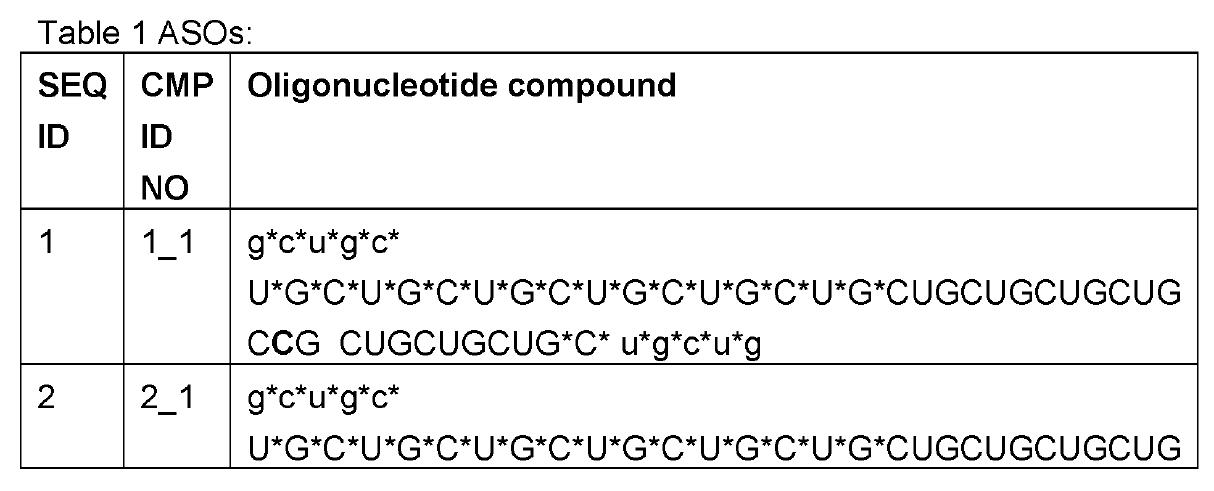
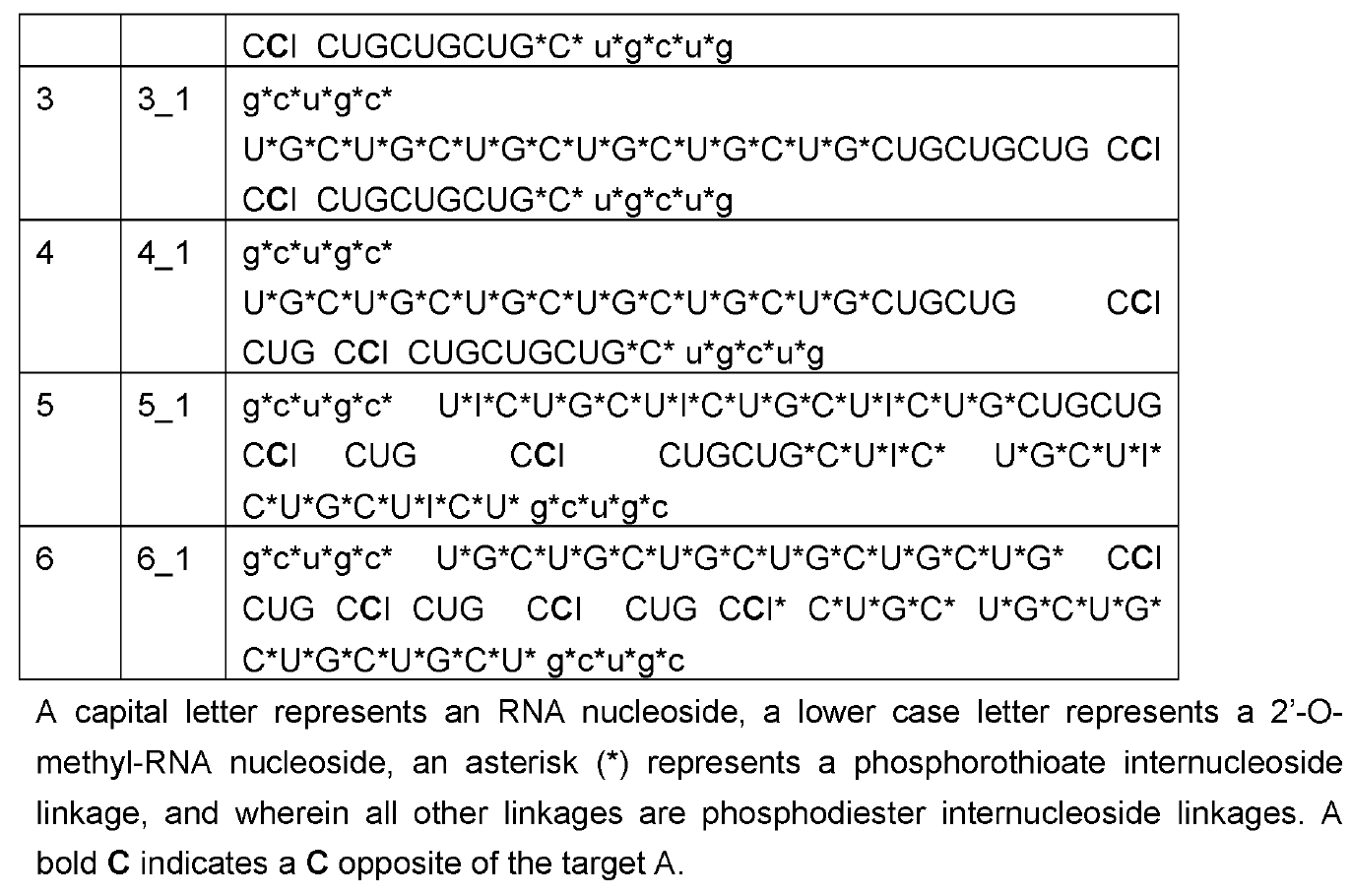
Employing ~50-60nt long CUG repeats (the complement of CAG), their editing oligonucleotides were above the typical length of ~30nt as now generally practiced by the leading RNA Editing companies ProQR and Wave Life Sciences.  These were transfected into HeLa cells expressing ATXN3 mRNA with 21-22 repeat CAGs all in the apparent absence of ADAR overexpression.  

The oligonucleotides were modified with 2’-o-methyl only in the 5 nucleotides on the 5’ and 3’ ends each; phosphorothioation of the backbone was also practiced at the wings of the oligos, but extended further into the center than the 2'-o-methyls.  The central part consisted of pure RNA. 


An orphan C was placed towards the 3’ end of the targeting oligo.  This creates a mismatch to the target A as is commonly practiced in the field.  Interestingly, an inosine follows 3’ of the orphan C and this is also practiced by some other companies as e.g. evidenced in last year’s high-profile paper on long-lived and potent ADAR editing in non-human primates by Wave Life Sciences in Nature Biotech.

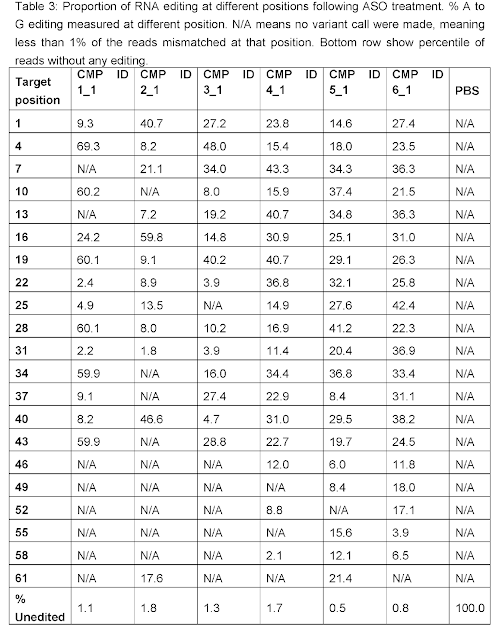
Remarkably, robust 20-50% AàI conversions were seen for many As in the ATXN3 CAG repeat with more pronounced editing towards the 5’ end of the repeat region consistent with the 3’ placement of the orphan C in the targeting oligonucleotide.  Moreover, less than 2% of the ATXN3 mRNAs was unmodified for each editing oligo.  If you consider that a huntingtin allele with say 33 CAG repeats does not result in Huntington’s disease, but one with 37 repeats typically does, you can imagine the impact that just a single or two successful editing events should have on pathogenicity of the resulting protein.


This experiment thus is an important de-risking step for RNA Editing in repeat expansion diseases and should whet the appetite of Roche which is already heavily invested in oligonucleotide therapeutics for Huntington’s through its collaboration with Ionis Pharmaceuticals (RNaseH mechanism), including research on improving the convenience and efficacy of intrathecal oligo administration.

As an investor in ProQR I was, of course, pleased to see that when discussing the prior art of ADAR editing in general, all 5 patent applications cited by Roche referred to ones controlled by ProQR. 

Looking forward to the next chapter in this story.

Wednesday, April 26, 2023

RNAi Also Conquers the Central Nervous System

In the span of a day, RNAi Therapeutics have gone from a mechanism widely viewed as being constrained to the liver only, to a major therapeutic modality for many targets and indications in a variety of tissues.  Due to the demonstrations in the liver, lung (yesterday), and today the central nervous system to potently and specifically knock down genes with infrequent dosing, RNAi will play a prominent role in today’s precision medicine-oriented drug development.

Employing C16 lipid-conjugated, chemically stabilized RNAi triggers, Alnylam and their partner in CNS drug development Regeneron achieved 84-90% maximal target gene knockdown with knockdown persisting at >70% for at least 3 months after a single dose.

Since chemical stability has been key to the successes in the lung, CNS, and also liver, it seems very likely that similar breakthroughs will be achievable for muscle, kidney, adipose tissues, and (in the words of Alnylam's President) 'even tumors' that Alnylam and Arrowhead are working on.

The initial target in the phase I study of ALN-APP was amyloid beta precursor protein (APP). Unlike the armada of antibodies that have targeted every known aggregation form of abeta for the treatment of Alzheimer’s, ALN-APP reduces them all and before they are even made thereby offering a unique angle to this important target.  An even more exciting near-term application of ALN-APP in my opinion is for cerebral amyloid angiopathy (CAA) where abeta accumulation near blood vessels can lead to intracerebral hemorrhage.  Studies with antibodies in Alzheimer’s have actually led to fatal damage to those very intracerebral blood vessels by causing local inflammation, and thereby make them a bad choice for CAA.

Beyond abeta and tau for Alzheimer’s, the CNS in particular abounds with otherwise difficult-to-drug important targets for diseases like Parkinson’s, Huntington’s, ALS, spinocerebellar ataxias for which RNAi is ideally suited.

The prolonged and robust knockdown observed is significantly better than what has been observed for previous RNaseH antisense candidates such as against SOD1 and tau (~50% target gene lowerings).  Safety also appears to be superior to the broadly phosphorothioated antisense molecules with no changes in neuronal markers of damage and inflammation seen with ALN-APP compared to placebo.

The US FDA though slapped a clinical hold on the multi-dose part of the trial based on findings in standard preclinical animal tox studies at doses well above what will be needed in the clinic.  The single dose exploration study, however, has been allowed to continue, and Canada has already allowed the multi-dose part to go ahead.  It therefore seems highly unlikely that the findings could derail ALN-APP or even this technology approach at this point.

With the recent news, the pharmaceutical landscape has changed and Big Pharmaceutical companies will have to think hard whether not having a stake in RNAi as a platform is viable.  The achievement is also one of delivery and stabilization chemistry which can be more broadly applied to other oligonucleotide therapeutics modalities in the CNS.

Tuesday, April 25, 2023

Oligonucleotides Break Through to the Lung

It is days like today that I live for.  Days when new platform technology data is revealed that will change the practice of medicine and benefit patients for a number of diseases of high unmet need. In this case asthma, IPF, COPD etc. 


Almost a decade after GalNAc started to revolutionize oligonucleotide therapeutics delivery to the liver (hepatocytes) and turned oligonucleotides into the important therapeutic modality it has become today, Arrowhead Pharmaceuticals just reported the equivalent for the lung (lung epithelial cells to be precise).

Employing inhaled delivery of αvβ6 integrin-targeted stabilized RNAi triggers in healthy volunteers, the company found robust, -80% mean maximum target gene (RAGE) knockdown after 2 doses spaced a month apart. 

Since the knockdown reading was based on RAGE protein in serum (sRAGE), the true knockdown in the desired lung epithelium is likely higher.  This is also supported by the observation that more direct bronchoalveolar lavage measurements revealed -75% knockdown after just a single 92mg dose when the corresponding reading in the serum indicated -56%.  Further dose escalation to 184mg is ongoing and there are first indications that the long-lived pharmacodynamic response observed in animals will hold up in the clinic.

RAGE is a key player in pro-inflammatory signaling in the lung and thought to play a central role in related pulmonary disorders such as asthma.

In addition to clearing the efficacy hurdle, safety seemed excellent, or in the words of the company ‘no patterns of adverse changes in any clinical safety parameters’.

As some may remember, an earlier RNAi candidate targeting the lung (ENaC for Cystic Fibrosis) was shelved by Arrowhead due to preclinical findings in chronic tox studies in the rat.  The reason is thought to be that the sheer amount of material delivered to rat lungs overwhelmed and inflamed the macrophage-based particle clearance system.

What is different this time is that ARO-RAGE utilizes improved stabilization chemistries and therefore only a fraction of the overall tissue exposure is required to achieve the same knockdown. 

This is reminiscent of the early days in GalNAc conjugate-based delivery to the liver when a first-generation GalNAc-TTR RNAi trigger had to be discontinued by Alnylam due to adverse safety in the clinic.  Improved GalNAc RNAi drugs of increased metabolic stability (and reduced 3'-fluoro content) are now well established medicines.

Beyond RNAi Therapeutics, today’s results have important implications for oligonucleotide therapeutics applications in the lung in general, including RNA Editing. 

Most importantly, they establish αvβ6 integrin as a valid target receptor for oligo conjugates.  Moreover, some of the chemistries should be directly translatable for stabilization purposes and together with ARO-ENAC Arrowhead should now have good insights into the chemistry-safety relationship. 


Tuesday, April 4, 2023

ProQR and Partner Eli Lilly Demonstrate Oligonucleotide-induced RNA Editing in the CNS: A Major De-risking Event for the Industry

With every new oligonucleotide therapeutics modality that feeds into an endogenous cellular mechanism comes uncertainty as to whether the mechanism is sufficiently robust to be of therapeutic utility.  

This is especially true for RNA Editing as in its early days targeted AàI editing was only shown with the concomitant DNA-directed overexpression of ADAR along with an targeting RNA or the introduction of recombinant ADAR-antisense conjugates of little direct therapeutic use.  Similarly, simply introducing into a cell a chemically synthesized antisense oligonucleotide hybridizing to the area surrounding the target adenosine in an mRNA will only give you minute editing efficiencies in cell culture without further structural and chemical optimization.

The liver and CNS, due to their gene target richness and the demonstrated clinical feasibility of delivering oligonucleotides to these organs, are of particular importance to the RNA Editing industry.  The demonstration byscientists from Wave Life Sciences of oligonucleotide-directed RNA Editing in non-human primates was therefore an enormous de-risking event in that it showed that RNA Editing is sufficiently robust in living primate livers.

Of similar importance was the revelation by ProQR and their partners from Eli Lilly last week that this also holds true for the primate nervous system following the intrathecal administration of an editing oligonucleotide.  10-30% editing were seen in the brain depending on the anatomical location investigated.  In both the mice (intracerebroventricular delivery) and cynomolgous monkeys, editing was highest in the cortex.  Even higher editing levels, up to 50%, were observed in the spinal cord of non-human primates.


The spinal cord (motor neurons) also happens to be the location of the most successful oligonucleotide therapeutic currently on the market: SPINRAZA (nusinersen) for spinal muscular atrophy.  Since RNA Editing is quite new and many do not fully appreciate what 10-50% editing efficiencies mean, SPINRAZA can serve as a good example for how impactful such target engagements can be particular for gain-of-function approaches.

SPINRAZA is a splice modulator and works through gain-of-function by obscuring an intronic splice silencer element in the SMN2 pre-mRNA.  Typically, only 10-20% of SMN2 mRNA is ‘correctly’ spliced to yield a functional full-length protein.  With 12mg of SPINRAZA in infants (same dose used for the RNA editing studies in cynomolgous monkeys), this increases 2-3x.  This means that an approximately 10-40% successful target engagement can save babies from certain death and, if given early enough, may allow children with the type I SMA mutations to grow up almost normally.

In the case of the (undisclosed) target gene that Eli Lilly is looking at, these types of target engagements with RNA editing resulted in 5-25x increases in protein function.  Because of the above and because gain-of-function is a particular competitive strength of RNA editing, this application should be prioritized in target selection of industry pipelines.

Thursday, March 23, 2023

Wave Life Sciences to Focus RNA Editing on Gene Upregulation

Yesterday, oligonucleotide therapeutics developer Wave Life Sciences provided a high-level preview on how it will deploy its RNA Editing technology.  Accordingly, modulating protein-protein interactions and, even more so, increasing gene expression will be the declared mechanisms of action of development candidates following its lead candidate WVE-006 for alpha-1-antitrypsin disease (AATD).

WVE-006 was recently licensed to GSK and should be the first RNA Editing candidate to enter clinical development later this year.  A big milestone for the field.   WVE-006 corrects a common single nucleotide mutation in the alpha-1-antitrypsin gene, Z-AAT, that causes both liver and lung manifestations of AATD. Z-AAT is retained in liver hepatocytes to cause cellular stress instead of being secreted to do its job and protect the lung.  As such, WVE-006 can be considered both a mutation corrector and gene function booster.


Mutations often scattered across genes

More often than not, however, mutations causing rare genetic diseases are scattered across a gene and precision genetic medicines targeting small segments of a gene at a time may thus only address a subset of patients.  A prime example is Duchenne Muscular Dystrophy where even exon 51 skipping which is the approach with the largest addressable patients still only serves 11-13% of the overall DMD population.


                                DMD patient segmentation according to skipped exon (from Wave Life Sciences presentation)

A very interesting indication for ADAR RNA Editing is Rett Syndrome (affects 1 in 10000 girls by age 12 in the US).  Here as well are the mutations scattered across the MeCP2 gene.  Almost half of those would be addressable by RNA Editing (including eliminating stop codons), but each individual target would be quite small.

So instead of targeting the specific mutations, ADAR Editing may also be used to screen all adenines in the MeCP2 transcript to identify those that lead to an increase in protein abundance and thus function either by stabilizing the resulting mRNA or by increasing MeCP2 stability.  While this approach would not apply to Rett Syndrome caused by 2 null mutations on the X chromosomes, a say 3x increase in activity of the chromatin CpG-binding protein may be enough to alleviate disease in a large fraction of Rett Syndrome patients with MeCP2 versions having reduced activity.  Or consider mutant CFTR proteins in cystic fibrosis with reduced channel activity. Increase the abundance of those CFTR mutant proteins and it should increase the overall desired activity.

The screening approach would also facilitate finding potent RNA editing oligos due to the flexibility and increase in targeting space as opposed to having to optimize the editing oligo around a small defined target site.


mRNA technology

Wave Life Sciences likened the gene upregulation approach as a simpler version of mRNA therapeutic technology.  Simpler, because it does not involve the delivery of long mRNAs which necessitates the use of LNPs and similar larger nanoparticle formulations due to mRNA stability requirements.  By contrast, RNA editing can be mediated by oligos ~30 nucleotides in length, short enough to be amenable to conjugation and oligo chemistry strategies already applied in RNaseH and splice modulation ASO and RNAi.

Smaller also means better tissue penetration and delivery to more target tissues.

Moreover, meaningful expression from an mRNA only occurs in short bursts so that the frequency of repeat administration is dictated by protein half-life.  Meanwhile, the administration frequency for oligo-mediated editing, due to the longer persistence of highly stabilized oligos, can be expected to be in the weeks and months.

It should be noted though that RNA editing would essentially upregulate what is already present in the cell (with the exception of the one editing change), whereas mRNA therapeutics in sensu strictu can generate entirely new proteins.

RNA editing would also not be the first oligonucleotide approach to mRNA upregulation.  RNA activation, the targeting of promoter-proximal regions using RNAi-type double-strand RNAs, and the targeting of upstream 5’ UTR mRNA elements with steric blocking antisense molecules as developed by Ionis Pharmaceuticals are competing approaches.  These, however, have so far either lacked the robustness or the flexibility in terms of sequence choice that AàI editing should afford.  


Now more than ever in biotechnology, companies need to carefully tease out the unique, differentiating advantages of a platform technology when selecting an indication.  RNA Editing leaders ProQR and Wave Life Sciences are in the fortunate position that they can apply the new biotech paradigm starting with their first RNA Editing candidates.  Biotech is ripe for a reboot and RNA Editing should have every ambition to be part of it.


Disclosure: I own both ProQR and Wave Life Sciences shares, though ProQR considerably more. 

By Dirk Haussecker. All rights reserved.

Disclaimer: This blog is not intended for distribution to or use by any person or entity who is a citizen or resident of, or located in any locality, state, country or other jurisdiction where such distribution, publication, availability or use would be contrary to law or regulation or which would subject the author or any of his collaborators and contributors to any registration or licensing requirement within such jurisdiction. This blog expresses only my opinions, they may be flawed and are for entertainment purposes only. Opinions expressed are a direct result of information which may or may not be accurate, and I do not assume any responsibility for material errors or to provide updates should circumstances change. Opinions expressed in this blog may have been disseminated before to others. This blog should not be taken as investment, legal or tax advice. The investments referred to herein may not be suitable for you. Investments particularly in the field of RNAi Therapeutics and biotechnology carry a high risk of total loss. You, the reader must make your own investment decisions in consultation with your professional advisors in light of your specific circumstances. I reserve the right to buy, sell, or short any security including those that may or may not be discussed on my blog.