Pages

Showing posts with label GalNAc. Show all posts

Monday, April 14, 2025

Verve Therapeutics Nails Cardiovascular Disease CRISPR Study

Patients do not benefit from drugs they do not take.  This is especially true in the cardiovascular disease space aimed at lowering atherogenic LDL-cholesterol where the majority of patients starting on oral options like statins do not take their pills after just one year.  This is also true for once every 2 to 4 weeks next-generation PCSK9 antibodies and even semiannual PCSK9 RNAi therapeutic inclisiran, though to a lesser degree in the latter case.
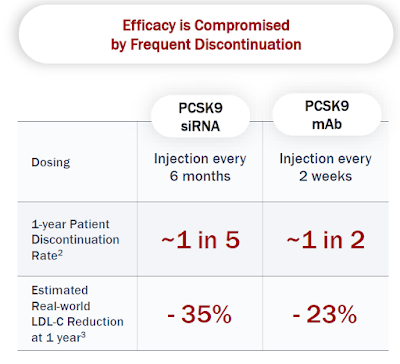


With this realization in mind, Verve Therapeutics set out to develop a PCSK9 CRISPR base editing treatment that should lower LDL-cholesterol for life by at least -40% after just a single administration of an intravenous LNP formulation.  Unfortunately, a first generation formulation, VERVE-101, had to be abandoned a year ago because of laboratory abnormalities, in particular ALT/AST elevations 5 to 10-fold above the upper limit of normal as well as a case of dangerously low platelet counts in a first clinical trial.  In addition, the intra-dose variability of the PCSK9 knockdown and LDLc lowering between subjects and the dose-responsiveness were not optimal.


Liver enzyme elevations (here ALT) with VERVE-101 in the HEART-1 study

All evidence pointed towards the LNP formulation, not the PCSK9 as the target or the base editing process, to be the culprit for the safety issues.  Verve therefore decided to replace some of the lipids in the liposomal formulation and add GalNAc sugars so as to allow the LNP to be taken up by both the LDL-receptor (via ApoE)- and ASGPR (via GalNAc).  This is helpful for two patient populations that are most in need for new treatment options and which lack LDL receptors (heFH and hoFH).  The base editor and guide RNAs were left unchanged from VERVE-101. 

Based on data from the first 14 subjects treated with VERVE-102 revealed today the theory translated perfectly into clinical practice.  At doses above 50mg of the LNP, the mean LDLc reduction was -59%, in line with the most potent PCSK9 agents (antibodies) and significantly more potent than inclisiran, especially in the heterozygous FH (heFH) population.  Moreover, there was a beautiful dose response for both PCSK9 and LDLc lowering and very little inter-patient variability.


Dose-related LDLc lowering in the HEART-2 trial with VERVE-102


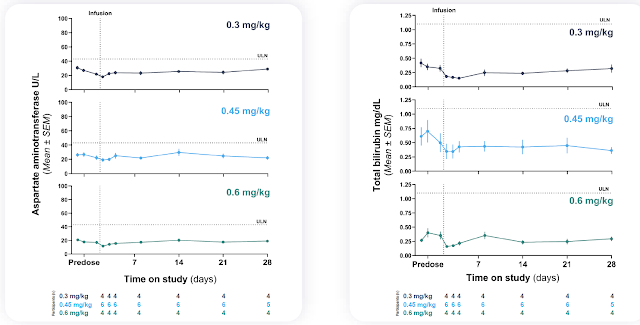
Even more importantly, the safety was pristine.  There was hardly a blip with no outliers in terms of ALT/AST changes upon LNP administration, a stark difference to VERVE-101.  Similarly, no platelet changes were seen.  Only a single case of grade 2 infusion reaction was observed which rapidly resolved and does not pose an obstacle to further clinical development and commercialization.  Anybody familiar with LNP technology understands that GalNAc-LNPs are now the gold standard in the delivery of genome editing in the liver.


Verve Therapeutics is wrapping up the HEART-2 study with a final higher dose to see whether there is further LDLc lowering and then proceed to a ~60-subject phase II study aimed at locking down one of two fixed doses of VERVE-102 for the registrational phase of clinical development.

Today marks a milestone in moving genome editing to large, indeed very large patient populations. 


Disclosure: I owned some Verve Therapeutics shares going into data and doubled down on it after seeing the emerging VERVE-102 product profile.


Tuesday, April 25, 2023

Oligonucleotides Break Through to the Lung

It is days like today that I live forDays when new platform technology data is revealed that will change the practice of medicine and benefit patients for a number of diseases of high unmet need. In this case asthma, IPF, COPD etc. 


Almost a decade after GalNAc started to revolutionize oligonucleotide therapeutics delivery to the liver (hepatocytes) and turned oligonucleotides into the important therapeutic modality it has become today, Arrowhead Pharmaceuticals just reported the equivalent for the lung (lung epithelial cells to be precise).

Employing inhaled delivery of αvβ6 integrin-targeted stabilized RNAi triggers in healthy volunteers, the company found robust, -80% mean maximum target gene (RAGE) knockdown after 2 doses spaced a month apart. 

Since the knockdown reading was based on RAGE protein in serum (sRAGE), the true knockdown in the desired lung epithelium is likely higher.  This is also supported by the observation that more direct bronchoalveolar lavage measurements revealed -75% knockdown after just a single 92mg dose when the corresponding reading in the serum indicated -56%.  Further dose escalation to 184mg is ongoing and there are first indications that the long-lived pharmacodynamic response observed in animals will hold up in the clinic.

RAGE is a key player in pro-inflammatory signaling in the lung and thought to play a central role in related pulmonary disorders such as asthma.

In addition to clearing the efficacy hurdle, safety seemed excellent, or in the words of the company ‘no patterns of adverse changes in any clinical safety parameters’.

As some may remember, an earlier RNAi candidate targeting the lung (ENaC for Cystic Fibrosis) was shelved by Arrowhead due to preclinical findings in chronic tox studies in the rat.  The reason is thought to be that the sheer amount of material delivered to rat lungs overwhelmed and inflamed the macrophage-based particle clearance system.

What is different this time is that ARO-RAGE utilizes improved stabilization chemistries and therefore only a fraction of the overall tissue exposure is required to achieve the same knockdown. 

This is reminiscent of the early days in GalNAc conjugate-based delivery to the liver when a first-generation GalNAc-TTR RNAi trigger had to be discontinued by Alnylam due to adverse safety in the clinic.  Improved GalNAc RNAi drugs of increased metabolic stability (and reduced 3'-fluoro content) are now well established medicines.

Beyond RNAi Therapeutics, today’s results have important implications for oligonucleotide therapeutics applications in the lung in general, including RNA Editing. 

Most importantly, they establish αvβ6 integrin as a valid target receptor for oligo conjugates.  Moreover, some of the chemistries should be directly translatable for stabilization purposes and together with ARO-ENAC Arrowhead should now have good insights into the chemistry-safety relationship. 


Thursday, March 9, 2023

Korro Bio Opts for LNP in Liver-Directed Lead Program

Korro Bio yesterday announced that it would collaborate with Genevant to develop liposomally formulated oligonucleotides for the ADAR editing of alpha-1-antitrypsin in the liver.

This is a big surprise for the field since based on the successes in the oligonucleotide therapeutics industry in general and data from competitors Wave Life Sciences and ProQR in particular, it would have seemed obvious to employ GalNAc-conjugated editing oligonucleotides for alpha-1 antitrypsin-related liver disease.

Korro Bio is a privately held pure-play ADAR editing company that has raised more than $200M since 2020 and is developing oligonucleotides, as opposed to DNA-directed small editing RNAs, for mediating AàI conversion.  Given this substantial funding and what appears to be the ready availability of GalNAc, it is a big mystery to me why Korro has chosen intravenously administered LNPs and in the process is giving up substantial ownership in this program through the collaboration.

Just last month, Korro Bio and scientific founder Joshua Rosenthal published a selection strategy for efficient editing oligonucleotides.  The paper (Quiroz et al, 2023) finished off with experiments illustrating the need for extensive oligonucleotide modification, reminiscent of what ProQR and Wave Life Sciences have practiced, for effective ADAR editing.


Learnings from RNAi

One explanation for why Korro may have favored an intravenously over a subcutanously administered technology may be potency.  In yesterday’s press release and a recent Nature Biotechnology RNA editing industry article, the company is boasting that it wants to return serum alpha-1-antitrypsin levels to within the normal range.

A lofty goal and perhaps most readily achieved without having to balance the demands of chemical modification for stabilization purposes and inherent ADAR activation potency. 

In the earlier days of RNAi, Alnylam’s LNP-formulated Patisiran actually won out over an internal GalNAc competitor that didn’t quite have the potency and was also associated with toxicity.  Patisiran has also won the commercial race against a subcutaneously administered antisense oligonucleotide by Ionis due to superior clinical data.

Clearly, depending on the stage of chemical modification know-how with regard to a specific oligonucleotide modality, LNPs may be preferable even for the targeting of genes in hepatocytes.

Maybe Korro Bio does believe it still has a potency edge over the competition, and combining its oligonucleotides with LNPs may also get them faster into the clinic.


The Vivek Factor  

There is no reason to believe that in AATD an LDL receptor-targeted delivery strategy may be beneficial over an ASGPR-targeted one because of changes in receptor expression levels.

I would, however, not rule out that Korro Bio succumbed to the magic of the bewilderingly fast-talking executives from the Roivant universe (Genevant is a Roivant subsidiary).  I still cannot get over the fact that Tekmira handed over half the company plus LNPs to (now US Presidential candidate) Vivek Ramaswamy for some toxic small molecules scribbled on the back of an envelope.

When you hear Vivek on the campaign trail these days and his sharp fast talk full with twisted arguments that make your head spin, then I understand why people that for whatever reason like this energetic person may throw out reason and just want to trust this guy.  But beware: while making billions for himself and his family, he has lost many more of shareholders’ money for projects like the Alzheimer’s drug that he dug out from a dumpster and IPO’d at a valuation of over a billion USD.  I digress…


Until we see non-human primate data from Korro Bio and Genevant, I will count this candidate out of the race in AATD.  Whether ProQR will fill the void and throw down the gauntlet to Wave Life Science will be seen by its pipeline reveal at the end of this month.

Sunday, October 9, 2022

Landmark Chemical Modification Study Shows RNA Editing Ready for the Clinic

At this stage, providing investors and the pharmaceutical industry with a clear line of sight that RNA Editing can be readily translated from concept into therapeutic reality is key to unlocking the next step-up in valuation.

A landmark study in March earlier this year by scientists from Wave Life Sciences (Monian et al, Nature Biotech) on chemically modifying ADAR guide RNA oligos (I will abbreviate them from now on AgRNAs due to missing consensus nomenclature) should go a long way in this regard.  It shows that applying a plethora of standard oligonucleotide stabilization chemistries (e.g. PS, PN backbones, 2’-O-methyl-, 2’-F-ribose) which are critical to enabling delivery and desirable durability do not compromise endogenous ADAR enzyme activity.

In fact, backbone stabilization for example via phosphorothioates, especially when in the SP stereopure conformation can actually greatly increase activity.  In a luciferase model system, editing activity of a fully (stereorandom) PS-modified AgRNA was 10x that of a corresponding AgRNA with an unmodified PO backbone.

Accordingly, when GalNAc-conjugated AgRNAs were tested in non-human primates, ~40% editing rates were observed for at least 2 months.  For this, a loading dose of 5mg/kg per day for 5 days was used.  This is on the higher end of what should be clinically acceptable, but as we know from experience with RNAi, what GalNAc works in non-human primates works even better in humans.


Illustrating the value of further refined chemical optimization of high-value candidates, impressive ~70% mRNA editing efficiencies were seen for a AgRNA against mutant SERPINA1 in primary mouse hepatocytes resulting in a concomitant increase in corrected protein.  SERPINA1 is also the target for Wave’s and possibly the industry’s first clinical RNAEditing program and addresses alpha-1-antitrypsin liver and lung disease.

What piqued my interest was that this AgRNA involved a 8-oxo-deoxyadenosine mismatch base opposite the adenine to be modified and a nearby inosine.  What this means will be addressed in my next blog entry...

So congratulations Wave Life Sciences on this study, but also they will admit that the study still only scratches the surface of what gains in potency will be possible with more detailed structure-activity studies.

Monday, September 10, 2018

Second-Tier RNAi Therapeutics Companies Starting to Deliver Clinically


Alnylam has had a 3 year head-start on the competition with GalNAc RNAi Therapeutics, but now additional companies are populating the field with actual clinical data.  While the knockdowns appear robust and the chemistries well tolerated, therapeutic utility and the potential of liver toxicity from off-targeting will have to be demonstrated in upcoming longer-term studies.

Dicerna clinically validates new target for primary hyperoxaluria

Dicerna used to be the leader in applying RNAi Therapeutics to primary hyperoxaluria (PH), an orphan genetic condition caused by dangerously high levels of oxalate in the blood.  Oxalate crystallization and deposition may then poison first the kidneys and then various organs leading to premature death.  Unfortunately, as its old LNP technology proved to be impractical, Alnylam's directly competing program targeting glycolate oxidase (GO) assumed the lead.

When Dicerna then came up with a GalNAc-based follow-up candidate (DCR-PHXC), it also chose a new target: hepatic lactate dehydrogenase (LDHA), a target which may have be applicable also for forms of PH beyond the most frequently diagnosed PH1 and for which GO is a suitable target.  Cynics may suspect that the new target was not chosen because it is the better one, but in an effort to provide differentiation over more advanced competition.  To wit, first-mover advantage can be significant in the orphan drug arena.

Perhaps due to its long-standing, deep relationship with the PH community, Dicerna has been able to recruit patients more quickly than I had suspected (in light of Alnylam's parallel recruitment efforts) in its first-in-patient study.  First data from this study (PHYOX) were revealed last week.  To their relief, LDHA knockdown resulted in oxalate lowering in all 9 subjects (8 PH1, 1 PH2) tested.

Following a single-dose of either 1.5mg/kg or 3.0mg/kg, at least 30% reductions in urinary oxalate were seen and all or almost all subjects got to urinary oxalate levels at or below 1.1mmol/24hrs/1.73m2, a level predictive of end-stage-renal-disease freedom.

More detailed data will be presented later this year where we will get a better sense in how the results stack up with those of Alnylam.  Earlier this summer, Alnylam reported 64% mean urinary oxalate reductions relative to baseline before following more than one dose.  Another area of concern is that it appears that 3 out of the 9 injections resulted in injection site reactions (ISR).  To see ISRs is not surprising per se, but the frequency appears to be on the high end based on early experience and could be a competitive disadvantage.  Similarly, no word was said about liver enzymes.

Given that Dicerna has been rushing the PHYOX trial without so much as testing multi-dose regimens, I expect the regulatory agencies to demand at least 2 dosing schemes in the upcoming pivotal trials.  A nightmare scenario would see Dicerna being sent back to phase II to test the safety of multi-dosing, a fate that Regulus Therapeutics had suffered before in Europe.

Disclosure: Over the last few months, I have been largely playing the volatility of DRNA- both on the long and short side.  Looking ahead to the end of the year, I would be hesitant of taking a substantial long position due to a market cap approaching $1B with the potential of negative surprises both on safety and efficacy when more detailed PHYOX data will be presented.  On the other hand, a deal (such as on the IND-ready mystery candidate) could provide a catalyst to the upside at least in the short-term.

Arrowhead sees best HBsAg knockdowns so far with new GalNAc candidate

When similar to Dicerna Arrowhead had to retool its lead programs with the GalNAc technology, one question was whether they could achieve knockdowns as potent as with DPC delivery which employed explicit cell penetrating chemistries.  It was therefore cause for celebration when the company reported -2log HBV surface antigen (HBsAg) knockdowns at the World Gastroenterologists Summit, better than with ARC520 and ARC521 before (slides here).  Also, the knockdown was observed regardless of e-antigen status, but that was to be expected with the new sequence design.

Intriguingly, following 3 monthly injections, the knockdown curves still kept coming down, making it almost look like HBV can be beaten into submission by the knockdown effect alone and without the help of an immune boosting effect.

Unfortunately, only HBsAg results from the 100mg and 200mg monthly dosing cohorts were disclosed even though the company had dosed 9 other dosing and patient cohorts.  Based on cohorts 8-11, it appears that best results may in fact have been obtained with the 300mg monthly regimen which will probably be disclosed in the run-up to this year’s AASLD meeting.

Similar to Alnylam in 2014, after showing impressive RNAi target knockdowns in the clinic, the wait is now on to show that the knockdowns will translate into therapeutic benefits.  Given the speed of the company’s execution in general, I would expect pertinent data to emerge from the HBV program in late 2019/early 2020.

Disclosure: similar to Dicerna, I have been recently playing the volatility of ARWR stock, getting long as it had been consolidating around the $14 level, then selling and going short into last week’s 50% spike to a $2B market cap.  With the puts I then sold ($21 and $20 September strikes), I have a ~10% cushion should the stock zoom past $21 by the September options expiration and my max gain is ~13%.  This is intended as a short-term trade


Monday, July 2, 2018

Arrowhead Achieves Robust Alpha-1 Antitrypsin Lowering As Grounds for Trial Termination Still Shrouded in Mystery


Last Friday, Arrowhead Pharmaceuticals presented first data from its phase I study of ARO-AAT being developed for addressing liver disease in people with certain mutations in the alpha-1 antitrypsin gene.  Based on the selective data release, Arrowhead has assumed the lead in this indication as Alnylam struggles to regain its footing following apparent off-target-related liver toxicity almost 2 years ago.

The press release can be found here, the actual presentation here

With a mean maximal target gene knockdown of -87% between 6 to 8 weeks following a single subcutaneous injection of 100mg dose of the GalNAc-enabled ARO-AAT, Arrowhead has shattered the previous AAT knockdown record by Alnylam’s ALN-AAT of -80% at a ~4x dose of ARO-AAT.  The dynamics of the knockdown also suggests that infrequent dosing should be feasible with ARO-AAT, although without seeing the multi-dose data from this study, it is difficult to predict whether we are talking about quarterly or semi-annual dosing here.

It will also be interesting to find out whether the variation of knockdown in the 4 patients- ~-70% knockdown at 4 weeks for the 2 weaker responders and ~-90% for the 2 better responders- had to do the polymorphism issues similar to those encountered by Alnylam before.

Safety mystery remains

When Arrowhead announced on June 18 that it would terminate the healthy volunteer trial prematurely given that it had escalated above doses at which maximal knockdown can be observed, I was hesitant in taking it at face value or whether this decision also had something to do with the safety profile of ARO-AAT.

The Alpha-1 National Education Conference update only added to the impression.  Firstly, because Arrowhead must already know the knockdown from the 200mg and perhaps also the 300mg open-label cohorts since at least June 18, why didn’t the company simply show the data?   

Regarding safety, the company chose a cut-off date of June 11, that is a week before the June 18 decision.  By June 11, there were only 2 drug-related injection site reactions among the 32 subjects that had received at least 1 dose of either ARO-AAT (n=20) or placebo (n=12) per slide 17 of the presentation.  Those happened to be in the 2 of 4 100mg open-label subjects, the only subjects for which the knockdown had been reported.  

Confusingly, the company also reported that 44 subjects had received at least 1 dose (at least as of the trial termination decision date of 18/6), meaning that 8 subjects had further received 300mg of ARO-AAT (4 open-label, 4 blinded) and 4 placebo (all blinded).  Adding to the confusion, a company representative emailed me in a response to a tweet of mine on the ISR frequency that the safety update referred to those 40 subjects that had received at least 1 injection as of 11/6, but- as I said- contrary to this statement the table on slide 17 only included 32 subjects.  For all those others, the safety data were missing entirely.

The question now is whether the omission was intended as a teaser for the Liver Meeting presentation in November, a minor math issue, or whether there was something more nefarious to it.  The speed with which the company will move into patients (which already have or are at risk for liver disease) will be an important indication whether liver toxicity or the like has been observed subsequent to June 11.

Friday, June 8, 2018

Alnylam's Primary Hyperoxaluria RNAi Drug Clears Patient Hurdle


Alnylam today provided an update on its clinical program of Lumasiran for primary hyperoxaluria (PH), an ultra-rare disease of organ damage and failure due to elevated levels oxalate (here for OxalEurope presentation slides).

The new data include safety and efficacy from all three studied dose cohorts (1 and 3mg/kg monthly, 3mg/kg quarterly) and involved early-stage PH type 1 (PH1) patients without end-stage renal disease and systemic oxalosis.  Accordingly, RNAi knockdown of the target glycolate oxidase (GO) enzyme reduced (urinary) oxalate by ~2/3.

Importantly, this was uniformly achieved across all dosing cohorts, perhaps with somewhat less inter-patient variability for the 3mg/kg cohorts.  Accordingly, oxalate levels were reduced in all patients below a threshold where natural history studies point to an almost complete protection from progression to ESRD. 

Of note, despite the caution that RNAi competitor Dicerna Pharmaceuticals had voiced that GO as a target might be prone to a rebound effect- based on the preclinical observations that oxalate reductions only kick in after profound, ~85% GO gene knockdown is achieved- the new data provide no evidence for this.  Instead, quarterly dosing with 3mg/kg was as good as with monthly dosing of the same dose, consistent with the sustained target-gene knockdown profiles seen with most current GalNAc-RNAi candidates.

The safety profile was unremarkable for a disease like this.  The only obvious drug-related side effect were transient injection site reactions in 2 out of the 9 patients receiving the investigational agent.

With these data in hand, Alnylam is about to embark on a registrational study of Lumasiran in ~25 PH1 patients.  This study will further include younger patients and those with more advanced disease than in the present study.  Given the similarity of the oxalate knockdowns across the cohorts, it is difficult to predict what the dose and dosing schedule will be, but testing both 1mg/kg and 3mg/kg quarterly could be a good idea.

Dicerna competition

Lumasiran is not the only gene knockdown agent in the clinic.  Its closest competitor, ~1.5 years behind based on the May 30 announcement that the 1st PH patient has now been dosed, is Dicerna Pharmaceuticals’ DCR-PHXC.  DCR-PHXC is differentiated from Lumasiran in that it targets LDHA instead of GO1 and is expected to have a more linear target gene knockdown-oxalate knockdown relationship.  

It is also applicable beyond the PH1 patient population, i.e. also for the less severe (and much less commonly diagnosed) PH2 and PH3 forms of primary hyperoxaluria.

Lumasiran has thus now set a high bar for the commercially currently most valuable patient population.  It will be thus be important for Dicerna to improve diagnosis rates of PH2 and 3 as it intends to embark on a pivotal study in 2019.

Friday, May 27, 2016

What the thrombocytopenia findings mean for Ionis Pharmaceuticals

Yesterday, Ionis Pharmaceuticals disclosed that severe reductions in platelets had been observed in phase III clinical trials of both IONS-TTRRx for the treatment of TTR amyloidosis and IONS-ApoCIIIRx for conditions related to highly elevated triglycerides.  Severe platelet reductions are dangerous since it can lead to occult, uncontrolled bleeding and poor blood clotting following injury.

Since the conference call was a PR disaster as the CEO of Ionis has major issues with speaking his scientific mind, and since competitor Alnylam has seemingly become the original source and interpreter of the Ionis thrombocytopenia issues (one wonders how they come into possession of these Ionis trade secrets...), I thought it may be useful to briefly come out of blogging hibernation and lay out my thoughts about what these events mean for the technology and the company.

Thrombocytopenia likely limited to systemically administered, unconjugated PS-oligos >200mg per injection

As a hematological abnormality that has historically been observed with phosphorothioate (a ‘sticky’ chemistry) oligonucleotides when given at high doses (>200mg/injection)  I’ve always considered it likely that such thrombocytopenia will be associated with measures of plasma exposure of the oligonucleotides.  Notable examples for thrombocytopenia with phosphorothioate oligos include the DMD exon skipper drisapersen by Biomarin/Prosensa (6mg per kg per week, i.e. around 300mg/week for 50kg boy) and telomerase inhibitor imetelstat by Geron (~10mg per kg per week, i.e. around 700mg/week for average adult).  Actually, isn’t it ironic, or maybe even curious that imetelstat is being developed for conditions where elevated thrombocytes is the problem (see related blog entry)???

Consistent with this notion, there was a study by Flierl et al. in 2015 that looked at the mechanism of platelet activation which may lead to platelet consumption and explain lowered thrombocyte counts.  Without going into the details of the mechanistic aspects of the study, the authors find a strong correlation with peak plasma exposure (c max) of the oligonucleotides and platelet activation.   

So why hasn’t Ionis seen severe cases of thrombocytopenia in the past (excluding use of PS-oligos in cancer patients which frequently suffer from potentially confounding bone marrow suppressions from other drugs)?  The most probable explanation is a) these events are quite rare events and b) that their experience with PS-ASOs at 300mg/week and above has been limited.  At 300mg and especially 400mg per week, safety has always looked a bit dicey such that the 300mg per week dose e.g. for TTRRx was only adopted after 200mg per week was not competitive with the knockdown results produced by ALN-TTR02 from Alnylam. 

Similarly, the initial studies with ApoCIIIRx did not include the 300mg per week dose and was adopted in favor of the very impressive triglyceride reductions seen at doses higher than 200mg.  Usually the dose escalation of the prototypical Ionis phase I studies involved 50, 100, 200, then 400mg per week with 400mg per week never being chosen for the phase II and/or pivotal studies.

What I find highly interesting is that the pharmacokinetics data from the healthy volunteer study of ApoCIIIRx reported by Graham and colleagues in 2013 (see only Table IV) reported a non-linear, 4.5x increase in cmax when doubling the dose from 200mg to 400mg per week.  This could mean that at doses of 200mg per week and higher, the risk of severe thrombocytopenia is dramatically elevated by going past the threshold where platelets become critically activated (à clotting cascade).  
If the cmax theory holds true, then the following should be the impact of the new findings on the Ionis platform.  The summary takes into account the clinical observations by Ionis that the platelet reductions are reversible upon stopping dosing and can be prevented and also treated by steroid use (just as ALN-TTR02 involves steroid use):

1)      Unconjugated, systemically administered antisense at 300mg per week and above (incl. phase III assets TTRRx and ApoCIIIRx): need for tight platelet monitoring.  May involve temporary halt of studies to amend protocols.  Commercially, need for tight platelet monitoring could be a problem for less severe diseases due to convenience and competitive issues.  

Note that for all the liver-targeted programs, backup GalNAc-conjugated versions are in development which should not suffer from thrombocytopenia (see below).  However, systemic programs targeting other tissues such as DMPKRx for myotonic dystrophy will have to be under continued scrutiny depending on the dose.

2)      Unconjugated, systemically administered antisense at 200mg and below per week and below: little impact.  Start collecting data more systematically to learn more about platelet interactions, otherwise no big impact.

3)      GalNAc-conjugated antisense: no impact. Essentially all the Ionis pipeline, including ApoCIIIRx, has been re-engineered for some time now to be GalNAc-conjugates.  This is because of their 10-100 fold increased potency over the unconjugated versions thus decreasing the doses to well below those expected to cause severe thrombocytopenia.  Even at the same doses, plasma exposures will be much reduced due to the rapid clearance into the hepatic compartment as demonstrated by Shemesh et al in one of the most recent publications by Ionis.  No thrombocytopenia events to my knowledge were seen with RG-101 (for HCV) by Ionis' 'satellite company' Regulus Therapeutics, where a up to 8 mg/kg of GalNAc-conjugated phosphorothioate oligonucleotide has been administered.

4)      CNS programs: no impact. Peak plasma exposures are insignificant for intathecally administered oligonucleotides as used in Ionis’ CNS franchise, a franchise which includes exciting drug candidates such as phase III asset nusinersen for the treatment of spinal muscular atrophy (SMA) and candidates for other severe neurodegenerative diseases.

In summary, the only programs which could be significantly impacted by the thrombocytopenia findings are the programs that target tissues outside the liver and which involve systemic administration.  The liver franchise remains intact especially with the new GalNAc versions although there could be some minor delays and increased competitive impact in those diseases that Alnylam is free to go after according to the Ionis-Alnylam IP agreements.  The important CNS franchise remains fully intact. 

Disclosure: long Ionis and doubled down yesterday.

Wednesday, June 10, 2015

Alnylam Slams Dicerna with Trade Secret Complaint

How times have changed.  Four years ago, Alnylam found itself on the receiving end of a trade secret lawsuit regarding the delivery technology du jour, SNALP LNP then, in which it ended up paying near-bankrupt Tekmira ~$70M to settle the allegations.  As I opined back then, Alnylam seemingly used almost any means to get access to the know-how to make SNALP LNP delivery work in primates in an effort to rid itself of the reliance on Tekmira, the inventors.

At that time, all Alnylam's CEO had to say on the topic of honoring trade secrets: 'you pay for it, you own it'.

Tonight, Alnylam claims to be the victim of similar trade secret misappropriations surrounding RNAi delivery technology.  In this case, Alnylam alleges (see Complaint) that Dicerna had hired ex-Merck RNAi scientists to gain access to critical GalNAc trade secrets invented at Merck after Merck sold their RNAi assets to Alnylam and laid off related employees.

An interesting aside of this is that it appears, contrary to representations by Alnylam, that the GalNAc-ESC technology were invented at Merck, not in-house at Alnylam.

The Complaint makes it clear that Alnylam feels threatened by the technologically very direct competition.  In a way, Dicerna’s new strategy was to become Alnylam's clone.  What could be worse, given the differences in the RNAi trigger lengths (~19bp Tuschl-type siRNAs by Alnylam; 25/27 and longer Dicer-substrate versions by Dicerna) and the apparent importance of stability/degradation in GalNAc technology, there is the distinct possibility that Dicerna’s version, everything else being equal, would outperform (or underperform) Alnylam’s.

In light of recent apparently rapid progress at Dicerna on GalNAc technology and the timing of events, the idea that Dicerna may have benefited from the GalNAc know-how of ex-Merck scientists does not seem far-fetched.  

It is unclear to me, however, whether you can expect expert oligonucleotide chemists to suddenly forget everything about their former job. 

Alnylam obviously takes care of that problem by enforcing harsh non-compete and pay-for-silence practices against their former employees, meaning that if you are an RNAi scientist that job at Alnylam will be your last RNAi job in the industry, period. 


Looking forward, I predict that the outcome of the case will hinge less on the physical documents that were alleged to have been ‘misappropriated’, but on whether or not the ex-Merck scientists could have re-invented GalNAc-ESC based on their skills and publicly available information (including from Alnylam) at the time.  If so, then Alnylam only has Merck to blame that it does not force their employees to leave their profession when they lay them off.

Regardless, the GalNAc-ESC genie is out of the bottle.

Wednesday, April 8, 2015

AstraZeneca Selects MicroRNA Development Candidate, Blazes Innovative Trail

When it is screaming into your face that your business model has failed you and the young competition is running circles around you, only then you might be compelled to change. 

This certainly is true for Big Pharma which have lost sight that their business is to make a buck while increasing the health of their customers instead of wasting time and energy on challenges like turning a twice-a-pill into a once daily therapy.  In its quest to optimize their business processes, it has thus thrown out of the window revolutionary, innovative technologies that just would not fit into those loved models.

Case in point, Merck writing off their multi-billion dollar investment in RNAi Therapeutics and selling it to Alnylam for $175 in largely equity and some cash. Alnylam then turned around and made at least a 10x return on the RNAi trigger stabilization chemistry by Merck in little more than a year.

This is a rough estimation of how much the Merck RNAi assets have approximately contributed to increasing Alnylam’s market cap.


AstraZeneca leading the way for Big Pharma in RNA Therapeutics

Not long ago, AstraZeneca was widely vilified for being the worst of the worst in terms of R&D productivity.  Their labs just would not produce new compounds that mattered to patients.

After a corporate shake-up, things certainly have changed on the innovation front.  AstraZeneca has fully emerged as a real risk-taker when it paid Moderna $240M in upfront monies alone for access to a comparatively early-stage mRNA Therapeutics platform in 2013. 

Before that, however, it already got active in the RNA Therapeutics in a less visible manner, notably with a much smaller, but possibly more profitable deal with microRNA Therapeutics platform company Regulus Therapeutics.

In the 2012 deal, AstraZeneca made a $25M equity investment in addition to a token $3M cash hand-out in the then privately-held Regulus Therapeutics.  In exchange, AstraZeneca received 3 microRNA target picks in the cardiovascular, metabolic, and/or oncology areas.

The best part of the deal for AstraZeneca (and the reason why I took money off the table today at what I considered an outsized reaction) was that it only has to pay $2.5M per target/candidate pick and Regulus Therapeutics has to pay for part of the work involved in generating the candidate at that.  There would, of course, be the milestones and royalties, but they should also be modest, in-line with the $2.5M payment due now. 

Oh, those were the good old times of abusive (because they could) Big Pharma biotech business development deal right on par with the steal that The Medicines Company got from Alnylam with regard to the PCSK9 target.

But still, you have got to credit AstraZeneca that unlike its brethren they not only sealed the deal, but actually advanced one of the first clinical candidates involving a fundamentally new molecular target class.  It will be interesting whether they will do the same in mRNA Therapeutics.

Anti-miR103/107 antagonism for improving liver health in diabetes

Initially, the focus  of the partnership had been on what looked like a very promising HDL-augmentation strategy by inhibiting miR33 in the liver, but this candidate has apparently taken a backseat in favor of the insulin-sensitizing strategy by inhibiting miR103/107.

It had been known that in type II diabetes, there is an inverse correlation between insulin sensitivity and miR103/107 expression.  Supporting a causal involvement, inhibiting miR103/107 in mouse models of diabetes with (unconjugated) antisense oligonucleotides increased not only insulin sensitivity, but also had positive effects on a couple of other diabetes-related parameters not only in the liver (e.g. triglyceride levels), but also body fat (adipocyte size/differentiation).

One puzzling aspect, somewhat akin to Regulus’ Alport’s program (--> miR-21), in exploiting anti-miR103/107 for pharmacological intervention is that it was initially uncertain what the target cells ought to be: adipocytes and/or hepatocytes?  A role for miR103/107 expression in adipocytes was particularly supported by the observation that its steady-state level there is higher than in the liver and the fact that single-strand phosphorothioate oligonucleotides also distribute to body fat.


However, with the adoption of GalNAc conjugation technology where most of the oligonucleotides now accumulate in hepatocytes it seems that AstraZeneca and Regulus have come to the conclusion that it is the liver that once again is calling the shots here as it usually does in diabetes.  You can deduce this from the fact that a GalNAc version was selected as the clinical candidate (AZD4076) slated to enter the clinic later this year.

Taking advantage of the observation that anti-miR103/107 has positive effects on liver triglyceride levels, the clinical development of AZD4076 will at least initially be geared towards treating non-alcoholic steatohepatitis (NASH) in diabetes patients.

Tuesday, March 17, 2015

Alnylam’s Scientifically Dishonest GalNAc Claims

Arrowhead Research, as the successor of Mirus Bio, can regard itself as the father of GalNAc-conjugated RNAi delivery.  Accordingly, in 2007, Rozema and colleagues published a seminal paper in which a multivalent polymer-conjugated GalNAc construct was utilized for the hepatocyte-specific delivery of RNAi gene silencing.

In 2015, Alnylam likes to be recognized as the inventor of GalNAc-oligonucleotide Therapeutics, with competitors like Isis Pharmaceuticals and Solstice Biologics playing the roles of copy-cats, and Arrowhead Research failing to get much mention at all.

This, however, is as noted in the introduction far from the truth, and a recent paper on ‘sequentially assembled’ GalNAc-RNAi triggers by Alnylam (Matsuda and colleagues, 2015) is yet another example for how they would like to re-write history to suit their (IP) goals.  History repeating itself you might think after all we’ve been through with SNALP LNP.

Matsuda re-discovering Rozema

Alnylam likes to laugh off Arrowhead’s GalNAc approach by claiming that you need a magic triantennary GalNAc ligand design with highly specific geometry to achieve tight ASGPR target receptor binding and subsequent cellular internalization.  By contrast, Arrowhead Research would be only using monovalent GalNAc which are known, in isolation, to be much poorer ASGPR binders.

The existence of the triantennary design obviously has not evaded Arrowhead Research.  Nevertheless, they have opted for monovalent GalNAcs most likely for their chemical simplicity and therefore reduced cost of goods.

The apparently high cost of triantennary GalNAc synthesis was acknowledged in the Matsuda paper and was said to be the motivation for testing RNAi triggers in which instead of a single triantennary ligand, monovalent GalNAcs were distributed along the RNAi triggers.

Short story short, having GalNAcs conjugated on 3 sequential nucleotides or every other nucleotide did not impact potency much compared to the triantennary 'parent' design.  In other words, the benefit from multivalent binding can be achieved by bringing monovalent GalNAcs together in space.

This, of course, is the same principle behind the Arrowhead approach, where GalNAcs are added to the free amines along a polymer/peptide (an RNAi trigger is just another polymer).  In the case of the melittin-like peptide, I have highlighted the basic amino acids to which GalNAcs are expected to be conjugated:

NH-LIGAILKVLATGLPTLISWIKNKRKQ-COOH

As you can see, towards the C-terminus (right hand side) of the peptide, there is a cluster of 4 positively charged amino acids that is expected to generate a multivalent ASGPR binder (note that 3 and 4 GalNAcs have similar binding affinities).

Shockingly, while masquerading as the inventors of GalNAc Oligonucleotide Therapeutics with statements like these…

The triantennary GalNAc ligand was subsequently used for hepatocyte-specific delivery of antisense oligonucleotides and short interfering ribonucleic neutrals (siRNNs) in mice, and anti-microRNA therapeutics in humans, confirming the value of the parent trivalent design.’

…they failed to even cite the Rozema paper and went on to say that now (i.e. for the first time) they were going to test the hypothesis that sequential monovalent GalNAcs could do the same job.  This obviously is a clear case of willful scientific dishonesty in their campaign to re-write GalNAc history.

Silence Therapeutics not even a pimple

While the Matsuda paper is geared towards claiming the sequential GalNAc assembly idea and is an affront to Arrowhead Research, it is also a reminder that Silence Therapeutics has been similarly treated with disregard in Alnylam’s ‘invention’ of ‘enhanced’ GalNAc-siRNAs. 

This is because (like Arrowhead Research actually), Alnylam, at least in essentially all RNAi trigger examples in the Matsuda paper, uses the AtuRNAi trigger design, US patents of which claim 2’-O-methylation every other base with a staggered pattern as it regards the annealed guide and passenger strands.


It therefore looks more and more like Alnylam will have to approach Silence Therapeutics for a license sometime before enhanced GalNAc-siRNAs hit the market (at least 2 by 2020 according to Alnylam’s 2020 guidance), if not ALN-TTRsc already (~2017-8).  If Alnylam will have to approach Arrowhead Research for a license regarding GalNAcs, I do not know, but given Alnylam’s noise, worth paying attention to the intricacies of the various IP estates. 

Saturday, January 10, 2015

Alnylam and ISIS Pharmaceuticals Divide Up a Small Lobe of the Liver Kingdom

For some time now, a GalNAc IP war has been brewing given that GalNAc conjugation has been used by both Alnylam and ISIS Pharmaceuticals to enable tremendous advances in targeting genes in the liver in an ever more potent and apparently safe and convenient manner.  This has suddenly opened the floodgate to numerous therapeutic targets (ApoCIII, Factor XI, HBV, TTR etc) and indications with gene knockdown likely to dominate drug innovation for cardiovascular, metabolic, plus a number of viral and rare genetic diseases in the years to come.

However, instead of escalating tensions, a partial armistice was declared this week when the companies announced that they will not get into each other’s hair for at least 4 gene targets in the liver.  According to the Agreement, Alnylam can use the two companies’ combined IP to support RNAi Therapeutics against the rare genetic disease targets antithrombin (for hemophilias) and ALAS-1 (for hepatic porphyrias) while ISIS can leverage the same for antisense therapeutics against factor XI (for anti-clotting) and Apo (a) (for cardiovascular disease). 

Interestingly, the press release talks about a reciprocal IP cross-licensing that extends to ‘RNA-targeting mechanism’ leaving open the possibility that Alnylam may use ISIS’ RNaseH antisense chemistry and ISIS in turn Alnylam’s siRNAs for these targets.  This would allow the companies to maximize the life-cycle opportunities for these targets by making available multiple routes of administrations (subQ, inhaled, oral) and pharmacodynamics (slow/rapid onset; different effects of gene/protein half-lives on required dosing frequencies).  Moreover, since some genes are easier targets for a given mechanism than others, chances are high that you can find a highly potent molecule with either RNAi or RNaseH ASO.   

By thus avoiding duplication of efforts and competition in the marketplace, the economic value of these targets is likely maximized.  I do not expect, however, that the truce will extend to all targets in the liver given the advanced stage and importance of for example the TTR amyloidosis programs of the two companies.  Moreover, there might be partner (e.g. Genzyme, GSK) pressures to go after certain targets no matter what.  For these targets, it will be interesting to see whether the companies will resort to patent litigation or whether they agree to merely compete in the marketplace. 

While the economic rationale is obvious, there is a scientific risk to the non-compete.  This is because you might end up with a late-stage failure, e.g. due to an unanticipated side effect related to sequence-specific off-targeting that is only seen in larger patient populations.

This, of course, would be welcome news to 3rd party competitors such as Tekmira, Arrowhead, and espcially GalNAc wannabe Dicerna who could then be the last man standing.  On the other hand, the concentration and coordinated use of the IP estates of the two juggernauts in the RNA Therapeutics space will make circumventing it more difficult to the competition.


Tuesday, December 16, 2014

Dicerna Behind Alnylam in GalNAc, But Early Data Suggest Clinical Relevance

As promised, RNAi Therapeutics fast-follower Dicerna for the first time disclosed last night data on GalNAc-conjugated Dicer-substrate technology.  It was not much that was shared, but a single-dose mouse ED50 value of ~2.0mg/kg (30% knockdown at 1mg/kg) suggests that similar to Alnylam, Regulus and ISIS Pharmaceuticals before, Dicerna also has achieved clinical relevancy with GalNAc-conjugates.  In other words, the data are consistent with robust clinical knockdowns with multi-dosing at doses of 10mg/kg or less.

By comparison, the single-dose ED50s for Alnylam’s first-generation GalNAc-siRNA ALN-TTRsc (OTS 2012 presentation) were between 1 and 5mg/kg in mice (20-25% knockdown at 1mg/kg) and 5mg/kg in Man (phase I study).

The data, both potency-wise and the fact that it was murine data only (not non-human primate data), however, also make it clear that Dicerna is at least 2 years behind Alnylam.  Accordingly, the company expects to file its first GalNAc IND in 2016, though it said it already has 4 candidates cooking for that purpose.

Due to the competitive disadvantage, it is understandable that Dicerna is keeping its gene targets secret (e.g. the data were against an undisclosed gene) as the primary hyperoxaluria and HBV histories have shown that Alnylam’s strategy is to suffocate its competition by announcing competing clinical candidates. 

On the other hand, with some luck and skill, Dicerna should be able to exploit its secrecy and build a large competitive lead in its chosen indications given that in going after ~2 dozen indications at once, Alnylam is spreading itself thin.   The alpha-1-antitrypsin history where Arrowhead has well overtaken Alnylam through focus supports this.  Similarly, Dicerna seems to have a good working relationship with the PH1 community which is very important in the ultra-orphan drug development field.


Overall, assuming that murine GalNAc data translate into non-human primates and humans, the promise of being able to knock down genes in the liver subcutaneously in a clinically relevant manner is important step forward for Dicerna which before that was without viable delivery technology.   

Other news

In last night's presentation, Dicerna also for the first time revealed non-human primate data for its lead primary hyperoxaluria program DCR-PH1 (note: investors should discount DCR-MYC).  The data show a near-elimination of the HAO1 target gene at monthly doses of 0.3mg/kg and due to the cumulative efficacy, a monthly repeat dose of ~0.1mg/kg should be feasible for a solid impact on disease-causing oxalate crystal formation.   Importantly, such a dose is expected to be safe, especially with the novel 'EX' strategy whereby Dicerna is adding anti-inflammatory activities in the RNAi trigger extension.

PS: from a scientific point-of-view, it shall be interesting to see data come out relating to the impact of the nucleic acid structure (e.g. length of double-strand RNA) added to a GalNAc ligand on functional delivery efficiency.  Such data would be informative on the mechanism of endo-lysosomal release and guide towards further optimization of the platform (e.g. utility of positive charge, lipophilicity, stability).

Monday, December 15, 2014

Dicerna About to Disclose Status of GalNAc-Conjugated Dicer Substrates

Dicerna is about to hold its annual R&D day tonight and, for the first time, reveal the status of their version of GalNAc-RNAi trigger conjugates.  To wit, when Dicerna licensed LNP technology from Tekmira for their primary hyperoxaluria development candidate, it concurrently announced that future development candidates will be based on GalNAc conjugate technology.

For stock market investors, the big question is whether the data suggest sufficient maturity and competitiveness compared to the more famous GalNAc-siRNAs by Alnylam.  If Dicerna can show tonight robust and prolonged knockdowns in non-human primates, e.g. in the form of an ~80% PCSK9 knockdown after 30 days with less than 10mg/kg, Dicerna could be viewed as a great Alnylam catch-up investment.  This is because such maturity would allow Dicerna, which sports a market cap just 1/30 that of Alnylam, to rapidly expand its liver-directed pipeline.

Scientifically, this should be possible although the requirement for prior Dicer processing of Dicerna’s, but not Alnylam’s RNAi triggers could impose limitations as to the extent of nucleic acid modifications.  It is a high degree of stability and consequently modifications that has been key to Alnylam’s recent technology progress.


On the other hand, an unanticipated upside would be if Dicerna could reveal advantages over Alnylam’s technology that are a direct reflection of it using a slightly longer RNAi trigger. 

Disclosure: long DRNA.

Wednesday, December 3, 2014

Alnylam Second-Generation GalNAc Chemistry ~5x More Potent

The GalNAc-RNAi trigger strategy pioneered by Alnylam and Arrowhead Research has opened up new opportunities for RNAi Therapeutics, partly due to the fact that they may be administered subcutaneously (note: for Arrowhead that means the single molecule DPC which is not yet in clinical development).  Although the first such product candidate, ALN-TTRsc, looks like it could be a decent drug for a severe disease such as TTR amyloidosis, there is room for improvement both in terms of efficacy (--> injection volumes) and tolerability/safety (liver enzyme elevations, skin reactions).

It is therefore no surprise that Alnylam keeps stressing the fact that it has improved upon ALN-TTRsc, now referring to the original GalNAc chemistry as ‘standard chemistry’ (STC) and the improved version as ‘enhanced stabilization chemistry’ (ESC).  By inter- and extrapolating data from various model systems and for various target genes, the company has come up with the notion that ESC ‘has the potential’ to be around 50x more potent than STC (IR departments know that investors will be blind to qualifiers like ‘has the potential’).

I love it when maths meets biology.

These numbers games, of course, make little pharmacological sense, mostly due to the fact that the same delivery chemistry can result in disparate knockdown efficacies just due to sequence and target gene differences.  In addition, concluding anything about a dose response from a ~25% knockdown in a single-dose, single dose level phase I study (--> ALN-AT3) is impossible.  In RNAi, a 25% knockdown can be achieved with homeopathic drug levels and does not inform at which drug concentrations more robust >50% knockdowns will be observed.

Apparently, Alnylam is seeing it the same way and probably has received the same criticism from other sources.  It has now provided on two recent occasions much more informative datasets on the relative potencies of STC versus ESC.

At the Cantonese Nucleic Acids Forum (CNAF) in Guangzhou, China, in early November, Dr. Manoharan revealed that if you turn the STC of ALN-TTRsc into an ESC, the gain is a 5x in potency.  Consistent with this 5x notion is the Nair et al. paper that published 2 days ago in JACS where the same exercise for an siRNA sequence against the murine transthyretin gene resulted in the same 5x improved potency.

Of importance to the RNAi community, the enhanced metabolic stability was achieved by the use of phosphorothioate bonds at the 5’ ends of both the guide and passenger strands, while the 3’ ends are protected in both generations by phosphorothioates in the overhang (guide strand) and the GalNAc ligand (passenger strand), respectively.  I would not necessarily have predicted that phosphorothioates were tolerated at the guide 5’ end and this could be all the material difference there is between STC and ESC.


All eyes are now on the ALN-AT3 phase I data presentation at the upcoming ASH meeting next Monday (abstract here).  To wit, in part A of that study, Alnylam reported a ~25% mean peak knockdown for the 0.03mg/kg starting dose in healthy volunteers earlier this year (single dose).  Although there was no dose response data and they had failed to reach the maximum allowable AT3 knockdown of 40%, part A was deemed a success with the study proceeding into part B in hemophilia patients for further dose escalation and repeat dosing.  First data from that part is to be revealed.  

Wednesday, August 20, 2014

Stabilizing RNAi Triggers against Cytoplasmic Degradation Pays Dividends

In describing the preliminary phase IIa results of ARC520 for HBV, Arrowhead Research noted that the duration of gene silencing (2 months and more) was surprisingly extended in Man compared to the preclinical experiences in rodents and non-human primates.  Alnylam hasnoticed the same with its GalNAc-siRNA conjugates, especially the highly modified ESC version. 

The extended gene silencing activities, of course, bode very well for RNAi Therapeutics in general when in the early days (~2002-2003) I was a bit apprehensive when gene silencing in my transfections of cancer cell lines persisted for only 2-3 days (as we now know largely due to their rapid cell division).  To maximize the duration of gene silencing, thereby opening up RNAi Therapeutics to new applications and increasing its competitive profile, it is important to understand the factors underlying it.

Alnylam explained the differences to the preclinical experience because rodent and monkey hepatocytes seem to have a more hostile, degradative cytosol compared to human hepatocytes (hypothesis 1).  In one experiment, only 6% full-length ESC-GalNAc-siRNA remained after a given time in rodent and monkey cytosolic extracts while in human liver cytosol extracts more than 60% persisted.

This, however, was only a correlation and I have considered it equally likely that the difference in gene silencing duration might be a function of more stable RISC complexes in humans (hypothesis 2) or increased stability in the endo-lysosomal compartment (hypothesis 3).  Especially for GalNAc-siRNAs, I would think that the reason that it works in the first place is due to them being able to accumulate in endo-lysosomes from which they only get released in the wake of natural vesicle membrane turnover.  So chemical stability here would be a critical factor since the endo-lysosomal compartment is known to be highly degradative.

DPC and SNALP: two endosomolytic technologies with different durations of gene silencing

While I still consider that endo-lysosomal stability of the naked RNAi trigger is critical for approaches like GalNAc-siRNA conjugates, the new DPC-enabled ARC520 results strongly indicate that another critical factor lies downstream of endo-lysosomes.  This is because in the DPC approach which involves strong endosomolytic activities that should activate soon after endocytic uptake, the risk of the RNAi trigger being degraded in the endo-lysosomes should be low.  Similarly, there should be little contribution to gene silencing from RNAi triggers that get released into the cytoplasm in a delayed fashion.

SNALP is another delivery technology where the RNAi triggers that become active in gene silencing get released into the cytoplasm soon after endocytic uptake.  However, while clinical data supporting 3-4 week dosing frequencies have been obtained with SNALPs (e.g. ALN-TTR02), the silencing does not appear to be as extended as with DPCs.  So given that one marked difference of the payloads used with SNALPs and DPCs is the modest degree of chemical modification historically used with SNALPs, this, too, points towards cytosolic stability of the RNAi trigger being important for the duration of gene silencing.  Parenthetically, it also suggests that Tekmira may want to similarly explore heavily modified RNAi triggers while being mindful not to step on the McSwiggen patent toes of Alnylam.


RISC-optimized ultra-stable single-strand RNAi triggers

In the case of traditional double-stranded RNAi triggers as e.g. used with DPCs, the stabilized RNAi triggers get used up over time as they are recruited into RNAi effector complex RISC.  Part of this process involves their unwinding into single-strand RNAs with the guide strand being retained.   It is known that once used, a 'normal' guide strand (or microRNA) is not recycled into another RISC complex and will likely suffer metabolic destruction once the protein components of RISC have become degraded as part of natural protein turnover.  And even if the guide strand had been stabilized, because a standard single-strand molecule that had relied on being part of a double-strand structure for RISC recognition, old age will eventually catch up here, too. 

What a waste after all this effort of getting the RNAi trigger into the cytoplasm.  So why not take a cue from the single-strand RNAi practitioners who optimize single-strand RNAi triggers also based on being able to be recognized by RISC?  If a corresponding dsRNA contained corresponding recognition elements, then the guide strand could contribute to another round of gene silencing, thus extending and enhancing knockdown.  On the other hand, the lessons learned from stabilized dsRNAi triggers should also benefit the single-strand RNAi approach as increased cytosolic stability should also increase their duration of activity: RISC-optimized ultra-stable single-strand RNAi triggers.
By Dirk Haussecker. All rights reserved.

Disclaimer: This blog is not intended for distribution to or use by any person or entity who is a citizen or resident of, or located in any locality, state, country or other jurisdiction where such distribution, publication, availability or use would be contrary to law or regulation or which would subject the author or any of his collaborators and contributors to any registration or licensing requirement within such jurisdiction. This blog expresses only my opinions, they may be flawed and are for entertainment purposes only. Opinions expressed are a direct result of information which may or may not be accurate, and I do not assume any responsibility for material errors or to provide updates should circumstances change. Opinions expressed in this blog may have been disseminated before to others. This blog should not be taken as investment, legal or tax advice. The investments referred to herein may not be suitable for you. Investments particularly in the field of RNAi Therapeutics and biotechnology carry a high risk of total loss. You, the reader must make your own investment decisions in consultation with your professional advisors in light of your specific circumstances. I reserve the right to buy, sell, or short any security including those that may or may not be discussed on my blog.