Pages

Showing posts with label Ionis Pharmaceuticals. Show all posts

Tuesday, June 17, 2025

CRISPR Stocks in Wake of Verve Therapeutics Acquisition by Eli Lilly


Last night, news broke that pharma giant Eli Lilly was in talks to acquire Verve Therapeutics.  After a 3-year lull in major CRISPR dealmaking following the Covid bubble, this brings the space the Big Pharma validation that genome editing is not a crazy fantasy, but a core modality of future drug innovation. To my surprise, even hardcore biotech investors had been waiting for such validation before considering the space investable. 

Needless to say, the news will trigger pin action in other CRISPR stocks.  In this blog post, also based on a similar experience I had in the RNAi space about 10 years ago, I will lay out how I see it play out,  

Verve acquisition is a steal

As you will remember, Verve is developing an exciting one-time PCSK9 base editing treatment, VERVE-102, that could transform LDL-cholesterol-driven atherosclerotic cardiovascular disease (ASCVD).  According to the rumors in the Financial Times the proposed acquisition price is ~$1.3B.  This would be a bargain considering the potential of VERVE-102. 

Even with the current small available safety dataset, it is hard for me not to see VERVE-102 as a highly compelling option for the 1-2 million heterozygous familial hypercholesterolemia (heFH) population in the US and Europe alone.  Slap on that a $100,000 treatment price, this alone has Glp1-type market dimensions.

Under normal market conditions, such a steal would not be possible.  But these have been anything but normal biotech investment times. I believe that more than the nice short-term financial reward of an acquisition, Verve management is doing here what is best for VERVE-102 reaching its maximal potential.  Ultimately, it takes the financial resources, experience, and credibility of a pharma giant to develop and commercialize such a revolutionary treatment to such a big market.  

Who is next?

But luckily for investors, Verve Therapeutics has not been the only severely undervalued CRISPR company.  When Alnylam started to gain tremendous traction in 2012-3 after demonstrating that you can make RNAi gene silencing work in humans, still working as a consultant to companies and investors back then, I noticed how funds started to dig into who could be the next Alnylam to invest in.

So on the back of very strong recent clinical data in the space (VERVE-102, NTLA-2001/2, BEAM-302) and now the Big Pharma validation, I expect the same dynamic to unfold here.

Intellia Therapeutics

The first obvious company to benefit from fund inflow should be Intellia Therapeutics.  Verve Therapeutics will be acquired mostly for a therapeutic candidate that has shown promise in the clinic. Intellia therefore with not just one, but three clinically validated market opportunities (ATTR-CM, ATTR-PN, HAE) and a reasonably large market cap of around $900M and good trading liquidity for funds to take needle-moving positions in, will come first on the radar.

What is more, almost the entire market cap can be accounted for by its cash position and the stock has come down from a high of around $200 4 years ago to $9.  The main reservation by the investor community has been that patients will prefer a daily pill over a futuristic-sounding lifetime treatment, if not cure.  I guess they were wrong.  Not only is Eli Lilly’s proposed acquisition a vote of confidence in CRISPR modality, but the KOLs in the ATTR and HAE field are already fully on board.

Beam Therapeutics

Beam with a market cap about 2x of Intellia’s will also come into investor focus.  While I do have a small position in that company, it is by far not as big as the one I have in Intellia.

This is because I consider uncertainties around its two lead candidates, for sickle cell disease (SCD) and alpha-1-antitrypsin disease (AATD), to be higher than for Intellia’s opportunities.  Their sickle cell disease base editing should be superior to that of already approved Casgevy by Crispr Therapeutics and Vertex Pharmaceuticals. 

But will that be enough for the ex vivo autologous hematopoietic stem cell approach to gain quicker commercial traction than Casgevy?  With regard to BEAM-302 for AATD, I am still waiting for more clarity on the liver safety of their (non-GalNAc) LNP.  It was the new safety standard set by VERVE-102 (GalNAc-targeted and ‘Novartis ionizable lipid’) that makes VERVE-102 a viable therapeutic in the first place.

Prime Medicine

Having just cured p47phox variant chronic granulomatousdisease (CGD) which could entail a valuable priority review voucher, Prime Medicine is now focusing on the relatively large severe genetic liver disease opportunities of Wilson’s Disease and AATD.

While not as clinically advanced as Beam Therapeutics, Prime Medicine has the benefit of learning from the LNP safety of the Intellia, Beam, and Verve programs.  I therefore expect them to bring forward a lower-risk GalNAc-enabled LNP similar to Verve’s when it enters the clinic next year.

From a platform point of view, prime editing is the future of CRISPR medicine due to its versatility and exquisite on-target specificity.  Prime Medicine with a dominant IP position in prime editing, a market cap of $200M, much of which in cash, is therefore a prime candidate for a Big Biotech/Pharma looking to make use of that technology for its in-house targets.

Metagenomi

Going nowhere in its clinical pipeline, but generating new, especially smaller CRISPR editors that could have delivery and immunologic advantages, is Metagenomi.  Its lead candidate is a CRISPR-enabled gene drop-in approach for hemophilia A (MGX-001) which it hopes to bring into the clinic in 2026.

While I consider Metagenomi’s gene drop-in data to be industry-leading, there are questions around its safety profile since it will involve not only LNP, but also AAV for systemic delivery.  So while MGX-001 could be the first ‘gene therapy’ for hemophilia with sustained transgene expression, Metagenomi’s valuation will unlikely get recognition for it until actual clinical data.

The main reason why Metagenomi is interesting here is that it is not only trading 70% below cash ($55M market cap, $200M cash), but that it has an important partnership with Ionis Pharmaceuticals which could view CRISPR as an increasingly important mechanism to shore up its commercial ambitions in ASO-led franchises such as ATTR, HAE, and cardiovascular disease.

If I were Ionis Pharmaceuticals, I would just buy Metagenomi for $200M, retire preclinical MGX-001 for little cost and thus get rid of my future milestone and royalty obligations.  Of course, Ionis may prefer Prime Medicine for its more versatile technology.

Buying a platform-only company in this biotech tape is certainly not for the faint of heart and large funds will shy away from Metagenomic at least initially due to its small size and illiquidity.  I can see it, however, emerge as an attractive second-wave opportunity should interest in CRISPR stocks be sustained enough.  As a backstop, you still have Ionis Pharmaceuticals having to make a decision on investing further into Metagenomi later this year.

You may ask yourself why I have not mentioned the biggest CRISPR company by market cap, $3.6B CRISPR Therapeutics.  This is because of initially overoptimistic expectation for Casgevy sales and with their recent RNAi deal spreading themselves out too thinly and losing their cutting edge so early in the game.  I would also like to see them disclose the liver safety before attributing value to their first generation Cas9 nuclease-based cardiovascular CRISPR franchise.


Disclosure: Verve Therapeutics became my largest portfolio position after they disclosed VERVE-102 data two months ago.  While smaller than my positions in Huntington’s disease gene therapy company uniQure and RNA editing company ProQR, Prime Medicine and Intellia Therapeutics are not far behind and very meaningful positions with close to 10% portfolio weightings.

This is not financial advice.  It is intended for those interested in contemplating the stock market repercussions of the rumored Verve Therapeutics acquisition.  Buying a stock is the simple part, successfully trading it for profit much more difficult. 


Friday, March 14, 2025

Hepcidin Agents Set to Improve Polycythemia Vera Care

Protagonist Therapeutics earlier this month reported positive results from its phase III VERIFY study of hepcidin mimetic rusfertide for the treatment of polycythemia vera (PV).  This marks an important milestone in bettering the care of PV patients as it showed a reduction in the need for phlebotomies that, importantly, was further accompanied by a measurable increase in quality of life. Notably, this did not come at the cost of a greater risk of developing cancer and other side effects such as fatigue that current standard of care agents suffer from.

Subsequent to the release of the VERIFY results, Ionis Pharmaceuticals licensed global rights to sapablursen to Japanese Ono Pharmaceuticals for $280M in upfront.  


Mechanism of action

Similar to synthetic peptide rusfertide, the RNaseH antisense sapablursen aims to increase hepcidin pathway activity by facilitating its  release from the liver.  This can be achieved by knocking down its negative regulator TMPRSS6.  As a master regulator of global iron uptake, storage, and dynamics in the body, hepcidin suppresses the overproduction of red blood cells (erythrocytosis) by restricting iron supply to the bone marrow.  It is the overabundance of red blood cells in circulation and subsequent viscosity that leads to an increased risk of thromboembolic events.  Night sweats, abdominal discomfort, and bone pain are some of the other consequences people with PV suffer from.

The expected life expectancy from diagnosis, typically around the age of 60, is about 20 years.  In about 10-15% of cases, PV progresses to myelofibrosis which carries a poorer prognosis.


Current standard of care

The first-line treatment for PV is ‘blood thinning’ aspirin in addition to bloodletting (phlebotomy) in a procedure that is essentially the same as when you donate blood.  The goal here is to get the fraction that red blood cell occupy in the blood to below 45%.  This is considered to reduce the risk of thromboembolism by 4 fold compared to having a hematocrit value of 45-50%.  The main side effects from phlebotomies is fatigue and general iron deficiency.

When phlebotomy is not enough, or when you are above 60, cytoreductive therapy is indicated.  The typical reason for red blood cell overproliferation in PV is an acquired mutation in the JAK2 gene (V617F)  in hematopoietic cells leading to increased cytokine signaling.  Blood cell lineages other than the erythropoetic one may also be affected.  Second-line agents (used in combination with bloodletting) aim to inhibit subsequent cellular proliferation.

Unfortunately, second-line agents are generally blunt instruments that carry a lot of safety and tolerability baggage.  

First off is hyroxyurea which is, hold on, a DNA synthesis and repair inhibitor and, unsurprisingly is recognized to cause cancer, especially non-melanoma skin cancer.  Add to this the nausea and immune dysfunctions to mention only a few of the other side effects.  I get it: small molecule and cheap, but give me a safer, alternative medicine (and since we are at it, HU is a reminder of all the widely described carcinogenic small molecule drugs and we are agonizing about genome editing agents with mutation rates well below natural sunlight). 

Next is interferon.  Anybody following the hepatitis B virus treatment field knows that this is a very poorly tolerated agent leading  to depression and flu-like symptoms causing patients to frequently stop taking the medication.

Ruxolitinib, a JAK2 inhibitor, is certainly an advance in the cytoreductive approach in PV as it targets the root cause: JAK2 activity.  This, however, also means an increase in the risk of infections (due to suppression of immune cell lineages) and, once again, non-melanoma skin cancer.  Approved for myelofibrosis already, it will be important to see whether its use in PV can also inhibit the progression to myelofibrosis.


Role of hepcidin agents

Due to the safety and tolerability issues noted above, the hepcidin pathway agents should be well positioned to grab a major share of the second-line treatment market.  In addition to not showing an increased rusfertide-related cancer risk or other major safety issues, VERIFY demonstrated that patients actually felt better on the drug.

In some patients, weekly subQ injections eliminated the need for phlebotomies altogether as more than 76.9% on the drug did not qualify for it during weeks 20-32 compared to  32.9% on placebo.  72.8% did not undergo a phlebotomy for the entirety of the primary observation period of the study (week 0-32) compared to only 21.9% on placebo.  

Importantly, the ~300 study participants could be on cytoreductive background therapy.  This may also explain that the mean number of phlebotomies during weeks 0 to 32 for those on placebo was just 1.8, i.e. in line with a regular blood donor.  Adding rusfertide reduced this to 0.5.  


PK/PD comparison of hepcidin agents

In addition to the difference of mimicking hepcidin versus inhibiting an inhibitor of hepcidin, another important differentiator is the PK/PD profile of the two approaches differ.  Since peptides typically do not last long in circulation, rusfertide needs to be given weekly with more than 10x differences in peak-to-trough levels.  By contrast, both the Ionis antisense (sapablursen) and Silence Therapeutics SLN124 (divesiran) RNAi TMPRSS6 knockdown agents lead to sustained 3-5 fold increases in endogenous hepcidin depending on dose and dose frequency.


In a study in PV patients, SLN124 led to a more than 10x reduction in phlebotomy frequency compared to the run-in period, although this difference may be more moderate in a placebo-controlled study similar to the Protagonist experience.  In any case, my base case is that efficacy in terms of phlebotomy frequency will turn out to be similar between the two approaches with the more sustained, physiological increase in endogenous hepcidin possibly paying dividends over the longer term.  The reduced drug administration frequency (monthly subQ likely for sapablursen, q6w currently for SLN124) would also favor the oligonucleotide options.


Ionis has been more secretive about the performance of IONS-TMPRSS6 in PV.  They did, however, disclose in an investor presentation that during the partnering process, Ono Pharmaceuticals and other competing companies got to see those data. Based on comparable hepcidin elevations in human volunteer studies, I would expect phlebotomy and other efficacy endpoints to be roughly on par with what Silence Therapeutics has seen, although the 9mg/kg cohort with SLN124 could set a new benchmark if confirmed in a larger study.


Additional Market considerations

There is considerable interest in developing next-generation PV therapeutics.  This is also illustrated by recent deal activity in the space.  In January 2024, Takeda Pharmaceuticals paid $300M upfront to Protagonist for 50:50 US co-development and co-commercialization rights and exclusive ex-US rights following the successful completion of phase II studies.  At the time, rusfertide peak sales were projected to be in the $1-2B range.

This week, another Japanese pharmaceutical company, Ono, obtained full rights to sapablursen from Ionis for $280M in upfront following full enrolment of a PV phase II study, a deal that was likely informed by the rusfertide results.  Though enhanced milestone payments compared to the Protagonist-Takeda deal may somewhat compensate for the lower upfront consideration, the deal indicates that the estimates for the market potential for the hepcidin entrants either have come down or that this market is now expected to be divided up between more players than initially envisioned.

Clearly, the US, with a patient population of 100-150,000, will be the major source of expected profits.  Similar to the hereditary angioedema (HAE) space, similar efficacy, but much better safety, tolerability, and convenience of the new HAE therapeutics have grown that into a multi-billion dollar market despite the availability of cheap alternatives like androgens and a small patient pool of at most 10,000.  

Androgens, however, are still widely used outside the US, even in wealthy countries like Singapore, and unlike HAE, PV is largely diagnosed in older people.  This means that reducing the number of annual phlebotomies by 2 will unlikely justify a $200,000 price tag.  To justify that, hepcidin pathway agents need to have robust phlebotomy-lowering activity in the absence of any other current second-line agents (remains to be seen in the full VERIFY dataset) in addition to demonstrating improved measures of well-being as was demonstrated in VERIFY.  

Disclosure: SLN124 is the core asset of Silence Therapeutics of which I currently own shares.


Wednesday, October 9, 2024

Genome Editing for Hereditary Angioedema Promises a Life Free from Disease Burden

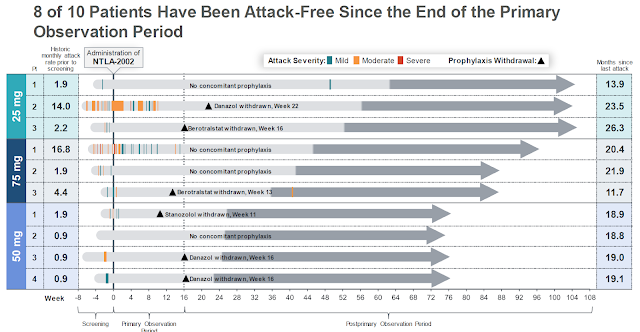
Intellia Therapeutics is about to unveil phase II data on NTLA-2002 at the end of the month.  NTLA-2002 aims to be a one-time treatment for hereditary angioedema (HAE). Prior phase I data looked intriguing with all 10 subjects becoming essentially attack free in the months following (1-time) drug administration and safety findings limited to around the time of treatment.

Still, the study involved too few patients for too short time to clearly define the commercial product in terms of dose, safety, and efficacy (including durability).


HAE is a rare disease with an estimated incidence of 1:10000 to 1:50000 depending on geography. These angioedema attacks are characterized by tissue swelling due to the influx of liquid into tissues through leaky vasculature as a result of bradykinin generation.  With few exceptions, they occur in people due to their genetic lack of C1 esterase inhibitor function.   HAE must be differentiated from allergic edema and as such is not responsive to antihistamines or corticosteroids.

In addition to outwardly visible soft tissue swelling, e.g. of the lips and hands, it can also involve internal systems like the abdomen and lead to excruciating pain.  Suffocation from laryngeal edema is probably the most feared disease manifestation.  It is therefore not surprising that many patients become depressed, stop engaging in normal daily activities to avoid anything that may set off attacks, including stressful situations, physical activity and injury (including surgery). 

Rapid progress in the understanding of the biology behind HAE has resulted in a number of treatments for on-demand and prophylactic uses and significantly improved the outlook for patients.  Still, there is widespread dissatisfaction with the incomplete protection and requirement for regular drug administration of current prophylactic treatments while the utility, convenience, side effects and even embarrassment that come from taking on-demand drugs is being questioned.

Switching between drugs and treatment approach is common and with costs often on the order of $500,000 per annum, access can be a real issue causing additional anxiety.


Enter NTLA-2002

NTLA-2002 promises to address all these challenges. 

That’s a bold statement, but the phase I clinical data provide hints that this could become reality, commercially in 2027 if you are living in the US or even earlier if you decided to and qualified for the global pivotal clinical trial that has just commenced.

NTLA-2002 is a CRISPR-based genome editing treatment that permanently and selectively disrupts the KLB1 gene in liver hepatocytes.  KLB1 codes for plasma prekallikrein (PKK) which is a critical component in the kallikrein-kinin inflammatory system.  Importantly, there are people that naturally lack plasma PKK (Fletcher’s syndrome) or another key component, Factor XII, and these appear to be perfectly healthy.  They are typically only identified by coincidence following routine lab tube tests showing prolonged activated partial thromboplastin time without an actual negative impact on bleeding or otherwise in the natural context.  Deleting KLB1 in the liver should therefore be safe. 

NTLA-2002 comprises of a messenger and guide RNAs entrapped in liposomal nanoparticles (LNPs) similar to the covid mRNA vaccines. Following one-time intravenous administration, these traffic to the liver hepatocytes where the guide RNA directs the CRISPR Cas9 enzyme to disrupt the KLB1 gene. 

Such a formulation already exists commercially in the form of ONPATTRO.  ONPATTRO is an RNAi therapy that is administered every 3 weeks.  Similar to the phase 1 study of NTLA-2002 (Longhurst et al 2024), transient immune suppression (corticosteroids, antihistamines) is practiced around the i.v. administration.  The great thing about NTLA-2002 is that the side effects from this procedure are well recognized and managed and would only present once- if at all.

As mentioned above, all10 subjects in the dose-ranging phase I study of NTLA-2002 have essentially become attack free once the medicine had a chance to do its work, destroy hepatocyte KLB1 and normalize the kallikrein-kinin-system.  This indicates that after the optimal dose has been found, a good number of HAE patients may go on with life and forget about their disease!  So patients may not only enjoy the best efficacy of any HAE treatment, they would only have to take it once.


The phase II study results will more than triple the number of patients that have been (hopefully successfully) exposed to NTLA-2002 and thus provide a good basis for the dose chosen to undergo confirmatory phase 3 testing.  Based on recent statements, the company will select the 50mg dose which in the phase I study gave -88% plasma PKK reduction, a level well above the -45% reduction where HAE attack rates start to drop off precipitously (Riedel et al 2024).   

For those that continue to experience a rare attack, it may be possible to give another dose of NTLA-2002.  Data from another (monthly administered) antisense oligonucleotide therapeutic (donidalorsen) targeting the same PKK gene indicate that attack rate reduction and PKK inhibition are tightly correlated (Riedel et al 2024).  It is therefore conceivable that once plasma PKK drops below a critical concentration in the blood, swelling attacks are virtually eliminated.  A presentation at the upcoming ACAAI meeting by the sponsor of donidalorsen, Ionis Pharmaceuticals, should further shed light on this.    

Medical innovation is costly and NTLA-2002 which promises to be the second approved CRISPR genome editing therapeutic following Casgevy for sickle cell disease will be no different.  Given the rarity of HAE, it would not be surprising if it cost 2 to 3 million USD for treating a patient.  This compares to other medications in the space, including Cinryze or Takzhyro, which often carry annual price tags exceeding $500,000.  Sure, healthcare administrators are likely to throw up their hands and have sticker shock, but simple math shows a one-time treatment to be a real money saver for patients that have decades of disease-free lives in front of them. 

Disclosure: this is not medical advice. Always talk to your HAE specialist doctor first before making a treatment decision.

Monday, November 14, 2022

Ionis Widens Its Modality Horizons

Over the weekend, blue chip antisense oligonucleotide company Ionis and genome editing competitor Intellia presented data on targeting prekallikrein (PKK) for treating hereditary hemeangioedema (Ionis donidalorsen here, Intellia NTLA-2002 here).

Using CRISPR Cas9 endonucleolytic disruption of the KLKB1 gene coding for PKK following LNP delivery, Intellia came out as the apparent winner in this showdown.  Not only did they demonstrate more pronounced PKK inhibition, but also more consistent elimination of debilitating attacks characteristic of the disease.  Moreover, by exploring less frequent antisense oligonucleotide administrations despite suboptimal low -60% knockdown, Ionis indicates that it is worried about the safety and tolerability profile of donidalorsen. 

Whether reversible approaches like antisense and RNAi or irreversible approaches like CRISPR gene disruption will ultimately prevail in the HAE race remains to be seen and will likely be decided by the safety of suppressing PKK expression over the long-term. If there is an overshoot of CRISPR-mediated gene disruption that would e.g. result in blood clotting abnormalities, even for a subset of patients, the field would be wide open for reversible methods.  

Ionis invests in genome editing

But whether that will be antisense remains to be seen.  Especially for targets in the liver, RNAi currently clearly rules the land for gene knockdown: highly potent, titratable and reversible knockdown with 5 years counting without a notable setback, especially related to off-target toxicity.  By contrast, Ionis is being held back by persistent safety issues as it has been beating a dead horse with its phosphorothioate-based backbone chemistry although it appears to be finally weaning itself off with chemistries such as the Mspa backbone.

So it is probably the hope of leap-frogging the RNAi competition by adopting genome editing as Ionis today announced that it was partnering with CRISPR genome editing company Metagenomi.  The HAE data comparison could not have come at a more opportune time.  

One declared aim of the investment in genome editing is life-cycle management of existing franchises.  In the liver, these franchises (TTR amyloidosis, ApoC3, PCSK9 etc) are currently and in the foreseeable future being dominated by RNAi despite Ionis’ heavy investments, so it clearly makes sense to amortize its investments in disease-specific market research, commercial infrastructure and clinical trial experience to accelerate the success of a more promising approach. 

TTR amyloidosis is a great example where even GalNAc-conjugated follow-on antisense compounds are unlikely to challenge Alnylam’s suite of RNAi triggers.  Also due to this dominance, it makes less sense for Ionis to develop an RNAi competitor drug despite its access and now actual adoption of this modality for targets in the muscle.  But as TTR shows, other genome editing companies are already competing for some of these targets so it won’t be all that simple trying to leap-frog RNAi and Alnylam like that.


The rise of the multi-modality oligonucleotide therapeutics companies

After straight-forward antisense for gene knockdown and then splice modulation, with the recent adoption of RNAi and genome editing, Ionis is rapidly expanding its oligonucleotide modality toolbox.

In fact, it is becoming a little bit like smaller competitor Wave Life Sciences which has been practicing all types of antisense (knockdown, splice modulation, more recently RNA editing) and RNAi using a bewildering mix of chemistries.  Not only are they burning through cash as if there was no recession and inflation problem, I never liked that because clinical failure after failure (esp. minute target engagements at best) suggest that the company is stretching itself too thin.

By comparison, Ionis, with $2 billion in cash and a more experienced and bigger operation is a different beast altogether and may be able to pull it off, at least on a technical level.  However, instead of spending $80M in upfront alone on a modality that is somewhat further removed from its traditional chemistries (longer mRNAs, LNP delivery for CRISPR), it could have much more synergistically leveraged its investments in chemistry and delivery by investing that same amount in the ripe-for-the-picking RNA editing.  Accordingly, $80M is more than the market cap of my currently favourite RNA editing investment, ProQR.

I’m sure the opportunity to expand druggable targets and indications by applying existing delivery technologies and chemistry know-how by adopting RNA editing is not lost on RNAi players such as Alnylam and especially Arrowhead Pharmaceuticals.  Arrowhead in particular, having scooped up the RNAi assets of Novartis and Roche for peanuts has demonstrated an ability to recognize and act on similar opportunities.

Thursday, August 9, 2018

TEGSEDI worse than tetramer stabilizer according to newly released EMA document


When Ionis presented data from the phase III NEURO-TTR study last year in Paris, they clung to numbers close to ‘zero’ to make the point that its TTR-lowering antisense drug TEGSEDI (aka inotersen) was 'stabilizing' and ‘halting’ disease progression.  According to a newly released document by the European Medicines Agency (EMA), this, however, does not seem to be truthful: TEGSEDI only delayed the progression of polyneuropathy compared to placebo, but patients on placebo still got worse over the 15 month study period.   

This not only widens the apparent distance in therapeutic efficacy between TEGSEDI and RNAi competitor ONPATTRO (which improved on disease parameters), but even puts it apparently behind generic tetramer stabilizer diflusinal.  Diflusinal also happens to be much better tolerated than TEGSEDI which has been plagued by platelet and renal issues.

EMA document suggests numbers were inflated

According to the ‘Summary of Product Characteristics’ document issued by EMA following its approval of antisense drug TEGSEDI for the treatment of TTR-related polyneuropathy, mNIS+7 after 15 months increased by +11 points vs 25 points for placebo.  By contrast, Ionis Pharmaceuticals (which has now licensed the drug to subsidiary Akcea Therapeutics) claimed a mere +5 point progression.  Curiously the placebo values haven’t changed.

This compares to an increase of +9.2 for diflusinal over 24 months and -6 for ONPATTRO over 18 months.

Similarly, on another measure of disease progression, the Norfolk Quality of Life questionnaire increased by only +0.99 per the Paris presentation last year, but by +4.38 per the EMA document.  Once again, the placebo numbers remained essentially the same.

Finally, what had been heralded as a TTR knockdown close to that of ONPATTRO, a median 75-79% TTR reduction vs 82% for ONPATTRO, now looks much different when considering that mean knockdown was only 68-74%, possibly reflecting the poor tolerability profile of TEGSEDI and missed doses.

I am sure that Akcea and Ionis will have eloquent explanations for the discrepancies which just so happens to  conveniently and selectively favor their drug when analyzed by them.  These new numbers, however, are not just minor adjustments, but represent substantial changes to the TEGSEDI narrative.

It should be noted that it is likely that tetramer stabilizers and TTR-lowering agents will be taken together by many patients.  The relative efficacy and tolerability numbers, however, put TEGSEDI in a very weak position with regard to direct competitor ONPATTRO, also as it comes to reimbursement decisions. 

ONPATTRO heart aches

In the phase III APOLLO study, patients treated with ONPATTRO were numerically less likely to die compared to those on placebo (~50% reduction in death rate).  Following the Paris meeting, I came away with the impression that the deaths in the ONPATTRO arm were largely due to cardiac failure and infection.

According tothe New England Journal of Medicine publication on the study, this seems to be a misunderstanding as infection was a main cause of death in the placebo arm while all deaths in the ONPATTRO arm were cardiac.  As has been pointed out by others on Twitter (@ionisdisrupts and @artkrieg), this could raise questions in the minds of regulatory bodies whether to include TTR cardiomyopathy applications on the label despite of ONPATTRO improving on related secondary endpoints.

In fact, considering that the recent study design agreement with the FDA for follow-up drug ALN-TTRsc02 also focuses on polyneuropathy endpoints, it is all but official that the label for the upcoming approval of ONPATTRO will be targeted at the polyneuropathy population only and that separate trials will have to address the patients mainly suffering from cardiomyopathy symptoms.

Disclosure: short AKCA, long ALNY.

Tuesday, May 8, 2018

FDA Cautious on Triglyceride-Lowering Antisense Drug WAYLIVRA


Today, the FDA released review material for the Advisory Committee Meeting on Volanesorsen (trade name WAYLIVRA) this Thursday.  WAYLIVRA has been developed for the lowering of serum triglyceride level in patients with a genetic form of severely elevated triglycerides, familial chylomicronemia syndrome (FCS).  Briefing Docs provide valuable insights as to the safety of drug candidates which are often glossed over by sponsor companies leading up to such regulatory events.

Echoes of KYNAMRO

The last time we had this opportunity in the phosphorothioate antisense space was in 2012 when the subject was the ApoB-lowering KYNAMRO.  Like KYNAMRO, WAYLIVRA is a second-generation 2’-MOE phosphorothioate-backbone oligonucleotide that was given at high doses in the registrational trials (200mg for KYNAMRO, 300mg for WAYLIVRA). 

It should therefore not come as a surprise that the safety and tolerability of WAYLIVRA was quite poor. In particular, not only did the at times drug-induced severe thrombocytopenia cause considerable bleeding concerns, the sponsor Akcea and parent company Ionis Pharmaceuticals have no idea about how to mitigate such risk.  Dose adjustments and increased platelet monitoring apparently did not change the thrombocytopenia risk substantially and apparently are still being made to this date without much rhyme or reason.   

In addition, there were the flu-like symptoms, liver enzyme elevations, renal tox, even a case of anaphylaxis causing around half of what should be highly motivated patients with FCS to drop out from the clinical studies.

This time it’s potent though

Fortunately, unlike KYNAMRO, WAYLIVRA has robust potency.  For those that managed to stay on the 300mg weekly dose, serum triglyceride lowering in excess of 70% was seen (reflecting ~90% target ApoCIII-lowering; cf. ~20% target-gene lowering with KYNAMRO).  Even the FDA had to acknowledge here that this is an unparalleled achievement.

But the positives end here already, with the FDA noting that in contrast to Akcea’s/Ionis’ claims there is no reliable reduction in measures of actual morbidity of FCS patients such as pancreatitis attacks, abdominal pain, and general well-being.  In fact, on most measures there was not even a numerical benefit favoring WAYLIVRA.  This, the FDA agrees, is also a function of the low number of patients available for such ultra-orphan disease studies.

The FDA admits that lowering of the biomarker serum triglyceride, even to much lesser extents than WAYLIVRA, has formed the basis for approving other drugs for hypertriglyceridemia-related disease.  In light of this, I expect WAYLIVRA to receive a favorable panel vote on Thursday on the condition that access to WAYLIVRA is strictly limited and safety tightly monitored (à REMS).  It apparently scares the FDA that while FCS has an estimated prevalence of 1 to 2 in a million, up to 1 in 600 have very high triglycerides resembling FCS.

Having said this, I am not quite clear why there should be different risk/benefit threshold with regard to the triglyceride-related morbidity for FCS and conditions resembling FCS as long as these other patients have exhausted options to treat the underlying causes for their particular hypertrigliceridemia.  As such, I believe the market potential estimates ought to be dramatically increased for WAYLIVRA.

WAYLIVRA competition

It is already clear, however, that WAYLIVRA will have a limited shelf-life.  Hot on its heels is a GalNAc-conjugated in-house competitor (ApoCIII-LRx) which has shown triglyceride lowering approaching that of WAYLIVRA, but at 5-10x lower dose levels, less frequent dosing and, crucially, with supposedly none of the worrisome safety issues of WAYLIVRA.  A phase III study of that compound is planned for 2019.  By that time, an RNAi GalNAc compound by Arrowhead should also be well in the clinic setting up ApoCIII-lowering to become a substantial market for oligonucleotide therapeutics by expanding the market well beyond the FCS population.   

Friday, April 20, 2018

Ionis Re-Sells Neuro Assets to Biogen for $500M and Improved Terms


This morning, Ionis Pharmaceuticals rattled my world by announcing an update to its neuro parnership with Biogen.  After recovering from a shock reaction thinking that $6B market cap Ionis Pharmaceuticals had sold the rest of its crown jewels in the neurological space for $500M and little more (upfront and premium paid by Biogen for the stock consideration), I noticed that this was merely the renewal of an earlier partnership that was about to expire in 2019.

Clearly, Biogen was eager to continue the partnership with sales gushing in from its first neurological disease partnership candidate, SPINRAZA for the treatment of spinal muscular atrophy, and other neuro antisense programs such as the one for Huntington’s Disease showing great clinical promise.  

As time was running out on the previous deal, Biogen wanted to buy itself additional time to be able to pick the right neuro antisense candidates.  In return for the 10-year extension, Biogen will now have to make its picks already by the end of IND-enabling studies instead of with clinical proof-of-concept.  This makes it likely that as Ionis can be expected to churn out IND-enabling studies one after another, quite a few candidates will slip by that deadline and become wholly owned by Ionis Pharmaceuticals.

Equally exciting is the fact that despite the earlier exercise term, instead of earning single digit to midteen royalty on drug sales, Ionis now stands to receive midteen to 20% royalties on sales.

On the downside, in the wake of the latest Akcea deal re-arrangements and this neuro deal extension which effectively shuts off other suitors to become owners of a significant part of the Ionis neuro franchise, we can wave good-bye to any hopes of a quick buy-out.  More likely, Ionis will largely remain a royalty play for the next 8-10 years by which time it surely will have a new CEO.  And then Biogen.

Saturday, January 27, 2018

Biotech M&A Heating Up, But Only One Oligo Company In-Play

The M&A activity in biotech has picked up additional steam this week with Celgene buying CAR-T player Juno Therapeutics for $9B and Sanofi buying blood disorder biotech Bioverativ for $11B (the latter shining a positive light on the recent Alnylam-Sanofi deal restructuring). And according to insiders, an unusually high number of additional deals are being finalized following the JP Morgan conference.

RNAi, ASO, genome editing, gene therapy platforms not in-play

Although another CAR-T player, Kite Pharmaceuticals, got acquired late last year by Gilead for $12B and both Juno and Kite had been billed as CAR-T platform plays, these acquisitions are unlikely to read through to gene-targeted platform technologies that are more broadly applicable across disease areas.  These include RNAi, antisense oligo, genome editing, and traditional gene therapy.

This is because the CAR-T acquisitions were driven by the desire of the acquirer to add near-term revenue growth to the topline while strategically positioning themselves in the blood cancer arena.  Of course, the underlying CAR-T platform technology will continue to be further utilized, but it is the near-term revenue streams from their drug sales that justify the multi-billion price tags to the bean-counters inside these companies and like-minded investors.  

These deals therefore do not signal to me a willingness of Big Pharma and Biotech to shell out $3B or so that they would have to acquire companies like Editas, Sangamo, and CRISPR in genome editing or Arrowhead and Dicerna in RNAi in the current marketplace.  This may also be informed by their experience in the RNAi space a decade ago when companies like Merck and Roche made large investments in the platform only to literally die in their hands while it was much smaller, nimbler pure-play companies that have now advanced the technology to commercial maturity.   

Also, more so than a decade ago, Big Pharma/Biotech has adopted a model where they focus on a few disease categories such as oncology, cardiometabolic, or the CNS, in a modality-agnostic fashion.

Target-based technology access 

Accordingly, when technology access for early-stage product development is sought, large companies prefer to partner on a limited number of targets.  This is illustrated by a range of deals over the last year or so such as in the RNAi (Dicerna-Boeheringer for NASH, Arrowhead-Amgen for cardiovascular disease) or genome editing (Sangamo-Pfizer CNS deal) spaces. 

In some cases, such deals may cover multiple targets in the same tissue using the same delivery technology.  These include deals such as the one by Editas Medicine with Allergan in ophthalmology.  

And only in rare cases such as the partnership between CRISPR Therapeutics and Bayer are multiple targets spread across multiple disease types (blood disorders, blindness and congenital heart disease) and may be largely unknown at the signing of the deal.  Such multi-target deals, however, have become less likely as the cost of capital for raising money on the Street has gotten lower and the market caps of these companies commensurately have increased.  At that point, it is advisable for the platform company to forego upfronts and near-term milestone payments that pale relative to their market caps and instead retain maximal low-hanging-fruit target-picking flexibility. 

Only Ionis Pharmaceuticals in-play

According to the above, only Alnylam and Ionis Pharmaceuticals with multiple important drug candidates about to be approved over the next 3-4 years would fulfill the requirement for adding needle-moving near-term revenue growth to a large acquirer.  With a $13B market cap already and a power-hungry management to build the most successful biotech company in history, I do not see large companies ultimately offering the ~$40B it would likely take for a successful bid for the company.

By contrast, Ionis Pharmaceuticals with a market cap of $6B and a likely more robust stream of oligo drugs hitting the market (Spinraza for SMA last year, Inotersen for TTR amyloidosis and an ApoCIII-lowering drug this year alone) appears to me a more realistic target despite its history of engaging in multiple partnerships with a number of large pharmaceutical companies, partly in an effort to make it a less appealing takeover target.

The likely acquirer would be Biogen, of course.  When Ionis and Biogen initially partnered to address in early 2012 on what has become the SPINRAZA blockbuster, Biogen quickly learned how powerful and widely applicable antisense technology could be for addressing CNS disorders.  In less than 2 years, the companies would sign another 3 partnerships ultimately covering numerous targets in the CNS which is where Biogen has gone on to firmly stake its future on.  

As we know today, giving away so fast so much of the upside to the CNS franchise was a mistake on Ionis' part as the CNS has emerged as the area of highest value to the current antisense platform full-stop.  SMA was only the beginning and diseases like Huntington’s, Alzheimer’s, ALS- you name the neurological disorder- suddenly seem within targeting reach.

Still, adding up the royalty payments and milestone payments for such licensed products would add up quite a bit.  In fact, SPINRAZA payments alone would justify Ionis' current market cap as it is growing into a multi-billion annual revenue drug and cornerstone to Biogen's SMA franchise.

Because other Ionis-licensed CNS product candidates would also address the root causes of diseases, they would similarly lend themselves to become cornerstones in new CNS franchises that Biogen is targeting, e.g. ALS.

So when Biogen’s CEO calls M&A valuations being reasonable and not over-stretched as frequently asserted by his colleagues and then goes on to mention recent CNS breakthroughs in SMA (à Spinraza), Huntington’s (watch out for knockdown data from phase I/IIa late Feb/early March), migraine, and multiple sclerosis, I cannot shake the feeling that Ionis will be the target of the big M&A move that everybody is expecting Biogen to make.  $20B and we have a deal. 

it could mean that the company that tried its best in the oligo space not to be an M&A target, Ionis, could be one of the next to be acquired.  

Wednesday, November 29, 2017

Non-RNAi Oligonucleotide Therapeutics Stocks

In the final instalment of the stock market-focused mini-series, I will turn my attention to the non-RNAi Oligonucleotide Therapeutics sector.  With last year’s approval of EXONDYS51 (Sarepta) and SPINRAZA (Ionis/Biogen), two highly impactful exon-skipping drugs, Oligonucleotide Therapeutics has finally gained widespread acceptance as a mainstream drug modality and arguably de-risked biotech investment vehicle.

Ionis Pharmaceuticals
This is a stock where tremendous value is waiting to be unlocked.  All it takes is a change in corporate strategy.  At present, Ionis needs ~4 groundbreaking medicines for every one developed by more traditional biotech companies such as Alnylam for it to reap similar market cap appreciation.  This is because it has readily given away ownership over its drugs regardless of needs, be they financial or related to a lack of disease expertise.

A striking recent example of this is the creation of Akcea as a subsidiary tasked with the commercialization of cardiometabolic drugs discovered by Ionis.  In addition to instantly giving up 1/3 of its ownership through an IPO of Akcea at very low prices, Akcea also partnered much of its assets with Novartis, thus further diluting Ionis’ ownership.

So what should have easily been a value of $3-4B to Ionis on the eve of the approval of the first important cardiometabolic antisense drug (triglyceride lowering Volanesorsen for FCS), Ionis’ stake in Akcea now probably accounts for barely $1B of Ionis’ ~$6.5B market cap.

To add insult to injury, Ionis this summer purchased close to $100M worth of real estate related to their R&D and manufacturing operations. $100M of valuable drug development monies!  This apparently they consider a better prospective return on investment than keeping full ownership of the cardiometabolic franchise or spending a few millions to just buy the marketing muscle they keep whining about lacking.

Not all may be lost though.  There are signs that Ionis, and perhaps even the CEO (Stan Crooke) himself who had been propagating the marketing-is-evil myth to justify Ionis’ business strategy, has started to realize that they need to change their ways to keep up with the market capitalizations of peers, including organizations driven by strong platform technologies (etc Alnylam, Regeneron).  With Brett Monia assuming the role of COO and Crooke’s right hand Lynne Parshall stepping aside, we are in the midst of a change of guards in this company.  But don’t hold your breath given that Dr. Monia, as a founding member (in his mid-20s!) of Ionis, still ought to be considered a part of status quo until proven otherwise.

Inotersen as an inadvertent opportunity

Just as Ionis was looking to be locked into its royalty play model with Volanesorsen (à Akcea) and GSK-partnered Inotersen for TTR amyloidosis as the next approvals on the 2018 horizon, GSK handed back full rights to Inotersen to Ionis.  Suddenly, Ionis is in full control of a drug competing for a market currently supporting ~$10B in market capitalizations between Ionis and Alnylam.  With peak sales expectations (even without the wild-type TTR cardiomyopathy opportunity) topping $5B, this number should only grow as the commercialization phase begins.   

If Ionis is smart, they will retain most marketing rights to Inotersen as any misstep by Alnylam around its first-generation TTR drug Patisiran could provide Ionis with an unanticipated upside (as an investor, I always look for the upside compared to market expectations).  Also, learning the TTR marketing ropes now will prepare them for the battle of the respective next-gen drugs between Alnylam and Ionis as this is where the TTR game will be won in the mid-term.

Chances are that Ionis will find commercialization less daunting and even rewarding, including to the R&D staff getting closer to the patient experience.  They should also then realize that through the exposure to the patients and medical community, they will gain a better understanding of the demands on follow-on products.  Drug discovery and commercialization in the orphan era is certainly a virtuous circle and Ionis may be the last one to find out.   

Better late than never.

In the interim, look to clinical results, especially from partnered CNS franchise drugs (Huntington’s, ALS) as tradable catalysts.  With a position in IONS that is approaching the size of my largest holding (ARWR) following the recent mini-sell-off in biotech, I also speculate that as the commercialization of Inotersen approaches and the market understands the impact of the SPINRAZA loading dose issue on sales numbers, IONS should be a solid outperformer in the biotech market. 

Strong buy.


Wave Life Sciences
I consider the CNS where currently the most value is bottled up in antisense therapeutics whereas in the liver, RNAi in general holds the edge in terms of safety and convenience (long-term I believe the battle will be won based on off-targeting, one gene at a time).

Since Ionis has given up substantial rights to its CNS drugs through its broad partnership with Biogen and the next hot CNS candidate is partnered with Roche (for Huntington’s), consider Wave Life Sciences not primarily as a stereopure ASO investment, but an ASO CNS play with the company likely retaining significant commercialization rights.

Of most interest to investors should be its two early clinical-stage drug candidates specifically targeting the mutant alleles in Huntington’s disease.  Initially, I had been skeptical about the actual need for targeting mutant huntingtin specifically given that we are unlikely to see the 90%+ type knockdowns that *could* spark safety concerns if the degree of knockdown also applied to wild-type huntingtin. The observation by Ionis, however, that ASO knockdown in the various areas of the brain is uneven and that the deep brain structures thought to be most involved in Huntington’s pathology may be some of the least sensitive to ASO knockdown made me realize the potential value of the allele-specific approach.  This is because in order to drive substantial knockdowns in the deep nuclei, the corresponding drug doses might lower wild-type huntingtin to very low levels say in the cortical neurons.

Still, since the huntingtin knockdown concern remains theoretical and is largely based on animal models where huntingtin has been knocked out since around birth (please correct me if wrong), I still consider the allele-specific approach as a needlessly complicating measure.

With a healthy market cap of $1B, I feel that WVE is a very interesting ASO investment for the long-term, but that price-wise better buying opportunities could be ahead for this clinically nascent company.  Also, I am skeptical about Wave’s unforced fast-follower strategy and would like to see first-in-class candidates entering clinical development.

And yes, if stereopure chemistry can get around some of the safety issues of phosphorothioate oligos that will likely remain relevant (due to dose levels) for systemic applications outside the liver, additional competitive value is to be realized there.

Disclosure: no position as of November 29, 2017.

Sarepta Therapeutics
One of the fast-follower indications pursued by Wave is exon skipping for DMD- the domain of Sarepta Therapeutics.  Soon, Wave may not find themselves chasing a modestly potent EXONDYS51 and related PMO-chemistries for other exons, but what could emerge as a much more exciting exon skipping chemistry for the muscle: peptide-conjugated PMOs (PPMOs) which has recently cleared the preclinical safety hurdle to enter clinical development.

PPMOs easily outperform simple PMO chemistry in terms of potency, but arginine-rich precursors have suffered from unacceptable preclinical toxicity.  Sarepta now claims that it has found PPMOs with increased potency (see slide 16 of this presentation), but a much better safety margin.

If first clinical biomarker data support substantial exon skipping, then I believe Sarepta’s control over the DMD market will be cemented. Currently it somewhat hinges on confirmatory clinical evidence of therapeutic benefit for their mildly active PMO exon skippers entailing considerable clinical and competitive risk.  Add to this a number of other modalities in the quiver to treat DMD which Sarepta has acquired rights to more recently, Sarepta looks like a Vertex-/Alexion-type single orphan disease-focus play in the making.  Think $30-40B market cap (now: $3.6B).

Disclosures: long SRPT.

Regulus Therapeutics
After the miR-122 desaster in HCV and new management in place, it looks like a fresh start for Regulus Therapeutics.  The new mantra is quality over quantity as Regulus and partners alike have axed a number of microRNA Therapeutics programs.

As a result, it is clinical data from two development candidates that will most likely determine the shareholders’ fate in the years to come (note: I still think there could be tremendous opportunity in microRNA Therapeutics from addressing complex neurological diseases like Alzheimer's, but his seems of less interest to Regulus currently).  

One is RG-012 targeting miR-21 for the treatment of Alport Syndrome, an orphan disease impacting kidney health.  The advancement of this program into patients was recently slightly delayed by a few months after insights from a natural history study of the disease made the company re-focus on only X-linked cases of the disease for purposes of better stratification.

Instead of considering the change in study design as increasing the quality and therefore odds of success for the study, the market penalized this 3-6 month delay by selling off the stock from $1.4 to sub $1.  I call this a buying opportunity.

Regulus Therapeutics stands out from the oligonucleotide therapeutics crowd in that also its second candidate, RGLS4326 for autosomal dominant polycystic kidney disease (ADPKD) now in the clinic, is also targeting cells in the kidney.  I don’t think that this was by design, but the result of the liver programs falling by the wayside for various reasons.

While the kidney is certainly an interesting organ for oligonucleotides due to its high exposure to this class of molecules, it is a complex organ and not all that much is known about cell type-specific pharmacodynamics outside the proximal tubule epithelial cells.  Add to this the uncertainty about the relevant therapeutic cell types that need to be targeted for a disease like Alport’s, and you end up with considerable target risk around these programs so that in the end we largely have to rely on the mouse models here being relevant to human disease.  


I am long RGLS given (1) that Alport Syndrome makes for a nice orphan market opportunity with some important groundwork laid by Regulus itself,  and (2) the fact that sentiment around Regulus can only get better and if targeting miR-21 does not have a measurable on fibrosis in the kidney, maybe it’s time to give up on microRNAs for therapeutics altogether.

Friday, May 27, 2016

What the thrombocytopenia findings mean for Ionis Pharmaceuticals

Yesterday, Ionis Pharmaceuticals disclosed that severe reductions in platelets had been observed in phase III clinical trials of both IONS-TTRRx for the treatment of TTR amyloidosis and IONS-ApoCIIIRx for conditions related to highly elevated triglycerides.  Severe platelet reductions are dangerous since it can lead to occult, uncontrolled bleeding and poor blood clotting following injury.

Since the conference call was a PR disaster as the CEO of Ionis has major issues with speaking his scientific mind, and since competitor Alnylam has seemingly become the original source and interpreter of the Ionis thrombocytopenia issues (one wonders how they come into possession of these Ionis trade secrets...), I thought it may be useful to briefly come out of blogging hibernation and lay out my thoughts about what these events mean for the technology and the company.

Thrombocytopenia likely limited to systemically administered, unconjugated PS-oligos >200mg per injection

As a hematological abnormality that has historically been observed with phosphorothioate (a ‘sticky’ chemistry) oligonucleotides when given at high doses (>200mg/injection)  I’ve always considered it likely that such thrombocytopenia will be associated with measures of plasma exposure of the oligonucleotides.  Notable examples for thrombocytopenia with phosphorothioate oligos include the DMD exon skipper drisapersen by Biomarin/Prosensa (6mg per kg per week, i.e. around 300mg/week for 50kg boy) and telomerase inhibitor imetelstat by Geron (~10mg per kg per week, i.e. around 700mg/week for average adult).  Actually, isn’t it ironic, or maybe even curious that imetelstat is being developed for conditions where elevated thrombocytes is the problem (see related blog entry)???

Consistent with this notion, there was a study by Flierl et al. in 2015 that looked at the mechanism of platelet activation which may lead to platelet consumption and explain lowered thrombocyte counts.  Without going into the details of the mechanistic aspects of the study, the authors find a strong correlation with peak plasma exposure (c max) of the oligonucleotides and platelet activation.   

So why hasn’t Ionis seen severe cases of thrombocytopenia in the past (excluding use of PS-oligos in cancer patients which frequently suffer from potentially confounding bone marrow suppressions from other drugs)?  The most probable explanation is a) these events are quite rare events and b) that their experience with PS-ASOs at 300mg/week and above has been limited.  At 300mg and especially 400mg per week, safety has always looked a bit dicey such that the 300mg per week dose e.g. for TTRRx was only adopted after 200mg per week was not competitive with the knockdown results produced by ALN-TTR02 from Alnylam. 

Similarly, the initial studies with ApoCIIIRx did not include the 300mg per week dose and was adopted in favor of the very impressive triglyceride reductions seen at doses higher than 200mg.  Usually the dose escalation of the prototypical Ionis phase I studies involved 50, 100, 200, then 400mg per week with 400mg per week never being chosen for the phase II and/or pivotal studies.

What I find highly interesting is that the pharmacokinetics data from the healthy volunteer study of ApoCIIIRx reported by Graham and colleagues in 2013 (see only Table IV) reported a non-linear, 4.5x increase in cmax when doubling the dose from 200mg to 400mg per week.  This could mean that at doses of 200mg per week and higher, the risk of severe thrombocytopenia is dramatically elevated by going past the threshold where platelets become critically activated (à clotting cascade).  
If the cmax theory holds true, then the following should be the impact of the new findings on the Ionis platform.  The summary takes into account the clinical observations by Ionis that the platelet reductions are reversible upon stopping dosing and can be prevented and also treated by steroid use (just as ALN-TTR02 involves steroid use):

1)      Unconjugated, systemically administered antisense at 300mg per week and above (incl. phase III assets TTRRx and ApoCIIIRx): need for tight platelet monitoring.  May involve temporary halt of studies to amend protocols.  Commercially, need for tight platelet monitoring could be a problem for less severe diseases due to convenience and competitive issues.  

Note that for all the liver-targeted programs, backup GalNAc-conjugated versions are in development which should not suffer from thrombocytopenia (see below).  However, systemic programs targeting other tissues such as DMPKRx for myotonic dystrophy will have to be under continued scrutiny depending on the dose.

2)      Unconjugated, systemically administered antisense at 200mg and below per week and below: little impact.  Start collecting data more systematically to learn more about platelet interactions, otherwise no big impact.

3)      GalNAc-conjugated antisense: no impact. Essentially all the Ionis pipeline, including ApoCIIIRx, has been re-engineered for some time now to be GalNAc-conjugates.  This is because of their 10-100 fold increased potency over the unconjugated versions thus decreasing the doses to well below those expected to cause severe thrombocytopenia.  Even at the same doses, plasma exposures will be much reduced due to the rapid clearance into the hepatic compartment as demonstrated by Shemesh et al in one of the most recent publications by Ionis.  No thrombocytopenia events to my knowledge were seen with RG-101 (for HCV) by Ionis' 'satellite company' Regulus Therapeutics, where a up to 8 mg/kg of GalNAc-conjugated phosphorothioate oligonucleotide has been administered.

4)      CNS programs: no impact. Peak plasma exposures are insignificant for intathecally administered oligonucleotides as used in Ionis’ CNS franchise, a franchise which includes exciting drug candidates such as phase III asset nusinersen for the treatment of spinal muscular atrophy (SMA) and candidates for other severe neurodegenerative diseases.

In summary, the only programs which could be significantly impacted by the thrombocytopenia findings are the programs that target tissues outside the liver and which involve systemic administration.  The liver franchise remains intact especially with the new GalNAc versions although there could be some minor delays and increased competitive impact in those diseases that Alnylam is free to go after according to the Ionis-Alnylam IP agreements.  The important CNS franchise remains fully intact. 

Disclosure: long Ionis and doubled down yesterday.

By Dirk Haussecker. All rights reserved.

Disclaimer: This blog is not intended for distribution to or use by any person or entity who is a citizen or resident of, or located in any locality, state, country or other jurisdiction where such distribution, publication, availability or use would be contrary to law or regulation or which would subject the author or any of his collaborators and contributors to any registration or licensing requirement within such jurisdiction. This blog expresses only my opinions, they may be flawed and are for entertainment purposes only. Opinions expressed are a direct result of information which may or may not be accurate, and I do not assume any responsibility for material errors or to provide updates should circumstances change. Opinions expressed in this blog may have been disseminated before to others. This blog should not be taken as investment, legal or tax advice. The investments referred to herein may not be suitable for you. Investments particularly in the field of RNAi Therapeutics and biotechnology carry a high risk of total loss. You, the reader must make your own investment decisions in consultation with your professional advisors in light of your specific circumstances. I reserve the right to buy, sell, or short any security including those that may or may not be discussed on my blog.