Pages

Showing posts with label Shape Therapeutics. Show all posts

Saturday, April 29, 2023

Roche Impresses with Effective RNA Editing of Polyglutamine Repeat mRNA

Roche has shown interest in RNA Editing through its 2021 partnership with Shape Therapeutics.  The goal of this partnership was to use Shape’s AAV-delivered, DNA-directed RNA editing nucleic acids for neuroscience and rare disease applications.

Readers of this blog will know that I have not been a great fan of DNA-directed approaches to ADAR editing, not least because the expressed editing RNAs are unmodified.  This means that they do not benefit from chemistry to optimize efficacy.  In terms of specificity, the simple, but very effective strategy of modifying the base opposite non-target adenosines (e.g. 2’-O-methyl) to abolish off-target editing is not available to DNA-directed RNA editing.  

To compensate the efficacy disadvantage, the concomitant gene therapy-directed overexpression of ADAR enzymes has been attempted.  Unfortunately, this is a no-go since it causes extensive genome-wide off-targeting.  

It therefore comes as no surprise that Roche has also been evaluating synthetic editing oligonucleotides as revealed earlier this month in patent publication WO2023/052317A1.  This patent application addresses CAG/polyglutamine repeat expansion diseases such as Huntington’s disease, but also other neurodegenerative polyGln diseases including a number of the spinal cerebellar ataxias.  Since the number of polyGln repeats critically determines whether a person will manifest the disease and is correlated with protein aggregation, disrupting stretches of CAG-encoded uncharged glutamines with even a few positively charged, CGG-encoded arginines may stop the pathogenic process and is thus a highly attractive therapeutic hypothesis.

Beyond CAG triplett expansion diseases, similar logic may apply to diseases caused by repeat expansions in non-coding regions- as long as the repeat contains an ‘A’ such as in Friedreich’s ataxia (frataxin GAA repeat in intron 1).  Regardless of the specific disease-causing mechanism, disrupting the repeat is likely to be beneficial.  

While attractive in theory, I had been wondering how easy it actually would be to target these repeats by ADAR editing as the target sequence is quite unusual in its repetitiveness which may result in impenetrable higher-order structures.  The use of repetitive oligonucleotides as therapeutic agents is also unusual because of potential structural and manufacturing issues.  Finally, once one of the target adenosines has been converted to an inosine, the target mRNA sequence is altered (=mismatch) and consequently may become a weaker target site.

On the other hand, long repeats may turn out to be excellent targets in that they provide for a high local concentration of target sequence.

Actual data

Unfortunately, conducting casual molecular biology experiments in the basement of private homes is frowned upon in Germany and fraught with legal risks (this has to change), so it’s nice that Roche has actually conducted initial tissue culture experiments to find out about the practicality of the approach. 

Employing ~50-60nt long CUG repeats (the complement of CAG), their editing oligonucleotides were above the typical length of ~30nt as now generally practiced by the leading RNA Editing companies ProQR and Wave Life Sciences.  These were transfected into HeLa cells expressing ATXN3 mRNA with 21-22 repeat CAGs all in the apparent absence of ADAR overexpression.  

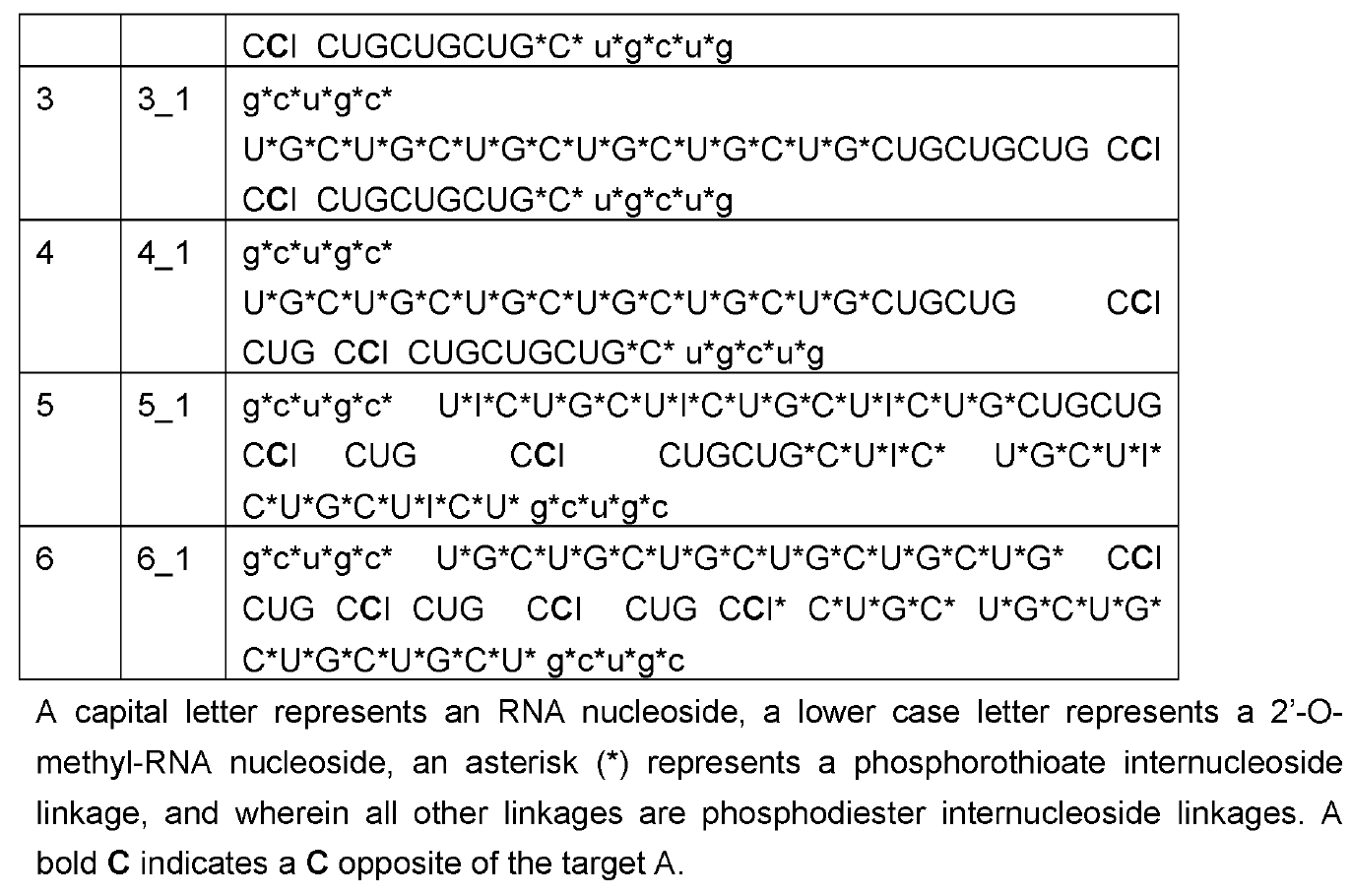
The oligonucleotides were modified with 2’-o-methyl only in the 5 nucleotides on the 5’ and 3’ ends each; phosphorothioation of the backbone was also practiced at the wings of the oligos, but extended further into the center than the 2'-o-methyls.  The central part consisted of pure RNA. 
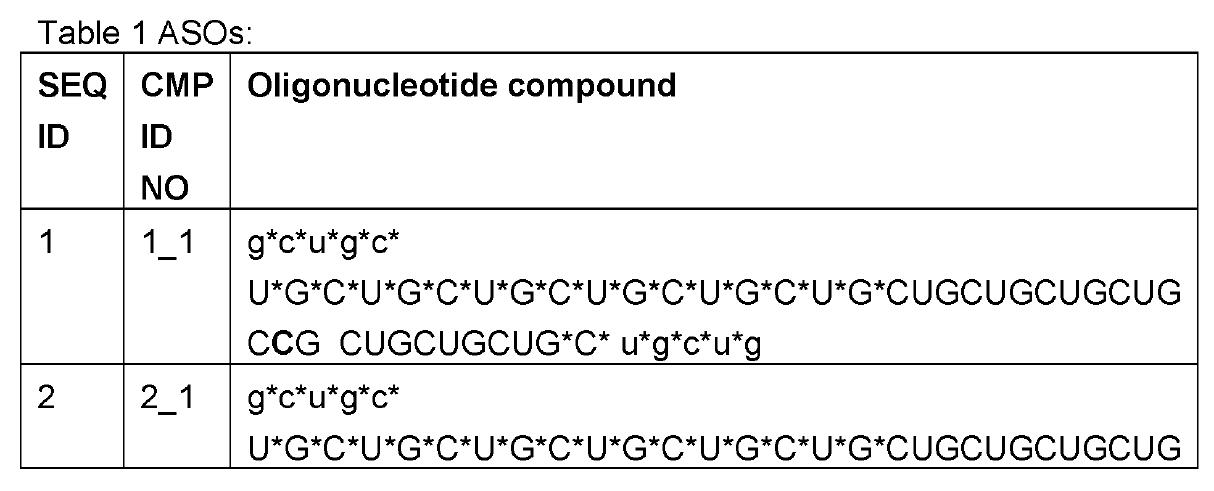


An orphan C was placed towards the 3’ end of the targeting oligo.  This creates a mismatch to the target A as is commonly practiced in the field.  Interestingly, an inosine follows 3’ of the orphan C and this is also practiced by some other companies as e.g. evidenced in last year’s high-profile paper on long-lived and potent ADAR editing in non-human primates by Wave Life Sciences in Nature Biotech.

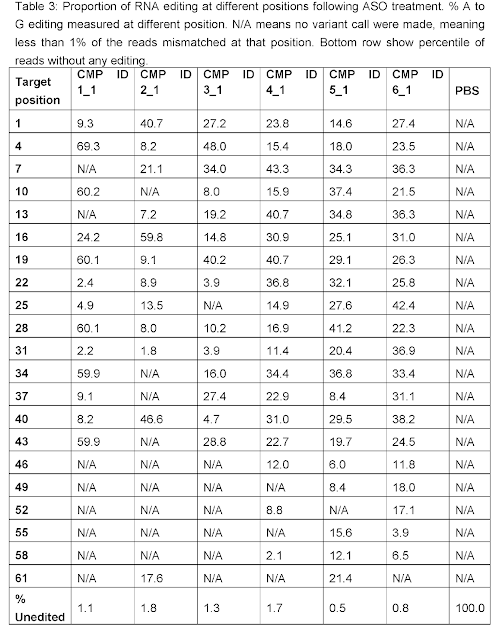
Remarkably, robust 20-50% AàI conversions were seen for many As in the ATXN3 CAG repeat with more pronounced editing towards the 5’ end of the repeat region consistent with the 3’ placement of the orphan C in the targeting oligonucleotide.  Moreover, less than 2% of the ATXN3 mRNAs was unmodified for each editing oligo.  If you consider that a huntingtin allele with say 33 CAG repeats does not result in Huntington’s disease, but one with 37 repeats typically does, you can imagine the impact that just a single or two successful editing events should have on pathogenicity of the resulting protein.

This experiment thus is an important de-risking step for RNA Editing in repeat expansion diseases and should whet the appetite of Roche which is already heavily invested in oligonucleotide therapeutics for Huntington’s through its collaboration with Ionis Pharmaceuticals (RNaseH mechanism), including research on improving the convenience and efficacy of intrathecal oligo administration.

As an investor in ProQR I was, of course, pleased to see that when discussing the prior art of ADAR editing in general, all 5 patent applications cited by Roche referred to ones controlled by ProQR. 

Looking forward to the next chapter in this story.

Thursday, December 15, 2022

GSK Partners with Wave Life Sciences for Access to RNA Editing

This week, we have seen further confirmation of the increasingly recognized value within the pharmaceutical industry of Oligonucleotide Therapeutics in general, and RNA Editing in particular.

In a landmark deal, GSK obtained an exclusive license from Wave Life Sciences to the RNA Editing industry’s lead, albeit still preclinical WVE-006 development candidate for the treatment of alpha-1-antitrypsin disease.  In addition, GSK has the right to evaluate Wave’s oligonucleotide platform (editing, splice modulation, and RNAi/ASO silencing modalities) to then advance up to 8 programs into development.

In return, Wave will receive $120M in upfront cash, another $50M in an equity investment, and the potential to earn up to $3.3B in development and commercial milestones in addition to royalties on drug sales.  Because of its more advanced stage in development, WVE-006 stands to earn relatively more in milestones ($525M) and royalties (tiered double-digit, up to the high teens).

While I view Wave doing this deal largely to feed its voracious appetite for cash to feed what I consider to be less exciting clinical work in Huntington’s (ASO knockdown) and Duchenne muscular dystrophy (exon skipping), GSK will bring its genetics-based target insights to the collaboration table so that Wave could advance up to 3 related programs that it would wholly own.

Seeing the AATD program go to GSK was a disappointment to me at first.  Ultimately, I thought that this program would end up shouldering the weight of Wave’s market cap as the company’s lead program once the current clinical pipeline will meet its expected fate.  However, during the discussion of the deal the company’s CEO Paul Bolno made it clear that not only is GSK much better suited to advance ‘006 especially with regards to its lung-related endpoints, it is RNA Editing and gene upregulation that Wave considers the most valuable elements of its PRISM oligonucleotide platform and that it wants to maintain control over.

Gene upregulation can be achieved by either masking destabilizing sequences in an (m)RNA by antisense oligonucleotide, or by using RNA Editing to disrupt those or slightly change the protein to make it more stable.

After the 2021 deals between Shape Therapeutics andRoche (neuroscience, DNA-directed RNA Editing) and ProQR and Eli Lilly, this marks the third such Big Pharma deal in the ADAR sector.  It is reminiscent of the 2004-5 phase when Big Pharma started to take note of RNAi through a few measured investments.  

Expect the noise and excitement to grow over 2023 as RNA Editing approaches the clinic.  But unlike RNAi, a lot of delivery work has already been undertaken so that the trajectory of RNA Editing should be smoother from a technology point of view.  Only yesterday, Avidity Biosciences reported on the  expansion of the targetable tissue universe to the muscle and Arrowhead Pharmaceuticals is about to report important data on targeting RNAi to the lung.

Thursday, October 27, 2022

Big Pharma Investments in RNA Editing

When it comes to new platform technologies, investors generally like to see their belief validated by large pharmaceutical companies.  In addition to confirming the soundness of the scientific approach, in times when access to capital is constrained, such partnerships also provide an important financing source.

In RNA Editing, Venture Capital certainly has taken the charge (and risk) by investing close to $600M in Series As and Bs spread between Korro Bio, Shape Therapeutics, EdiGene and ADARx (the last two are not pure-plays) largely in 2020-1.  There have, however, been two notable Big Pharma deals that materialized in the second half of 2021.


Shape Therapeutics-Roche

In August 2021, Shape Therapeutics announced its first Big Pharma partnership.  Shape apparently has been working on the DNA-directed expression of editing RNAs harnessing endogenous ADARs, especially in the CNS.  Their favourite delivery vehicle is AAV viral delivery.

It is an interesting approach, since despite of going through the trouble of gene therapy-type delivery, they choose not to bring exogenous ADARs along for the ride.  This makes sense since overexpression of ADARs is linked to widespread off-targeting and the molecular size of ADAR may be a vector capacity issue, too.  As it would have involved essentially naturally occurring ADARs (plus/minus a few optimizing mutations), the cost in terms of immunogenicity though may have been tolerable.  This is in stark contrast to genome editing technologies like CRISPR where, because of delivery in the CNS, you would likely have to deal with the extended expression of entirely foreign proteins.

Shape and Roche will tackle a number of neuronal diseases together, likely Alzheimer’s, Parkinson’s and more rare indications like Rett Syndrome.  Of note, Roche has suffered a major setback in oligonucleotide-based neurodegenerative drug development when efficacy and tox issues derailed a late-stage Huntington’s disease drug candidate based on the intrathecal administration of phosphorothioate antisense molecules.  So for them opting for AAV-based expression of targeting RNAs is worth taking note of.

Rett Syndrome is a truly intriguing indication highlighting a few of the unique advantages of RNA Editing.  Rett Syndrome affects ~1 in 10-15k female births.  It is a severe, early onset neurodevelopmental disorder caused by too little MeCP2 expression due to mostly spontaneous (as opposed to inherited) mutations.  Nevertheless, persons suffering from this X-linked gene condition can still live into their 40s and 50s- with severe disabilities. There are no drugs approved specifically addressing Rett Syndrome. 

Rett Syndrome would seem like an ideal candidate for the development of gene therapy.  What makes, however, gene therapy particularly challenging in this setting is that while too little of the master epigenetic regulator that MeCP2 is gives you Rett Syndrome, too much of it is neurotoxic.  Add X chromosome inactivation mosaicism into the mix and the therapeutic window of MeCP2 expression narrows dramatically:

for each (neuronal) cell just enough to give you MeCP2 function, but not more, certainly not >2x normal MeCP2 expression.

As a technology that does not change the rate of gene transcription, RNA Editing is ideally suited for Rett Syndrome and it is estimated that 40-50% of cases can be addressed by the technology.  The downside is that in order to address all of those mutations, similar to Duchenne’s and exon skipping, a number of RNA editing molecules would have to be developed.


ProQR-Eli Lilly

A month following the Shape deal, ProQR announced a partnership with Eli Lilly for up to 5 targets in the liver and CNS. This was accompanied by a $20M upfront consideration and a $30M equity investment.

Unlike Shape, ProQR (pronounced ‘Procure’) is pursuing a more traditional approach to drug development in the form of synthetic oligonucleotides for A-to-I editing.  Eli Lilly has shown great commitment to RNA Therapeutics for a while now with for example two RNAi compounds licensed from Dicerna (now part of Novo Nordisk) in clinical development for two cardiometabolic indications and a recent whopping $700M investment into a Genetic Medicine research site for RNA- and DNA-based drug development.  In the CNS, Eli Lilly will be interested in applying the new platform to the usual suspects including Alzheimer’s and pain.


As RNA Editing is moving into the clinic (Wave Life Sciences, alpha-1-antitrypsin) and more people hear about the platform and come up with great ideas of where to apply it, but also as oligonucleotide therapeutics more and more becomes part of the mainstream pharma mindset, I expect additional Big Pharma deals to materialize soon.

By Dirk Haussecker. All rights reserved.

Disclaimer: This blog is not intended for distribution to or use by any person or entity who is a citizen or resident of, or located in any locality, state, country or other jurisdiction where such distribution, publication, availability or use would be contrary to law or regulation or which would subject the author or any of his collaborators and contributors to any registration or licensing requirement within such jurisdiction. This blog expresses only my opinions, they may be flawed and are for entertainment purposes only. Opinions expressed are a direct result of information which may or may not be accurate, and I do not assume any responsibility for material errors or to provide updates should circumstances change. Opinions expressed in this blog may have been disseminated before to others. This blog should not be taken as investment, legal or tax advice. The investments referred to herein may not be suitable for you. Investments particularly in the field of RNAi Therapeutics and biotechnology carry a high risk of total loss. You, the reader must make your own investment decisions in consultation with your professional advisors in light of your specific circumstances. I reserve the right to buy, sell, or short any security including those that may or may not be discussed on my blog.