Pages

Tuesday, November 22, 2022

RNA Editing to Generate Protective Variants

Last week, ProQR participated at its first investor conference after a half year hiatus following a failed binary clinical read-out of a antisense splice modulator and corporate re-organisation to solely focus on RNA Editing.

To raise awareness of the company as a serious contender in this exciting field, the CEO detailed the new corporate strategy of growing the company as a major future biotechnology company.  This will be based on foundational IP, know-how and cash-generating partnerships as well as a broad internal pipeline reflecting the numerous ways RNA Editing can bring unique differentiation to addressing disease.  At the EuroTIDES two days later, the company provided scientific data illustrating the types of possible applications.

What caught my attention here is using RNA Editing for generating protective variants.  Protective variants are genetic variants in the human population that make carriers less likely to develop a disease.  PCSK9 and ApoCIII are well known in the cardiovascular field for those and have yielded promising therapeutics as a result.  Protective variants can also be found in other areas such as infectious disease (e.g. CCR5 and HIV) and Alzheimer's.

Not least because the story surprised and intrigued me for its translational potential, I will illustrate protective variant generation using RNA Editing taking PCSK9 as an example. 


Mimicking a PCSK9 mutation causing drop in bad cholesterol

With Inclisiran, an RNAi trigger suppressing the expression of PCSK9, RNA Therapeutics have become a commercial reality in cardiovascular disease aimed at very large populations.  A key attraction of this agent is the infrequent, semiannual dosing regimen that clamps down bad LDL cholesterol by ~-50%.

50%, however, somewhat lags the efficacy of the competitive PCSK9 monoclonal antibodies (~-60%) which have to be given at least monthly.  The fact that more robust LDL cholesterol lowering should therefore be possible also for RNA Therapeutics, the race for the most effective PCSK9 in this class is yet to be decided. 

Finding better RNA knockdown agents may be one, certainly attainable strategy, although AstraZeneca has just given up on an RNaseH antisense oligo that had looked promising in that regard.  Using an entirely new mechanism another.

Intriguingly, the sequencing of the PCSK9 gene in an individual with conspicuously low LDL cholesterol in Canadian Quebec province (Mayne et al. 2011) revealed that a Q152H variant in the heterozygous (!) state could lower circulating PCSK9 levels by ~-80% compared to the average, non-related population. This translated to a 60-70% LDLc lowering.  Subsequent cell culture experiments confirmed the causality of this mutation in regulating LDL-receptor levels via PCSK9 expression.  Curiously, while it was initially assumed that the mutation inhibited autocatalytic cleavage of pro-PCSK9, these experiments suggested that such mutant PCSK9s can also inhibit PCSK9 cleavage and subsequent export out of the cells in trans.  This dominant negative effect explains why the mutation in the heterozygous state could have such an outsized effect on serum PCSK9 and LDLc levels.


While other protective PCSK9 variants had been found before, this one was intriguing enough for ProQR to follow up on.  As histidine (H) is unlikely to be unique in messing up PCSK9 processing, ProQR chose QàR editing at the 152 site, possibly because glutamines cannot be converted into histidine via AàI editing, but also possibly because they suspected that the more highly charged arginine (R) residue could be even more impactful.


Impactful it was.  Even at only modest 25% editing (which certainly can, and has to be improved upon for further development), cleaved and secreted PCSK9 in cell culture was reduced by roughly -90%.   

It is important for the RNA Editing space to continue to advertise what the technology can do.  Because RNA Editing is not very useful as a genetic tool for general, academic molecular biology, the onus is on the companies to raise the awareness as some of the best translational ideas may come from scientists and physicians that have yet to hear about the technology.

Monday, November 14, 2022

Ionis Widens Its Modality Horizons

Over the weekend, blue chip antisense oligonucleotide company Ionis and genome editing competitor Intellia presented data on targeting prekallikrein (PKK) for treating hereditary hemeangioedema (Ionis donidalorsen here, Intellia NTLA-2002 here).

Using CRISPR Cas9 endonucleolytic disruption of the KLKB1 gene coding for PKK following LNP delivery, Intellia came out as the apparent winner in this showdown.  Not only did they demonstrate more pronounced PKK inhibition, but also more consistent elimination of debilitating attacks characteristic of the disease.  Moreover, by exploring less frequent antisense oligonucleotide administrations despite suboptimal low -60% knockdown, Ionis indicates that it is worried about the safety and tolerability profile of donidalorsen. 

Whether reversible approaches like antisense and RNAi or irreversible approaches like CRISPR gene disruption will ultimately prevail in the HAE race remains to be seen and will likely be decided by the safety of suppressing PKK expression over the long-term. If there is an overshoot of CRISPR-mediated gene disruption that would e.g. result in blood clotting abnormalities, even for a subset of patients, the field would be wide open for reversible methods.  

Ionis invests in genome editing

But whether that will be antisense remains to be seen.  Especially for targets in the liver, RNAi currently clearly rules the land for gene knockdown: highly potent, titratable and reversible knockdown with 5 years counting without a notable setback, especially related to off-target toxicity.  By contrast, Ionis is being held back by persistent safety issues as it has been beating a dead horse with its phosphorothioate-based backbone chemistry although it appears to be finally weaning itself off with chemistries such as the Mspa backbone.

So it is probably the hope of leap-frogging the RNAi competition by adopting genome editing as Ionis today announced that it was partnering with CRISPR genome editing company Metagenomi.  The HAE data comparison could not have come at a more opportune time.  

One declared aim of the investment in genome editing is life-cycle management of existing franchises.  In the liver, these franchises (TTR amyloidosis, ApoC3, PCSK9 etc) are currently and in the foreseeable future being dominated by RNAi despite Ionis’ heavy investments, so it clearly makes sense to amortize its investments in disease-specific market research, commercial infrastructure and clinical trial experience to accelerate the success of a more promising approach. 

TTR amyloidosis is a great example where even GalNAc-conjugated follow-on antisense compounds are unlikely to challenge Alnylam’s suite of RNAi triggers.  Also due to this dominance, it makes less sense for Ionis to develop an RNAi competitor drug despite its access and now actual adoption of this modality for targets in the muscle.  But as TTR shows, other genome editing companies are already competing for some of these targets so it won’t be all that simple trying to leap-frog RNAi and Alnylam like that.


The rise of the multi-modality oligonucleotide therapeutics companies

After straight-forward antisense for gene knockdown and then splice modulation, with the recent adoption of RNAi and genome editing, Ionis is rapidly expanding its oligonucleotide modality toolbox.

In fact, it is becoming a little bit like smaller competitor Wave Life Sciences which has been practicing all types of antisense (knockdown, splice modulation, more recently RNA editing) and RNAi using a bewildering mix of chemistries.  Not only are they burning through cash as if there was no recession and inflation problem, I never liked that because clinical failure after failure (esp. minute target engagements at best) suggest that the company is stretching itself too thin.

By comparison, Ionis, with $2 billion in cash and a more experienced and bigger operation is a different beast altogether and may be able to pull it off, at least on a technical level.  However, instead of spending $80M in upfront alone on a modality that is somewhat further removed from its traditional chemistries (longer mRNAs, LNP delivery for CRISPR), it could have much more synergistically leveraged its investments in chemistry and delivery by investing that same amount in the ripe-for-the-picking RNA editing.  Accordingly, $80M is more than the market cap of my currently favourite RNA editing investment, ProQR.

I’m sure the opportunity to expand druggable targets and indications by applying existing delivery technologies and chemistry know-how by adopting RNA editing is not lost on RNAi players such as Alnylam and especially Arrowhead Pharmaceuticals.  Arrowhead in particular, having scooped up the RNAi assets of Novartis and Roche for peanuts has demonstrated an ability to recognize and act on similar opportunities.

Thursday, October 27, 2022

Big Pharma Investments in RNA Editing

When it comes to new platform technologies, investors generally like to see their belief validated by large pharmaceutical companies.  In addition to confirming the soundness of the scientific approach, in times when access to capital is constrained, such partnerships also provide an important financing source.

In RNA Editing, Venture Capital certainly has taken the charge (and risk) by investing close to $600M in Series As and Bs spread between Korro Bio, Shape Therapeutics, EdiGene and ADARx (the last two are not pure-plays) largely in 2020-1.  There have, however, been two notable Big Pharma deals that materialized in the second half of 2021.


Shape Therapeutics-Roche

In August 2021, Shape Therapeutics announced its first Big Pharma partnership.  Shape apparently has been working on the DNA-directed expression of editing RNAs harnessing endogenous ADARs, especially in the CNS.  Their favourite delivery vehicle is AAV viral delivery.

It is an interesting approach, since despite of going through the trouble of gene therapy-type delivery, they choose not to bring exogenous ADARs along for the ride.  This makes sense since overexpression of ADARs is linked to widespread off-targeting and the molecular size of ADAR may be a vector capacity issue, too.  As it would have involved essentially naturally occurring ADARs (plus/minus a few optimizing mutations), the cost in terms of immunogenicity though may have been tolerable.  This is in stark contrast to genome editing technologies like CRISPR where, because of delivery in the CNS, you would likely have to deal with the extended expression of entirely foreign proteins.

Shape and Roche will tackle a number of neuronal diseases together, likely Alzheimer’s, Parkinson’s and more rare indications like Rett Syndrome.  Of note, Roche has suffered a major setback in oligonucleotide-based neurodegenerative drug development when efficacy and tox issues derailed a late-stage Huntington’s disease drug candidate based on the intrathecal administration of phosphorothioate antisense molecules.  So for them opting for AAV-based expression of targeting RNAs is worth taking note of.

Rett Syndrome is a truly intriguing indication highlighting a few of the unique advantages of RNA Editing.  Rett Syndrome affects ~1 in 10-15k female births.  It is a severe, early onset neurodevelopmental disorder caused by too little MeCP2 expression due to mostly spontaneous (as opposed to inherited) mutations.  Nevertheless, persons suffering from this X-linked gene condition can still live into their 40s and 50s- with severe disabilities. There are no drugs approved specifically addressing Rett Syndrome. 

Rett Syndrome would seem like an ideal candidate for the development of gene therapy.  What makes, however, gene therapy particularly challenging in this setting is that while too little of the master epigenetic regulator that MeCP2 is gives you Rett Syndrome, too much of it is neurotoxic.  Add X chromosome inactivation mosaicism into the mix and the therapeutic window of MeCP2 expression narrows dramatically:

for each (neuronal) cell just enough to give you MeCP2 function, but not more, certainly not >2x normal MeCP2 expression.

As a technology that does not change the rate of gene transcription, RNA Editing is ideally suited for Rett Syndrome and it is estimated that 40-50% of cases can be addressed by the technology.  The downside is that in order to address all of those mutations, similar to Duchenne’s and exon skipping, a number of RNA editing molecules would have to be developed.


ProQR-Eli Lilly

A month following the Shape deal, ProQR announced a partnership with Eli Lilly for up to 5 targets in the liver and CNS. This was accompanied by a $20M upfront consideration and a $30M equity investment.

Unlike Shape, ProQR (pronounced ‘Procure’) is pursuing a more traditional approach to drug development in the form of synthetic oligonucleotides for A-to-I editing.  Eli Lilly has shown great commitment to RNA Therapeutics for a while now with for example two RNAi compounds licensed from Dicerna (now part of Novo Nordisk) in clinical development for two cardiometabolic indications and a recent whopping $700M investment into a Genetic Medicine research site for RNA- and DNA-based drug development.  In the CNS, Eli Lilly will be interested in applying the new platform to the usual suspects including Alzheimer’s and pain.


As RNA Editing is moving into the clinic (Wave Life Sciences, alpha-1-antitrypsin) and more people hear about the platform and come up with great ideas of where to apply it, but also as oligonucleotide therapeutics more and more becomes part of the mainstream pharma mindset, I expect additional Big Pharma deals to materialize soon.

Saturday, October 15, 2022

At the Core of Highly Active RNA Editing Oligos

 Increasing the inherent potency of ADAR guide RNAs (AgRNAs) through chemical and structural means is critical for the success of RNA Editing. For activity, the AgRNAs need to pair with the elements around the target Adenosine (A) and activate resident cellular ADAR enzymes.

There are 3 ADAR enzymes that are relevant for therapeutic RNA Editing: 2 isoforms of ADAR1 (p110, and the longer p150) and ADAR 2.

ADARs fundamentally comprise of N-terminal double-stranded RNA binding domains (dsRBDs) and a C-terminal deaminase domain which itself can also recognize structural features of the double-strand RNA elements around the target 'A'.  


ADAR1 p110 is fairly uniformly expressed in the nucleus across tissues (possibly least in muscle; Picardi et al), but appears somewhat less effective in oligo-guided RNA editing compared to its interferon-induced cytoplasmic bigger brother p150.  Of note, the lung, one of the initial attractive target organs for this new therapeutic modality is an exception as it naturally expresses more p150 than p110.  Finally, ADAR 2 (mostly nuclear) is most highly expressed in the CNS and also quite effective in oligo-mediated RNA editing.

ADAR expression levels are important as more ADAR means more effective RNA Editing.  It is therefore important to use clever chemistry in the design of AgRNAs to make the most of what ADAR is present in a cell. 

ADAR structure

A breakthrough step in that direction was the structural elucidation by the Beal laboratory at UC Davis of hADAR2 in complex with its dsRNA substrate (Matthews et al 2016).  Although the structures of the hADAR1 isoforms have not been solved yet, the high sequence similarity between the ADARs as well as mutation experiments with hADAR1 (Park et al. 2020) suggest that the deamination reaction is highly similar between the enzymes.  Chemical strategies successful for one enzyme should therefore be directly applicable to the other one.


Having said this, it remains an open question whether one ultimately ought to tailor AgRNAs depending on which ADAR is most relevant in a given target tissue and disease setting.

After capturing the structure of human ADAR2 with substrate dsRNA in which the target 'A' (actually a more easily trapped nucleoside analogue replacement 8-azanebularine) is flipped out of the double-strand into the catalytic deaminase pocket of ADAR2 ready for deamination, Matthews and colleagues noted that this rate-limiting step was apparently facilitated by hydrogen bonding between a glutamate residue of ADAR2 with the base originally opposite target A.  This base is also referred to as the orphan base at this stage of the reaction and cytosine is thought to be preferred at this position.

The structure provides an explanation for the base preference as the nitrogen 3 (N3) in the cytosine base ring can hydrogen bond with the acidic side chain of ADAR2 glutamate 488.  This functions as a firm handshake thus displacing and keeping target A out of the double-strand and pushed into the deaminase pocket.

This model also neatly explains the 60x increased activity of a hADAR2 mutant in which glutamate 488 has been replaced with a glutamine amino acid residue as the amide group of glutamine very happily provides a hydrogen for hydrogen bond formation.

Cytidine analogs

While co-delivery of (engineered) ADAR was strongly considered in the early ADAR RNA Editing days, it suffered from widespread off-targeting and delivery challenges.  So to still take advantage of this structural insight for improving therapeutic RNA Editing efficiency, the Beal group, this time in collaboration with Dutch RNA Editing pure-play ProQR investigated whether nucleoside analogues, in particular cytidine analogues with improved hydrogen donating ability could similarly enhance AàI editing (Doherty and colleagues 2021).

I can only imagine the excitement in the lab when it was found that, indeed, cytidine analogues Benner’s base Z and pseudoisoC could increase the rate of deamination.  Importantly, it was shown for Benner’s base Z that this benefit translated to improved AàI editing in living cells.

It should be noted that the deoxy forms of the nucleoside analogues were used as this is known to be tolerated in the orphan position and should make the AgRNAs more stable. 

Of interest, a bulkier adenosine analogue that should be a ready hydrogen donor impaired deamination in the test tube.  Curiously, Wave Life Sciences successfully used this 8-oxodA in their efficacious alpha-1-antitrypsine AgRNA in the recent Nature Biotech paper discussed in this blog (Monian et al 2022).  It remains to be seen whether the discrepancy is explained by sequence and modification context or whether the in vitro deamination assay is not always predictive of performance in cells.

Regardless, 8-oxodA is one of the analogues covered in the patent applications by UC Davis and ProQR (WO 2020/25237641).


Disclosure: I own shares in ProQR.

Sunday, October 9, 2022

Landmark Chemical Modification Study Shows RNA Editing Ready for the Clinic

At this stage, providing investors and the pharmaceutical industry with a clear line of sight that RNA Editing can be readily translated from concept into therapeutic reality is key to unlocking the next step-up in valuation.

A landmark study in March earlier this year by scientists from Wave Life Sciences (Monian et al, Nature Biotech) on chemically modifying ADAR guide RNA oligos (I will abbreviate them from now on AgRNAs due to missing consensus nomenclature) should go a long way in this regard.  It shows that applying a plethora of standard oligonucleotide stabilization chemistries (e.g. PS, PN backbones, 2’-O-methyl-, 2’-F-ribose) which are critical to enabling delivery and desirable durability do not compromise endogenous ADAR enzyme activity.

In fact, backbone stabilization for example via phosphorothioates, especially when in the SP stereopure conformation can actually greatly increase activity.  In a luciferase model system, editing activity of a fully (stereorandom) PS-modified AgRNA was 10x that of a corresponding AgRNA with an unmodified PO backbone.

Accordingly, when GalNAc-conjugated AgRNAs were tested in non-human primates, ~40% editing rates were observed for at least 2 months.  For this, a loading dose of 5mg/kg per day for 5 days was used.  This is on the higher end of what should be clinically acceptable, but as we know from experience with RNAi, what GalNAc works in non-human primates works even better in humans.


Illustrating the value of further refined chemical optimization of high-value candidates, impressive ~70% mRNA editing efficiencies were seen for a AgRNA against mutant SERPINA1 in primary mouse hepatocytes resulting in a concomitant increase in corrected protein.  SERPINA1 is also the target for Wave’s and possibly the industry’s first clinical RNAEditing program and addresses alpha-1-antitrypsin liver and lung disease.

What piqued my interest was that this AgRNA involved a 8-oxo-deoxyadenosine mismatch base opposite the adenine to be modified and a nearby inosine.  What this means will be addressed in my next blog entry...

So congratulations Wave Life Sciences on this study, but also they will admit that the study still only scratches the surface of what gains in potency will be possible with more detailed structure-activity studies.

Thursday, October 6, 2022

RNA Editing Emerging as a Broadly Applicable Oligonucleotide Therapeutics Modality

This feels like RNAi all over again. 20 Years after my life-altering journey in RNAi Therapeutics started, I can’t shake a similar sensation for the almost boundless therapeutic opportunities around RNA Editing.

RNA Editing in our context refers to the directed change from Adenine (A) to Inosine (I) in an RNA molecule with ‘I’ being read as a ‘G’ by the molecular machineries inside a cell.  This process harnesses endogenous ADAR enzymes (Adenine Deaminases Acting on RNA) which recognize certain double-stranded RNA features upon which nearby ‘A’s are converted to ‘I’s.  These recruiting features can be created in a sequence-directed manner through the interaction of exogenously applied oligonucleotides with complementarity to cellular target RNA, typically mRNA.

Other types of RNA editing, for example ‘C’ to ‘U’ are also being explored, but as a readily sequence adaptable platform, ‘A’ to ‘I’ excites me the most right now and appears ready for prime time.


Boundless therapeutic opportunities

When I was first pitched with the concept of RNA Editing, I was skeptical.  I merely saw it as a gene therapy alternative for ultra orphan applications aiming to revert pathogenic ‘A’s into wildtype or less pathogenic ‘G’s. 

Even fairly common genetic diseases like Duchenne muscular dystrophy and cystic fibrosis for example can be caused by hundreds of different point mutations and it would seem overly cumbersome to develop different oligos to address unique mutations of individual patients.

Also, how would it compete here with genome editing technologies like CRISPR that aim for one-time treatments to achieve the same?

It was during a recent trip back to Stanford when I voiced such concerns as Billy Li remarked in passing that RNA Editing was not limited to such genetic therapies in the traditional sense, but could also be used more widely to modulate wildtype mRNAs to influence processes such as signaling pathways for diseases involving much larger target populations.

Billy Li is an associate professor at Stanford University and a leading researcher on ADAR molecular biology and genetics.

To influence signaling pathways, you may for example target RNA Editing to abolish phosphorylation sites or other amino acids critical for protein-protein interaction.  Often, this will have gain-of-function effects such that editing only a fraction of the target RNAs may result in dramatic upregulation of a pathway.

Tunability and temporary modulation as opposed to the binary nature of genome editing is another attraction of RNA Editing.  You can easily see for example that having a signaling pathway permanently fully switched ON could pose a safety issue.

In addition to changing the coding potential of a target mRNA, RNA Editing can also be used for altering RNA processing sites, especially those regulating splicing, RNA stability and transport.


Ready to shine

While it has taken RNAi Therapeutics roughly 15 years from the early start-up phase to having its first drug approved for clinical use, the timeline for realizing the therapeutic potential of RNA Editing should be shortened. 

In particular, much has been learned about the delivery of oligonucleotides such that related oligonucleotide stabilization and conjugation chemistries can be rapidly translated to RNA Editing.  First clinical trials will likely be for applications in the liver and CNS, followed by the eye and lung.   

Similarly, the modification toolbox and the dramatically lowered cost of large-scale oligo synthesis and screening can be exploited to improve targeting specificity and to identify highly active RNA Editing oligos.


Investment opportunities

I get my adrenaline kick when science and the stock market come together.  After seeing RNAi Therapeutics mature into a widely accepted therapeutic modality, I had increasingly turned my stock market trading to biotech in general.  While this allowed me to learn much about the regulatory and late-stage aspects of drug development and marketing, I have come to miss the passion I felt while diving into the molecular biology and competitive dynamics of RNAi as it was still developing.

I know many of you are biotech investors and feel the same.  So while RNA Editing investment opportunities are not limited to the stock market, this blog will shine particular light on publicly traded biotechs in the field. 

For full disclosure, I have started a position in ProQR (ticker: PRQR; market cap: $62M), to my knowledge the only public pure-play RNA Editing biotech.  After a failed trial involving antisense oligo-mediated splice modulation it now trades at ~50% below cash suggesting that all that was left is an empty biotech shell.  It couldn't be further from the truth as ProQRians have been working on RNA Editing for almost a decade and now find themselves leading the charge of a hot new biotech platform.  Along the way, ProQR has been working on potentially critical IP and it is also for this reason that Eli Lilly has partnered with it on up to 5 RNA editing programs.  ProQR has been in a quiet period.  The next catalyst will be the announcement of more concrete development timelines and programs.  While we are waiting, the projected 2026 cash runway and partnering potential provides the company and investors with a nice cushion in these turbulent times.

Wave Life Sciences (ticker WVE; market cap: $320M) may be first into the clinic with alpha-1-antitrypsin, but as a most diverse oligonucleotide therapeutics company it is burning through its cash much more rapidly, spending it on less promising antisense knockdown and exon skipping programs.  For RNA Editing, I like it for their deep expertise in oligonucleotide chemistry and their editing efficiencies appear leading.

Stoke Therapeutics (ticker STOK; market cap $520M) is another ticker to watch as it uses oligonucleotides in more general for gain-of-function purposes.

Tuesday, February 8, 2022

Reuters Article on Novavax: a Rebuttal

 [disclosure: I own shares in Novavax]

The protein-based vaccine by Novavax is about to become the gold standard covid vaccine: proven to be highly efficacious and better tolerated than existing options with 3-shot and ease of multiplexing making it ideally suited for fighting variants along with flu in the future.

Unfortunately, Nuvaxovid (aka Covovax) has not been widely available as manufacturing a protein is not as straightforward as making an mRNA-LNP particle.  Still, with partners such as the Serum Institute of India and SK Bioscience now making commercial-grade product, approvals are being granted globally and the broad roll-out is on its way (Indonesia since last December; South Korea from February 14; EU and Australia from February 21 etc).

Curiously, while there is little controversy about the suitability as a covid vaccine, it has been under constant attack from media articles trying to tarnish the image of this company and vaccine.  Politico and Reuters in particular stand out by publishing harmful articles seemingly whenever the stock price is gathering momentum.

Today, I will exemplify just how bad this has become by dissecting the latest hit piece by Reuters paragraph by paragraph.


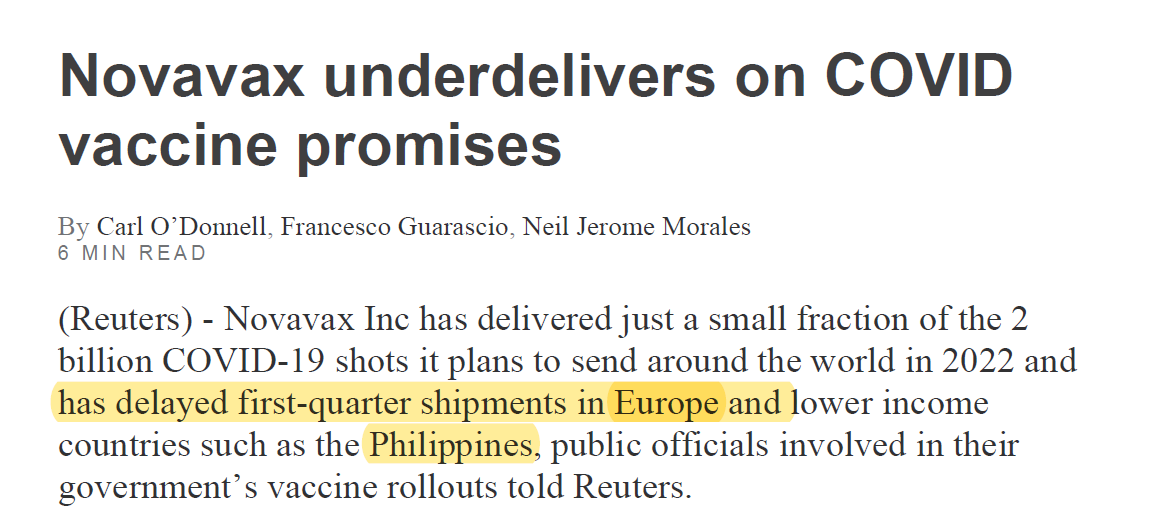
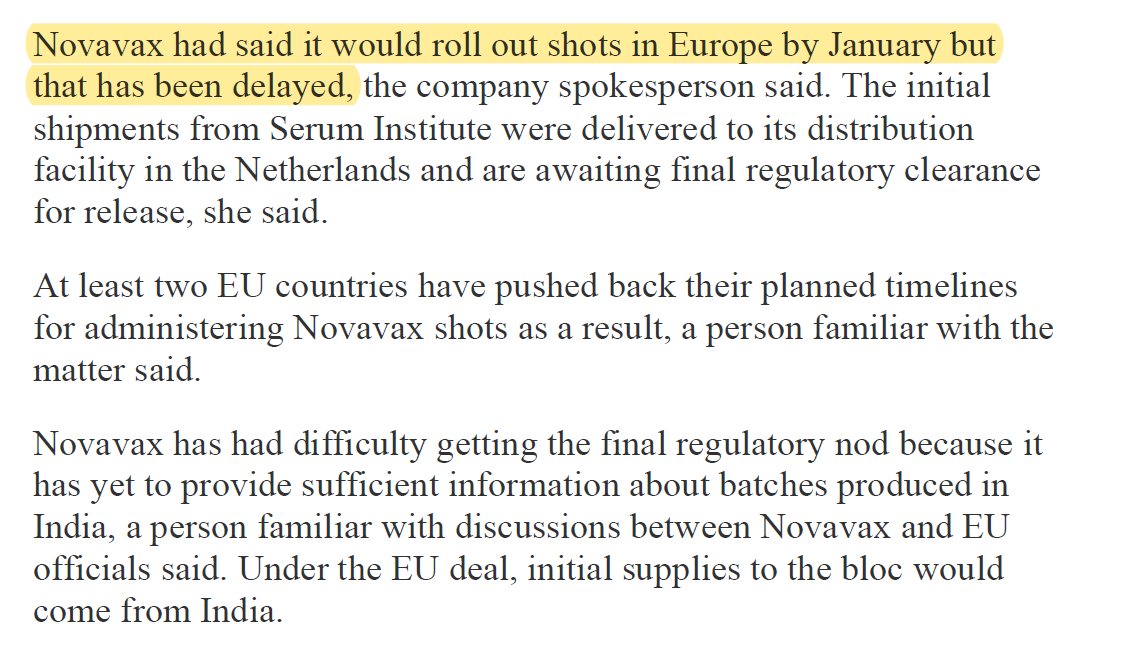
Rebuttal: On January 10 at the JP Morgan Healthcare conference, the CEO of Novavax Stan Erck told the audience that the EU had orderd 27 million doses for Q1 2022.  According to an Indian government site that tracks vaccine exports, Novavax' main manufacturing partner the Serum Institute of India (SII) has shipped 26 million doses into the EU during January.  These will have to be cleared following batch testing and checking the paperwork.   Unless the Indian government laboratories (CDL Kasauli) have passed and shipped bad product, it is unlikely the the SDS-PAGE and similar standard techniques will find something substantially different.

Regarding the Philippines situation, the vaccine is likely to be shipped in March once the 3-step process before roll-out has been satisfied:

1) approval (EUA on Nov 17, 2021)

2) HTAC recommendation for inclusion in national vaccination plan and DOH financing (29 December, 2021)

3) supply negotiations (ongoing)

Before that has occurred, Novavax and Serum will not send vaccine to places where it cannot be immediately used as they have only begun to turn stockpiled antigen and adjuvant into fully formulated products (~150M monthly capacity for SII sites alone).


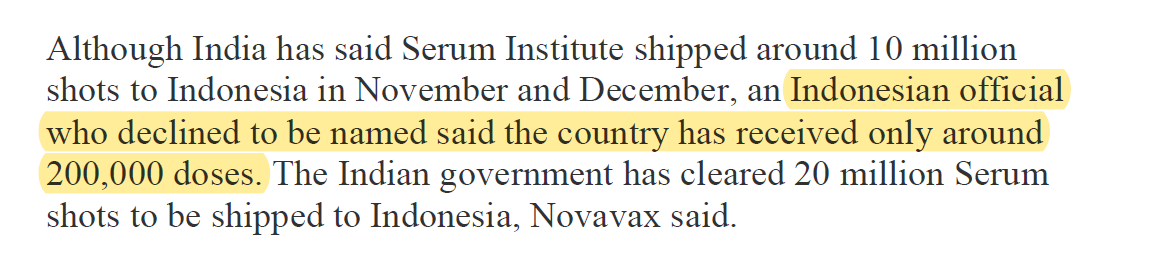
The 10 million doses here likely refer to the 10 million doses that Novavax on January 10 confirmed have been shipped to Indonesia where they have been used already.  The doses are also shown on the Indian government export site.  Reuters, however, knows that it purposefully omitted that in fact 38 million doses have been shipped and that the balance (28 million doses) are currently undergoing batch release- some of which, as we will see later in the Reuters very own article, have actually been released for shipping.


That’s the normal process.  It’s great that Reuters acknowledges here that additional doses outside the 10 million in Indonesia are sitting in places like the EU ready to go out to healthcare providers once the paperwork is finished.  In Germany, many states are still planning with a February 21 start of vaccinations.  In Korea, SK Bioscience has today received batch clearance of the first batch of 840000 doses with vaccinations starting after Chinese New Year.


Standard cut-and-paste paragraph by Reuters, sadly adopted by the wider press, to ridicule the company. Which other company the size of Novavax 2 years ago has achieved what they did?  How about them filling in a major vaccine gap on the order of 2 billion doses, especially in countries that either cannot afford or do not have the cold chain required for mRNAs?


‘Tiny company’...well yes, if you consider Novavax 2 years ago on the brink of bankruptcy (biotech is a very high risk-high rewards business), but a company that will  soon hire their employee No 2000 is actually not so tiny in biotech terms.

But, of course, this is just part of Reuters ridiculing the company.


The only new information here as the broad roll-out is about to commence is that ‘individual vaccine batches’ have been cleared already in the EU.  Great to hear!  You are starting to contradict yourselves, Reuters.

Ominous mystery country will be revealed later in article. A bait for the reader to stay with article (spoiler alert: no, it's not the US or the EU).


80 million doses of the 1.1 billion doses promised to COVAX in Q1 as the company starts turning antigen + adjuvant into product and rich countries incentivizing the company to prioritize them.  Between Serum, SK Bioscience, Novavax' own sites that they had to set up and various other partners, a monthly run-rate of 200 million doses can be expected in the following quarters and should be able to satisfy the COVAX order.


Stan Erck said on January 10 that 10 million doses have been shipped in accordance with Indian government data.  An ‘Indonesian official who declined to be named’ apparently is only aware of the first November 26 shipment of 137500 doses, but not the subsequent December 98 million doses.  I guess fact-checking is optional for Reuters ‘journalists’.

But don't take it from Stan, but see it on the Indian government site or the United Nations OCHA January 5 Indonesia status update for yourself.


As I had noted before, Novavax and Serum will only send vaccine to countries that are ready to vaccinate.  The Philippines is not yet as it still needs to conclude its supply negotiations.


OK, if the Philippines regret having purchased other unused vaccine then by all means try and find reasons to renegotiate. We have all been there, done that.


Yes, I also had hoped that the vaccine would become available earlier than that after the December 20, 2021 approval, but the messaging in Germany has been February 21 for the first vaccinations and many states are making appointments accordingly.  Some are planning for February 28 and only a few early March.  ‘Early March’ would therefore indeed represent a delay.  We will see. Next up is South Korea next week.


 There is nothing factually wrong with this final paragraph, but it is symptomatic for Reuters to keep focusing on the hard work and challenges of bringing the first global protein-based covid vaccine to market.  Instead, it should have seized the opportunity- even if it was a critical article- to raise awareness of the unique opportunity for global health in front of us:


A better tolerated and efficacious covid vaccine without proven safety risks such as myocarditis and anaphylaxis.


As I look forward to getting my Novavax booster*, it is time to acknowledge the achievements of this tiny company where big ones such as Sanofi have failed.


*1st shot JNJ...rather severe chills, night sweats, headache, fever from 8-36 hours following vaccination; 2nd shot Biontech: better, but muscle ache around upper arm first, then entire body and general malaise 8-30 hours post vaccination. Now waiting for Novavax to reduce my chances of another 'bad day'.

By Dirk Haussecker. All rights reserved.

Disclaimer: This blog is not intended for distribution to or use by any person or entity who is a citizen or resident of, or located in any locality, state, country or other jurisdiction where such distribution, publication, availability or use would be contrary to law or regulation or which would subject the author or any of his collaborators and contributors to any registration or licensing requirement within such jurisdiction. This blog expresses only my opinions, they may be flawed and are for entertainment purposes only. Opinions expressed are a direct result of information which may or may not be accurate, and I do not assume any responsibility for material errors or to provide updates should circumstances change. Opinions expressed in this blog may have been disseminated before to others. This blog should not be taken as investment, legal or tax advice. The investments referred to herein may not be suitable for you. Investments particularly in the field of RNAi Therapeutics and biotechnology carry a high risk of total loss. You, the reader must make your own investment decisions in consultation with your professional advisors in light of your specific circumstances. I reserve the right to buy, sell, or short any security including those that may or may not be discussed on my blog.